
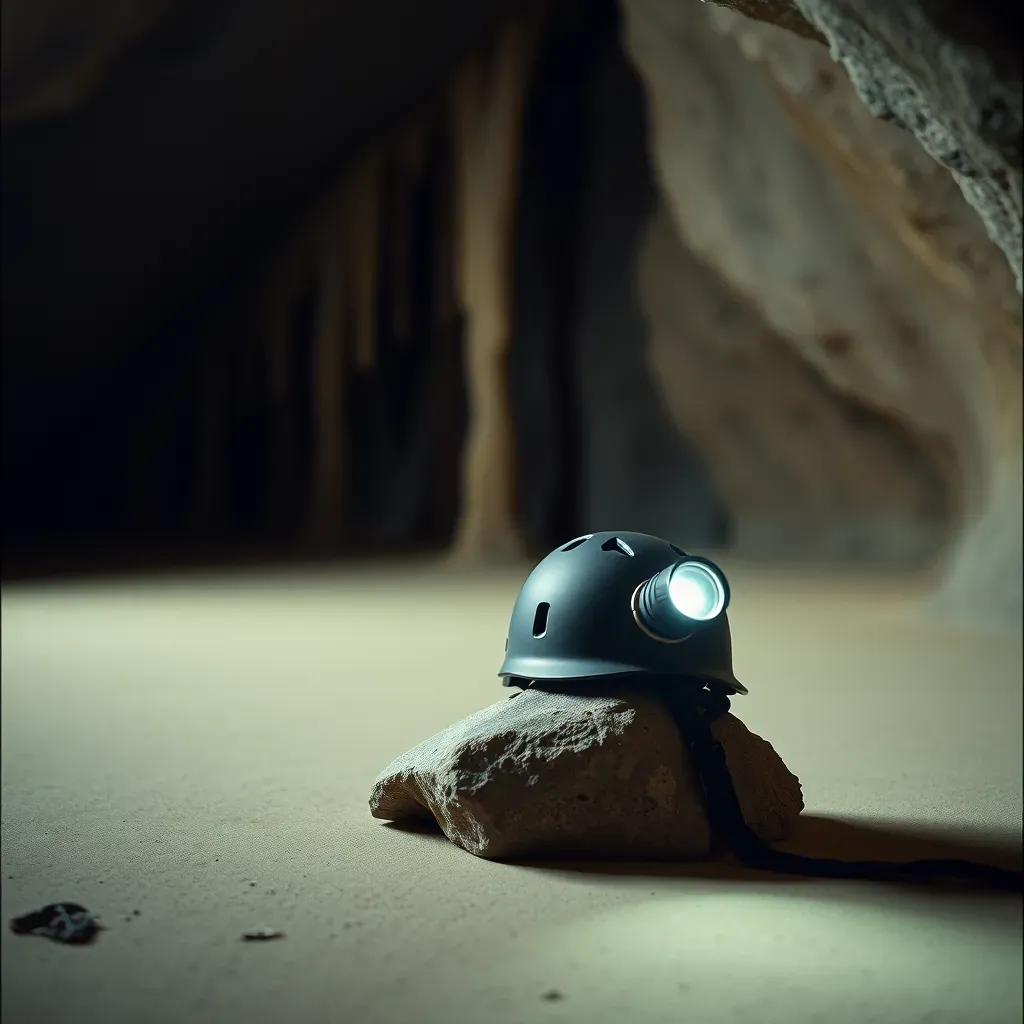
 Caving, by Orma Logbook
Your caving.
Every trip with its cave, its depth reached and its TPST (time spent underground), the rope you descended, your surveyed metres, the role you played and your nights underground on an exploration camp. In a logbook that holds your other sports too.
Get it on Google Play Coming soon to the App Store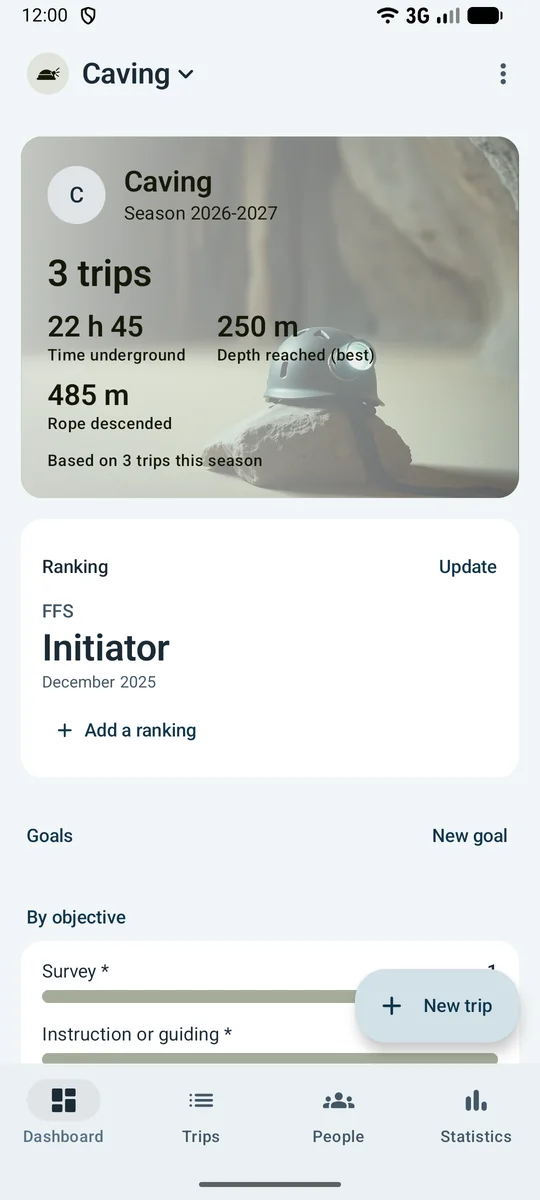
-
−248 m · 10 h
Depth and TPST first
The cave, the depth reached and the time spent underground: the two figures you announce on coming out. The greatest depth and the rope descended make up the summary card.
-
- Classic
- Exploration
- Survey
- Digging
- Rescue exercise
- Instruction or guiding
6 objectives, chosen up front
Classic, exploration, survey, digging, rescue exercise, instruction or guiding: the objective sets how the trip is read, is never assumed by default, and it opens the surveyed length.
-
Rope · pitches
The rigger’s rope
The metres of pitch descended and the number of pitches are noted on each trip, and the rope adds up month by month. What you placed or removed in the cave is ticked.
-
- Participant
- Rigger
- Trip leader
- SSF rescuer (exercise)
The role played that day
Participant, rigger, trip leader, or rescuer on an exercise: the role of each trip, not the one you usually have. Their share reads at a glance.
-
- 0
- 1
- 2
- 3
- 4
Cave class, from 0 to 4
The FFS’s teaching benchmark, neither a sporting grade nor a safety guarantee: it is kept with the cave, and the highest class you have visited reads year after year.
-
- Initiator
- Monitor
- Instructor
Your federal certificates
Initiator, monitor, instructor: the teaching levels of the École française de spéléologie, with their date. They show where you stand in leading others, never your performance.
-
2 nights underground
The exploration camp
A camp keeps its trips under one event, and a multi-day trip notes the nights spent underground in bivouac, with the surveyed length.
-
- Low
- Normal
- Flood
The water level, and the early exit
What you saw on site, noted afterwards: a safety fact, never a judgement by the app. A climb-out ahead of a flood is recorded as “Early exit”, never as a failure.
More than 800 ways to read your caving
10 ready-made analyses, and custom analysis: 43 indicators to cross with 19 criteria, as a breakdown or over time, with whatever filters you like.
- 10ready-made analyses
- 43indicators
- 19criteria
- 817possible combinations
- The rope descended, month by month
- Your greatest depth reached, season after season
- Your cumulative TPST, season after season
- The number of trips by objective
- The metres surveyed, season after season
- The number of trips by role played: participant, rigger, trip leader, rescuer
- The greatest depth reached in each cave
- The number of trips in each cave
- The rope descended by role played
- The average TPST of a trip by objective
- The highest cave class visited, year after year
- The number of trips by water level observed
- The nights spent underground, year after year
- The number of trips completed, early exits and trips cancelled before the entrance
- The longest TPST of each camp or course
- The number of pitches descended, month by month
- The number of trips by progression: vertical, horizontal or squeezes
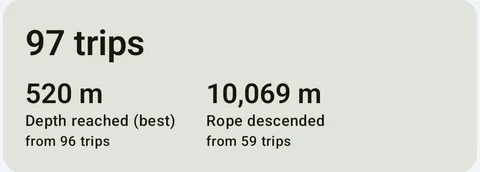
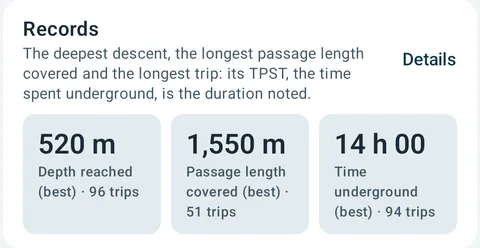
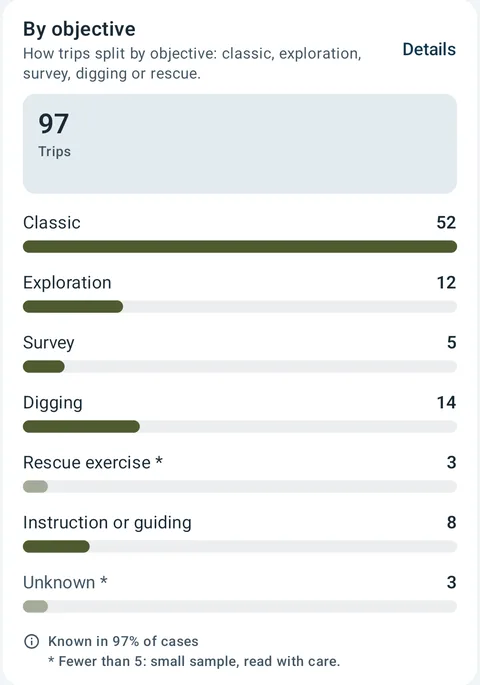
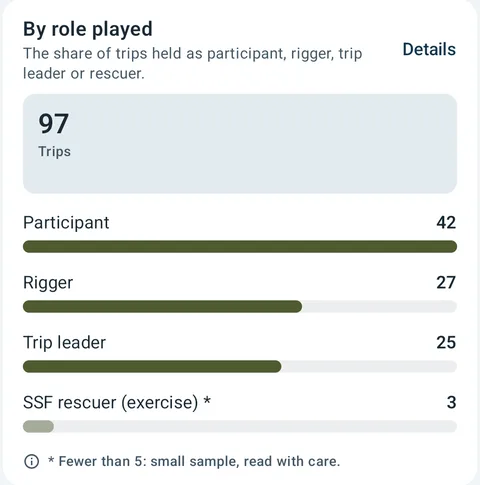
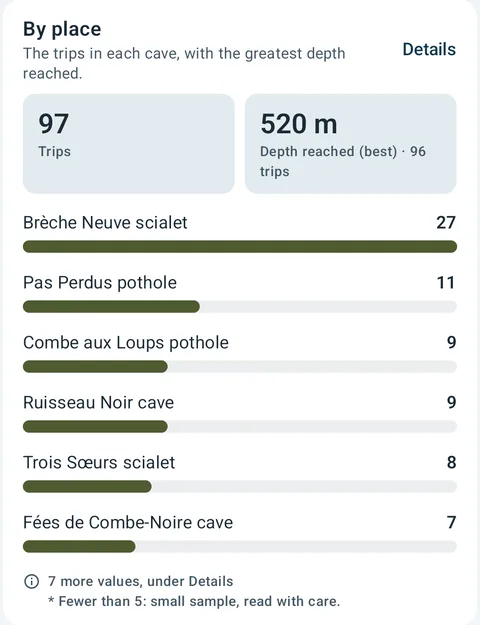
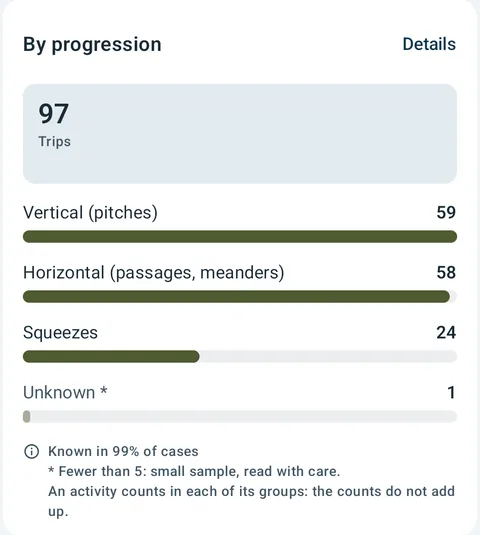
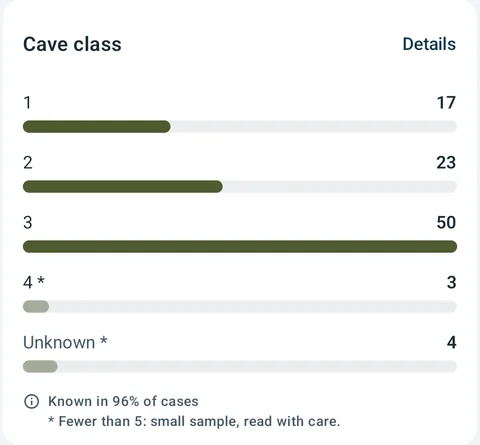
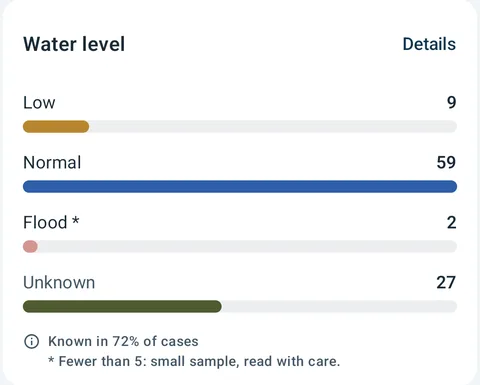
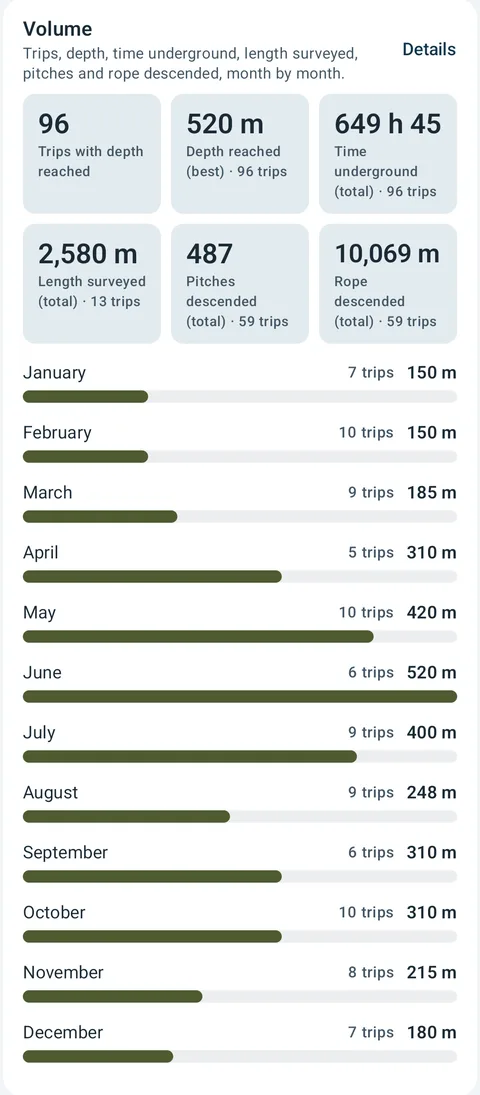
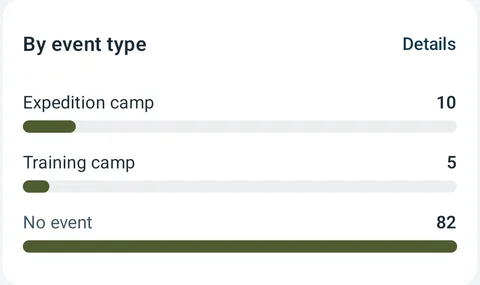
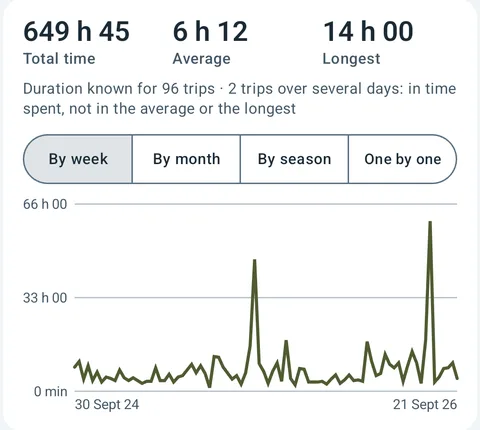
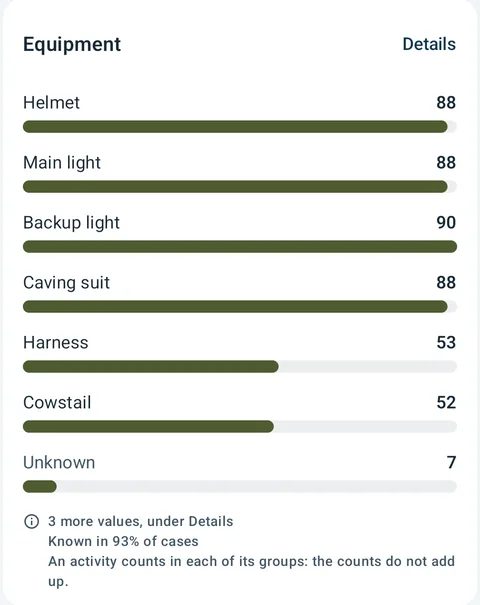
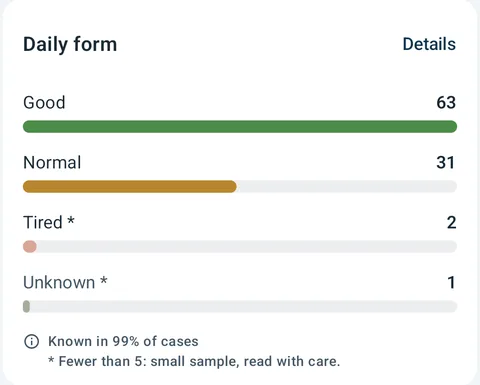
Tap a bar, a slice or a point: the trips behind it open up. And every figure says how many trips it is based on.
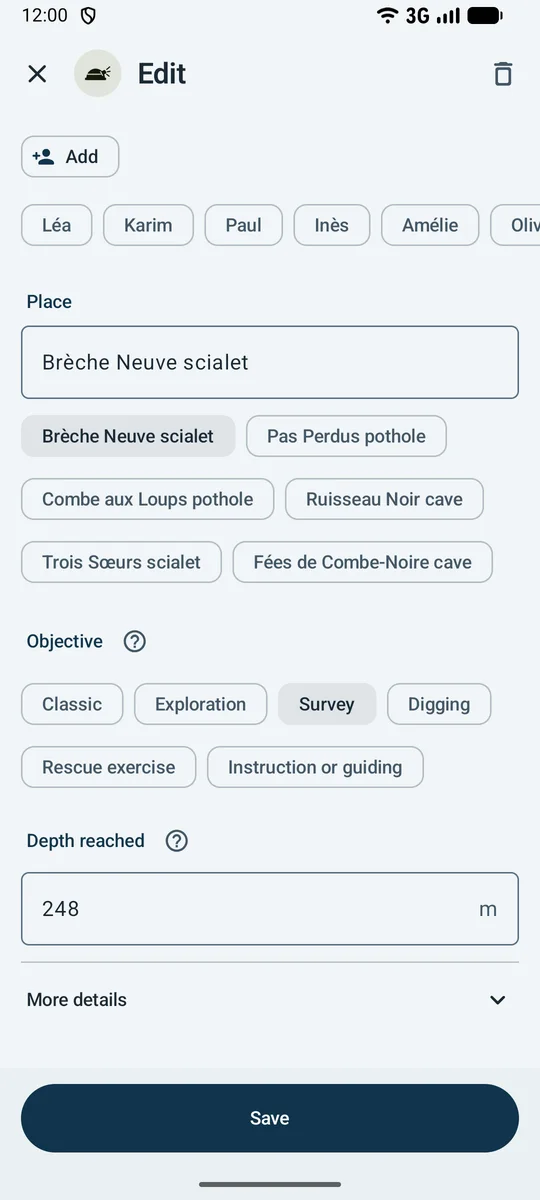
The cave, the objective, the depth
The cave, the objective and the depth reached are in front of you; the rest unfolds when you want it.
- The objective is chosen up front: classic, exploration, survey, digging, rescue exercise, or instruction or guiding.
- The TPST is noted beside the date; for an exploration or a survey, the surveyed length opens.
- Under “More details”: the pitches and rope descended, the cave’s equipment, the role played, the gear carried, the water level and the form of the day.
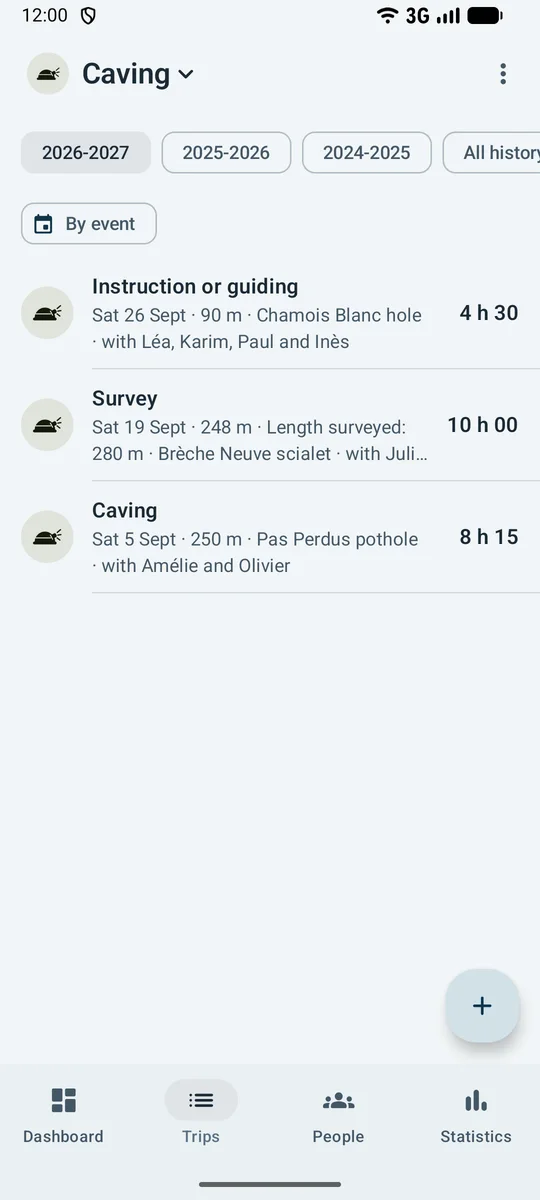
Your trips, with their depth
Each trip gives its objective, its depth reached, its cave and who was there, with its duration on the right, from the most recent to the oldest; the surveyed length is added when there is one. “By event” files the trips of a camp or course under their event.
- The trip’s duration, on the right, is called TPST in the statistics, as it is said underground.
- An early exit reads “Early exit”, a trip cancelled before entry “Cancelled before entry”: words of decision.
- “Next trip” chains the next one with one tap, without copying the depth or the survey of the previous one.
A cave, a depth, and it is noted
A trip is worth its date, its cave and its depth. The TPST, the pitches, the rope and the role come when you feel like it.
From the certificate to the introductions
Your federal certificates are kept with their date, and your introduction or instruction trips are told apart from your club trips by their objective.
Everything caving brings to the logbook
Logging
- A date is enough, and the result when there is one: no required field
- Outcomes: early ascent and cancelled before entry
- Objective (6), depth reached, passage length covered, length surveyed, progression (3), pitches descended, rope descended, cave rigging, cave class (5), equipment (9), water level (3), nights underground…
- “Next trip” starts the next one with the same settings
Events
- Training camp and expedition camp
Rankings
- 1 system: FFS
- FFS: Initiator to Instructor, 3 steps
- Dated rankings, best ranking and its date, a curve
Statistics
- Record, form, streaks, season-by-season trends; custom analysis on any field
- Volume
- By objective
- By progression
- Records
- By role played
- By place
- Every figure says how many trips it is based on
And across the whole logbook: goals and a companion, private groups of friends, body, finances, a one-file archive, CSV spreadsheet, a printed logbook as PDF. No account, no ads, no audience tracking.
Caving, and everything you do alongside
Do you climb, descend canyons, or go to the mountains? Each discipline has its own space in the same logbook, with its own words.
Free, with Premium
Logging and data are free, without limit. Free statistics cover your last 20 trips; Premium opens your whole history.
Get it on Google Play Coming soon to the App Store