

 Snooker, by Orma Logbook
Your snooker.
Your highest break, your breaks of 30, 50 and 100, your frames at fifteen, ten or six reds, the table you play on and your dated FFB ranking. In a logbook that also holds your other sports.
Get it on Google Play Coming soon to the App Store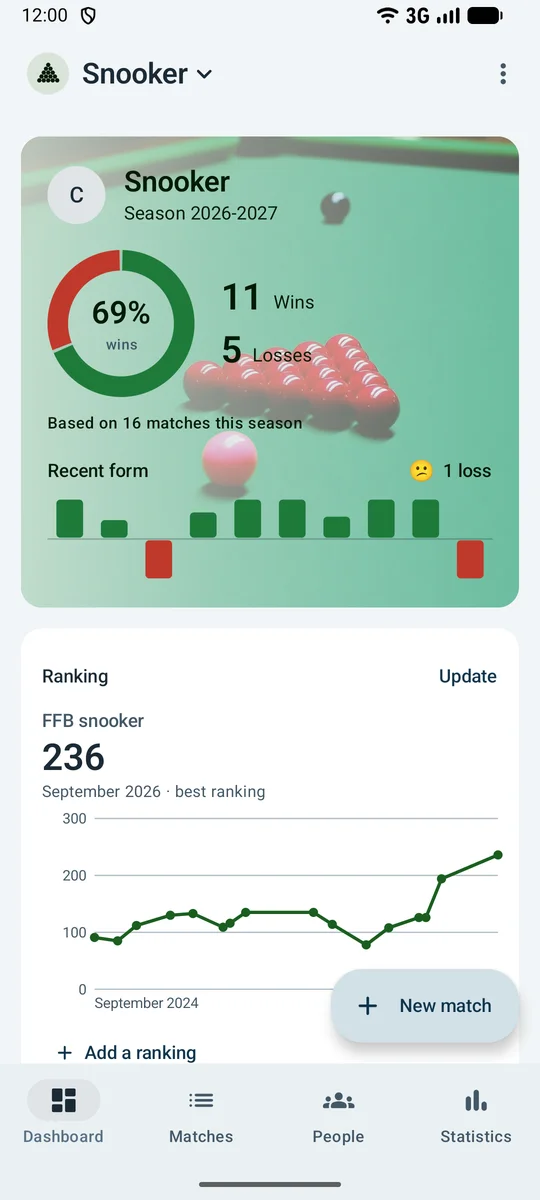
-
Century
The best break, celebrated when it lands
The best break of the frame is noted first, up to 155. The logbook celebrates the century at 100 and the maximum, 147 with fifteen reds, 107 with ten reds, 75 with six reds, and keeps your record.
-
- 15 reds
- 10 reds
- 6 reds
3 red counts
The full game, or the evening game with ten or six reds: the maximum break changes with it, and the record reads by the number of reds.
-
- 12 ft (competition table)
- 10 ft
- 9 ft
3 tables, from 12 to 9 feet
A break of 40 does not weigh the same on the 12-foot competition table as on a 9-foot table in a café. The table is noted with the game and reads beside your breaks.
-
30 · 50 · 100
Your breaks, band by band
How many breaks of 30 to 49, of 50 to 99 and of 100 or more in the game: the logbook adds them up month by month, with your highest break.
-
Per frame
The points on the scoreboard
The points you score in the game, divided by the frames played, won and lost, month by month. The free format is left out, as nothing says it counts frames.
-
- Line-up
- Clearance
Your drills, shot by shot
The line-up of reds, the clearance, or a drill you name: the list grows with your names. One score per attempt, and a record per drill.
-
FFB points
Your ranking, dated
The World Snooker Tour ranking, those of Portugal and Brazil, and the FFB national, Masters TN, women’s and seniors rankings: each value carries its date, and the record reads by the gap with the opponent.
-
- Single frame
- Best of 3 frames
- Best of 5 frames
- Best of 7 frames
- Best of 9 frames
- Best of 35 frames
- …
12 game formats
A single frame for the evening game, best of 5 or 7 in a tournament, up to best of 35. The score is counted in frames, and doubles has its own modality.
More than 1,400 ways to read your snooker
24 ready-made analyses, and custom analysis: 44 indicators to cross with 33 criteria, as a breakdown or over time, with whatever filters you like.
- 24ready-made analyses
- 44indicators
- 33criteria
- 1,452possible combinations
- Your best break each month
- The average of your best breaks per game, season after season
- Your best break on the 12-foot, 10-foot and 9-foot tables
- The average of your best breaks with fifteen, ten and six reds
- Your breaks of 50 to 99, season after season
- Your breaks of 30 to 49, month by month
- Your breaks of 100 or more, season after season
- Your win rate by table
- Your win rate with fifteen, ten and six reds
- Your games by setting: bar, club, home or competition hall
- Your win rate against each opponent
- Your points scored per game, on average, by format
- Your best score in each drill
- The average score of your drills, month by month
- Your win rate by round: pool, quarter-final, semi-final or final
- Your win rate by ranking gap with the opponent
- Your win rate at home and away
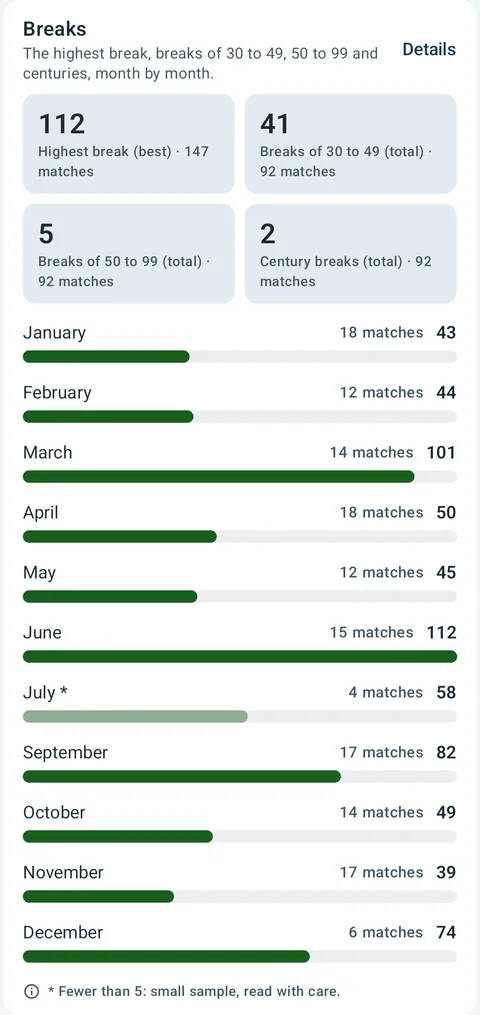
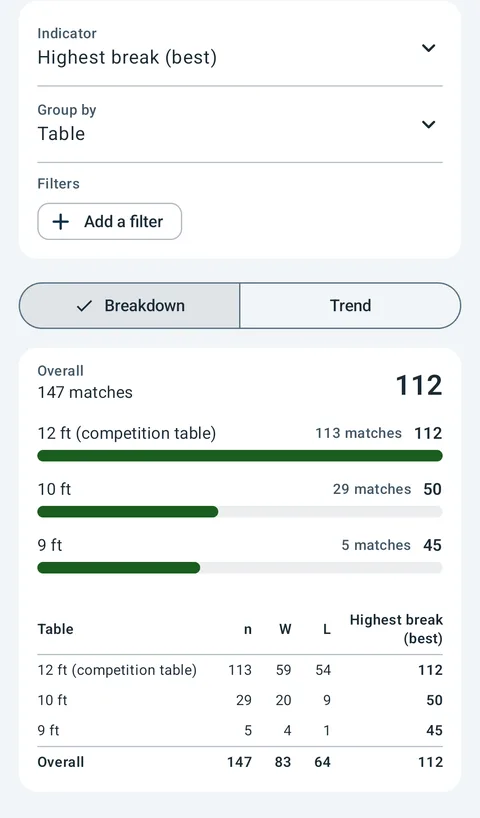
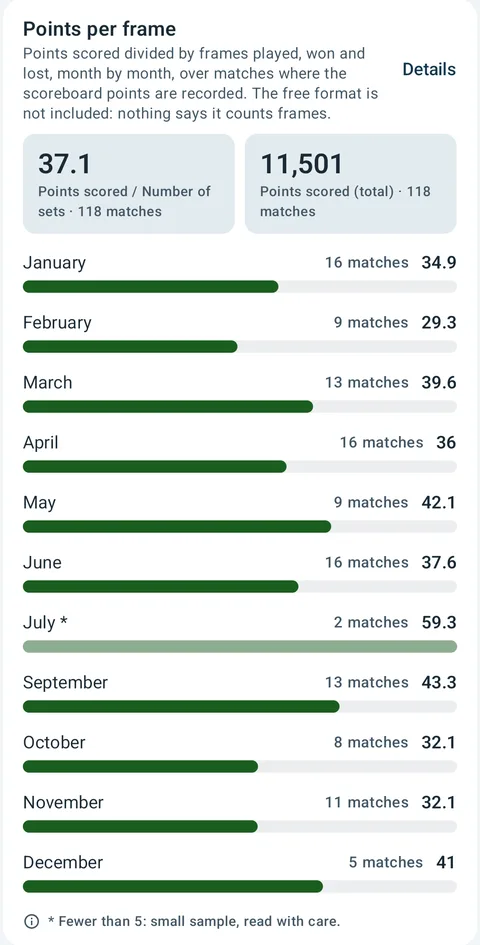
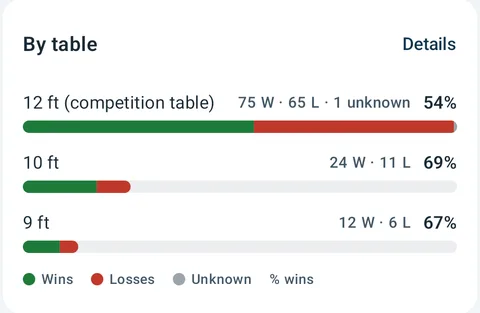
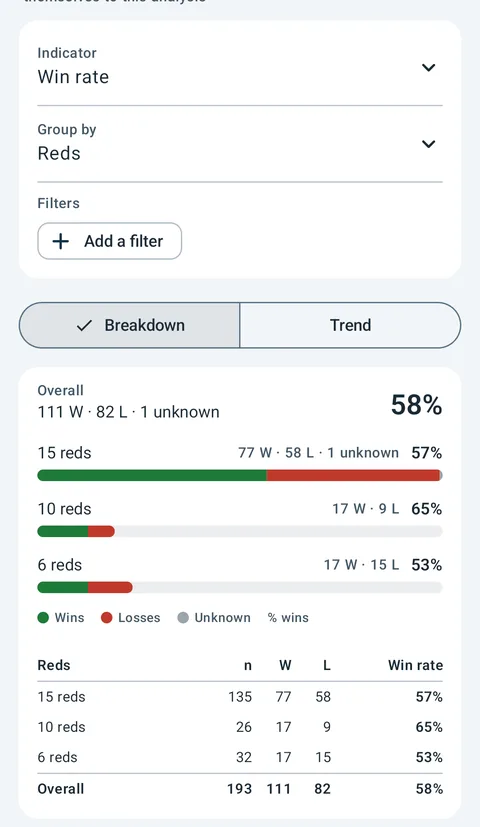
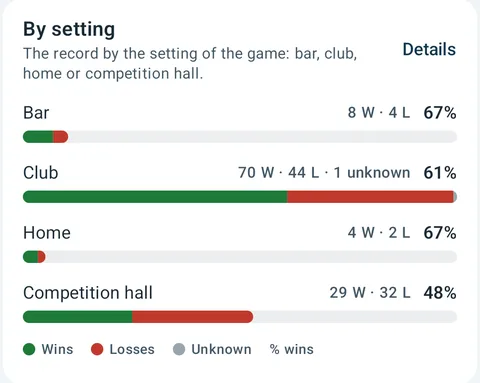
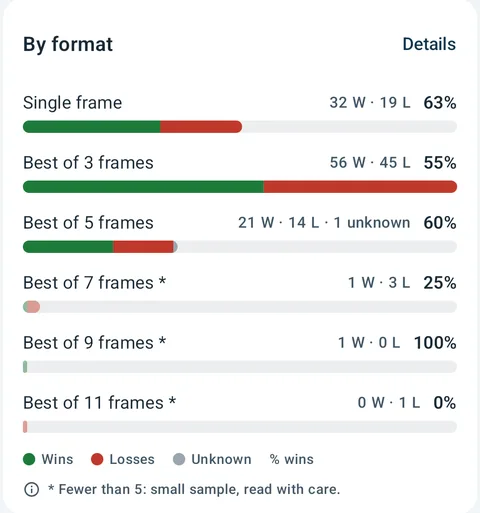
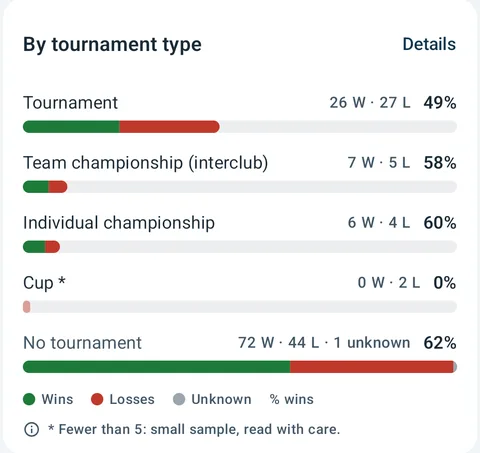
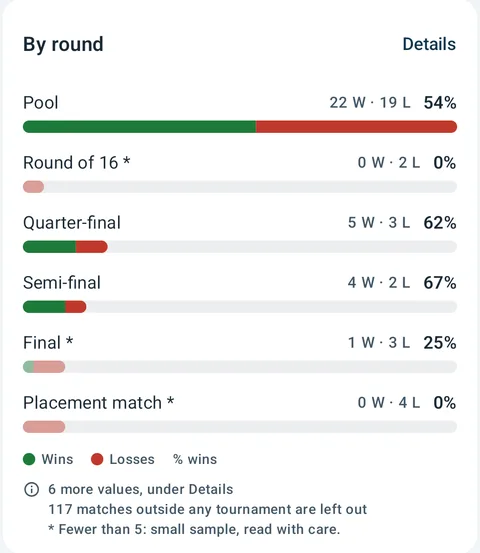
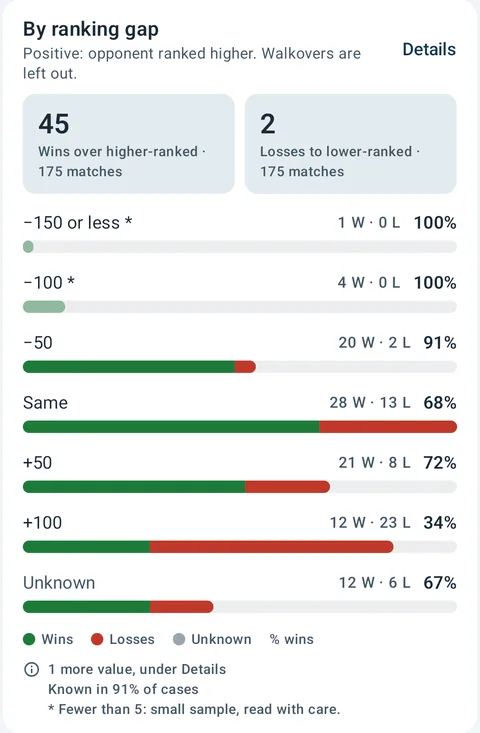
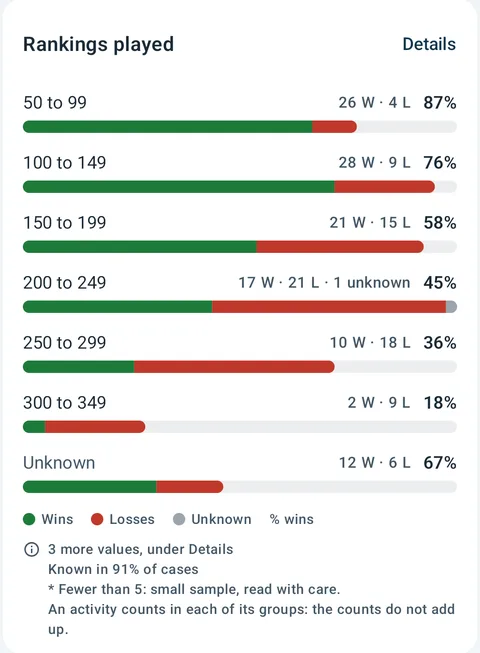
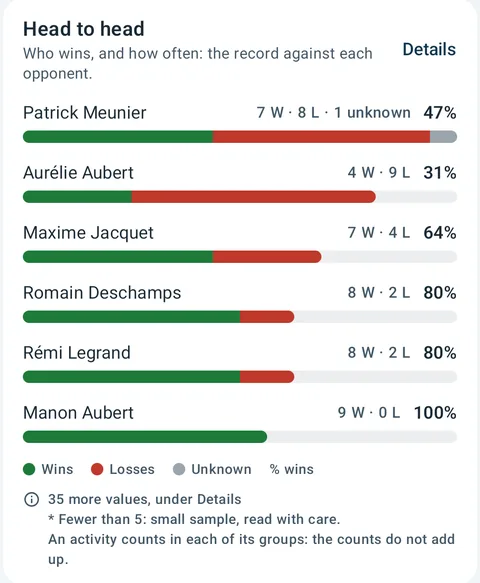
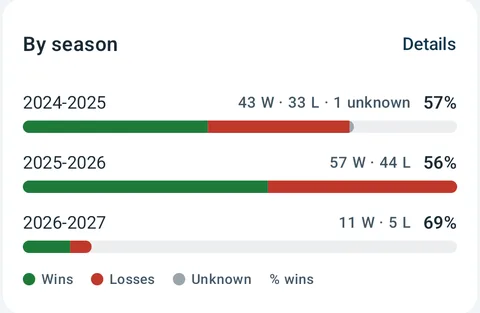
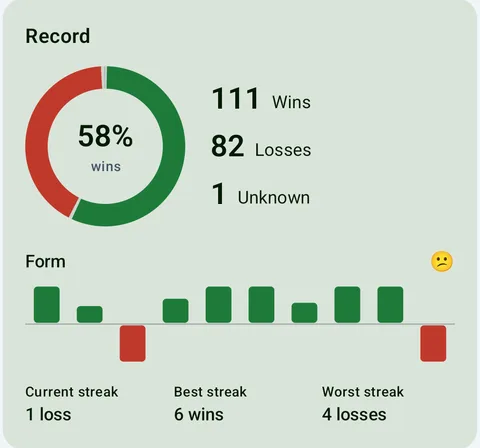
Tap a bar, a slice or a point: the matches behind it open up. And every figure says how many matches it is based on.
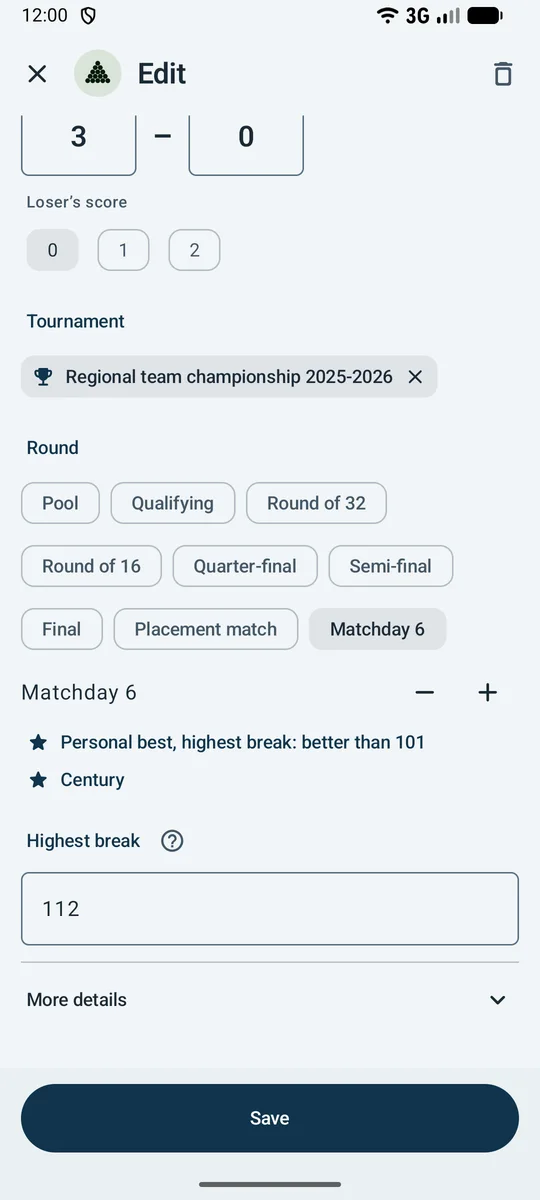
The score in frames, the highest break first
The date, the opponent and the score in frames; the highest break comes next, because it is the figure people remember. Breaks of 30, 50 and 100, points scored, reds, table and setting are noted if you have them.
Best of 5 frames- The best break, up to 155: 147 at most, 155 with a free ball.
- The number of reds, the table of 12, 10 or 9 feet and the setting: bar, club, home or competition hall; a tournament sets them on its games by default.
- The century, the maximum and the best-break record, celebrated the moment they land.
- “Next match” carries on, “Rematch” plays the same opponent again.
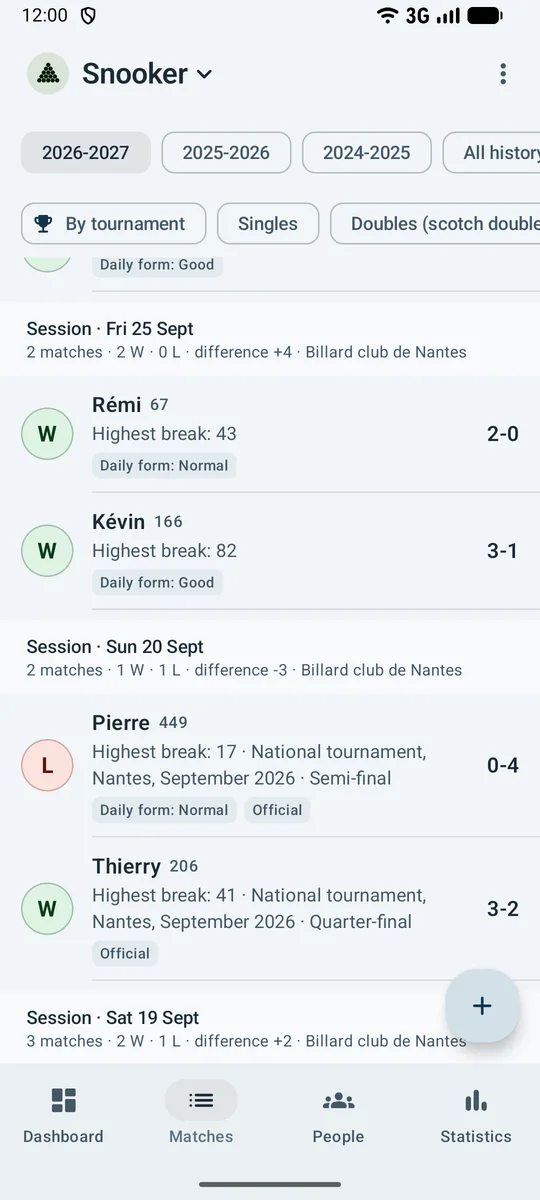
Your games, with their breaks
Each match shows its score in frames, its highest break and the daily form. Each session has its header: the number of matches, wins and losses, the difference and the venue.
- The round reached in each tournament, individual championship or cup, and the numbered days of the team championships, at home or away.
- “Print the logbook”: the list of your games as a PDF.
Doubles, at the club
Doubles (scotch doubles) has its own modality: two players per side, and the record reads with each of your partners.
Tournament, cup and team championship
The tournament, the individual championship, the cup and the team championship each have their rounds: pool, quarter-final, semi-final, final, or numbered day.
Everything snooker brings to the logbook
Logging
- A date is enough, and the result when there is one: no required field
- Singles, doubles (scotch doubles) and team
- 12 formats: single frame; best of 3 frames; best of 5 frames; best of 7 frames…
- Outcomes: retired, walkover and disqualified
- Training, friendly and official
- Reds (3), setting (4), table (3) and daily form (3)
- “Next match” starts the next one with the same settings
Events
- Tournament, individual championship, team championship (interclub), cup and friendly series
- Rounds: pool, qualifying, round of 32, round of 16, quarter-final, semi-final, final…
Rankings
- 7 systems: FFB snooker, FFB Masters, FFB women's, FFB Seniors, WST, FPB and CBBS
- Dated rankings, best ranking and its date, a curve
Drills
- 2 “drill” values supplied, open list
- Last time, and the record broken, as you log
- Drill and drill score
Opponents and partners
- A card for every opponent and partner: hand, club, rankings and notes
- Head-to-head, match preparation, record with each partner
- Several players followed; a match between two of them is logged once
Records and markers
- Records announced the moment they fall: highest break and drill score
- Milestones celebrated: century; maximum break; maximum break with 10 reds and maximum break with 6 reds
Statistics
- Record, form, streaks, season-by-season trends; custom analysis on any field
- Head to head
- Breaks
- Frames won and lost
- Points per frame
- By format
- By setting
- By table
- By number of reds
- Drills
- Every figure says how many matches it is based on
And across the whole logbook: goals and a companion, private groups of friends, body, finances, a one-file archive, CSV spreadsheet, a printed logbook as PDF. No account, no ads, no audience tracking.
Snooker, and everything you do alongside it
Do you also play pool, carom billiards, darts? Each discipline has its own space in the same logbook, with its own words.
Free, with Premium
Logging and data are free, without limit. Free statistics cover your last 20 matches; Premium opens your whole history.
Get it on Google Play Coming soon to the App Store