
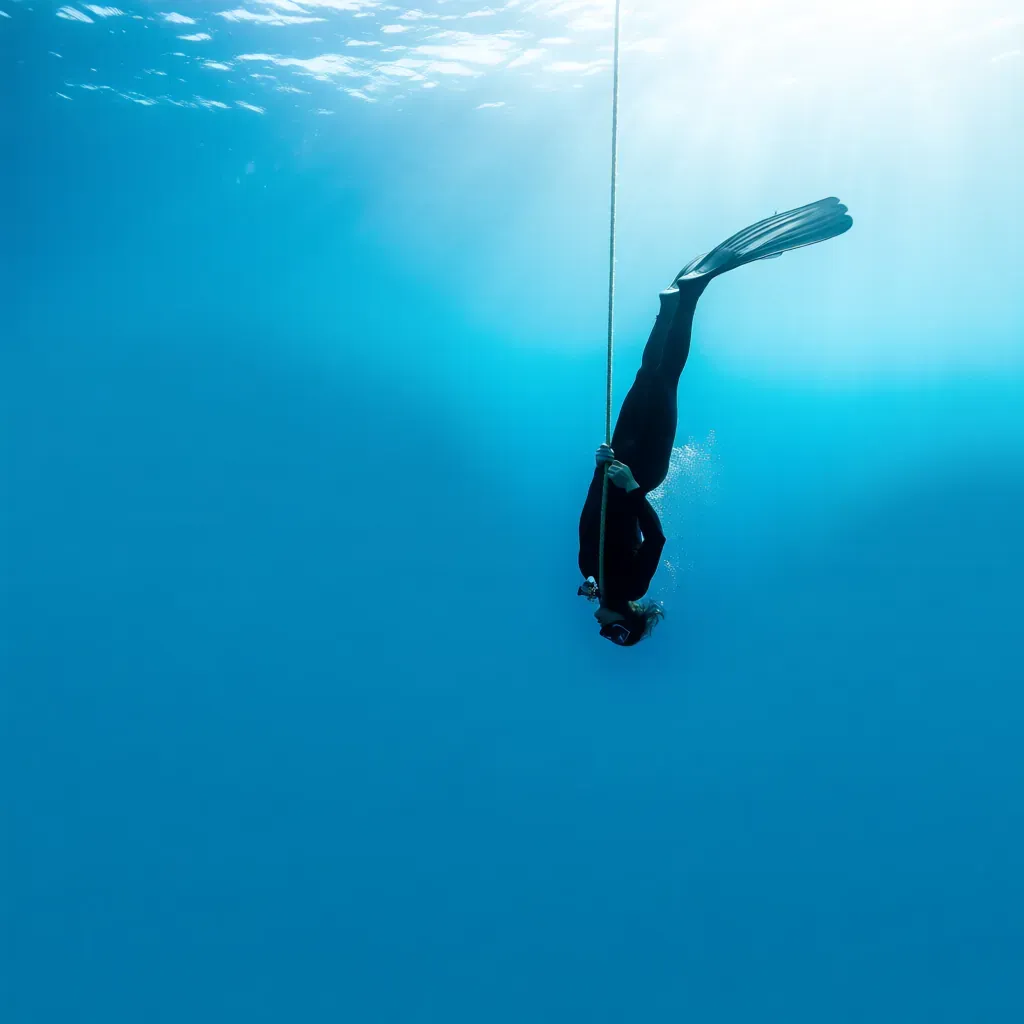
 Freediving, by Orma Logbook
Your freediving.
Your static, your dynamic and your depth, each in its own unit, your breath-holds logged one by one, the announcement made to the judges beside the actual performance, and your records kept apart by environment. In a logbook that holds your other sports too.
Get it on Google Play Coming soon to the App Store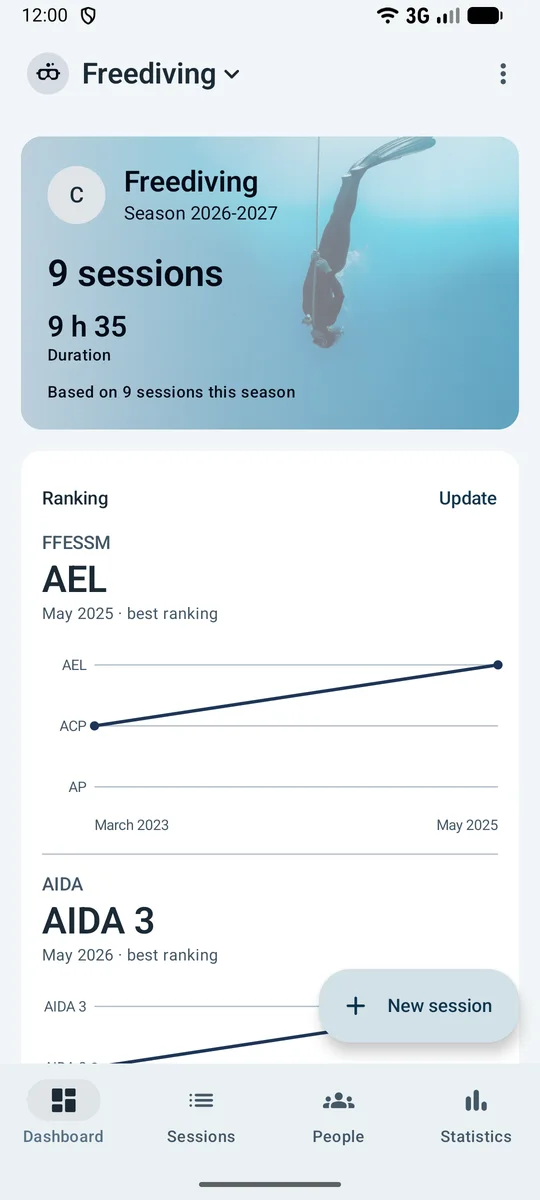
-
4’20” · 101 m · 36 m
The mark, in its own unit
The discipline decides the mark: a time for static, a distance for dynamic, a depth for constant weight. Each is recorded and read in its own unit, never converted.
-
- Static · 1
- Dynamic · 3
- Timed · 1
- Depth · 6
11 events, in four families
Static, dynamic, speed endurance and depth: the codes of AIDA and those of CMAS. The list is open: a missing event is added while you log.
-
−2 m
The announcement, beside the actual result
Before an attempt, you note the announcement made to the judges: the gap to the actual result is worked out, with its sign, in seconds, or in metres of distance or depth. No penalty is taken from it.
-
- Static training
- Dynamic training
- CO2 table
- O2 table
- Line training
- Competition
6 session types
A training session is a run of breath-holds, each logged with its recovery. The best one gives the session’s mark.
-
1.05 m/s
Speed in dynamic, worked out
Note the distance and the duration of the breath-hold: the speed follows. An analysis reads it event by event.
-
- Pool
- Sea
- Lake or quarry
- Dive pit
- Dry land
5 environments, each with its own records
A static held dry, in a pool or at sea cannot be compared: the records read environment by environment, the dive pit apart from the sea.
-
Red card
The competition, with its outcome
Bib, place among the ranked finishers, age group: an attempt disqualified, cut short or not attempted is logged as such. The logbook does not recalculate the judges’ points.
-
- AP
- ACP
- AEL
- ACEL
- AEEL
Your FFESSM level
From the pool freediver to the expert open-water freediver, each level with its date. Alongside it, 6 other systems: AIDA, Molchanovs, PADI, SSI, PFI and FII.
More than 2,000 ways to read your freediving
16 ready-made analyses, and custom analysis: 101 indicators to cross with 20 criteria, as a breakdown or over time, with whatever filters you like.
- 16ready-made analyses
- 101indicators
- 20criteria
- 2,020possible combinations
- Your longest static breath-hold, month by month
- Your longest hold by environment
- Your longest dynamic distance, month by month
- Your longest distance, event by event
- Your average speed in dynamic, month by month
- Your greatest depth at sea and in the pit
- Your maximum depth, year after year
- The average length of a static, CO2 table and O2 table breath-hold
- The number of breath-holds logged, month by month
- The average recovery between two breath-holds, by session type
- The number of sessions of each type
- The average gap between the announced and achieved distance, competition after competition
- The average gap between the announced and achieved time, competition after competition
- The share of ranked finishers you beat, competition after competition
- Your average place by event
- Your best speed endurance sprint, season after season
- The average water temperature, month by month
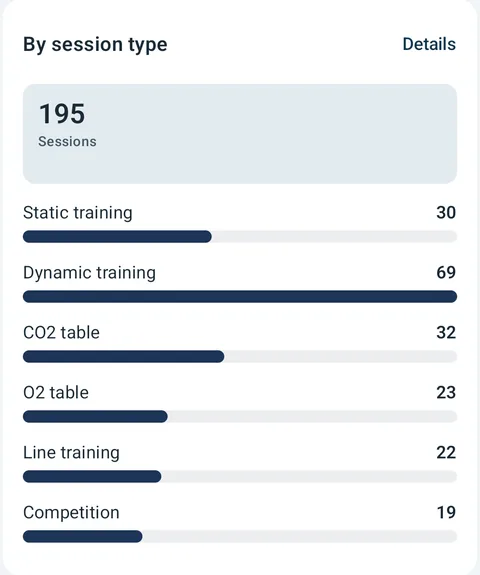
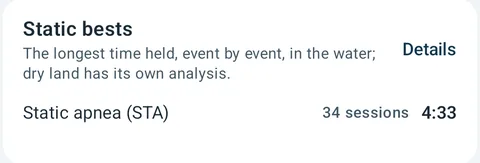
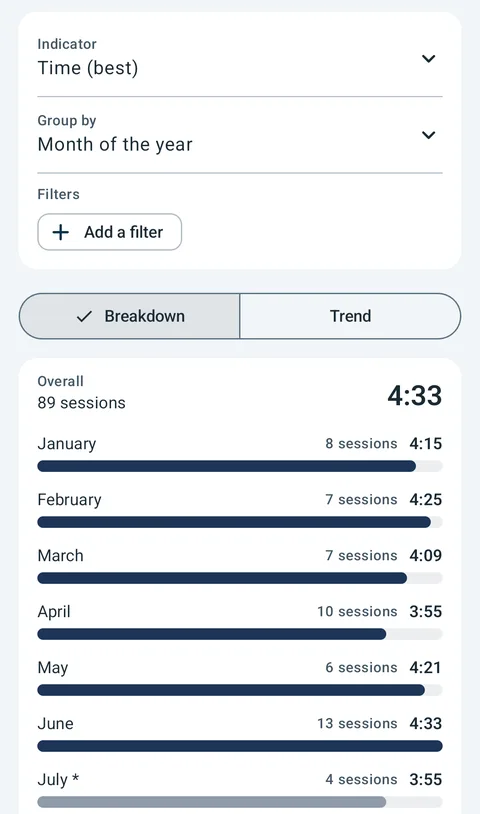
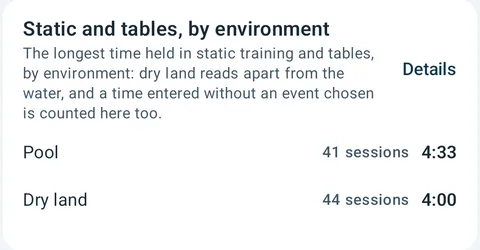
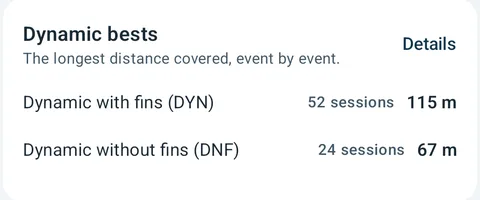
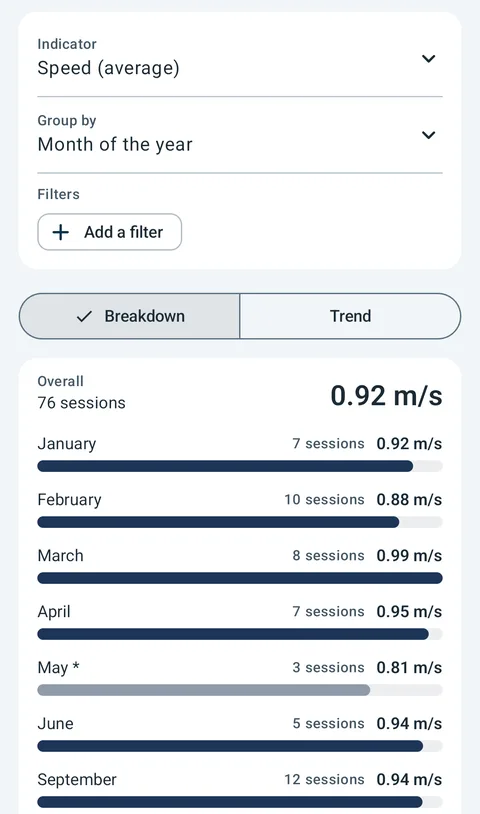
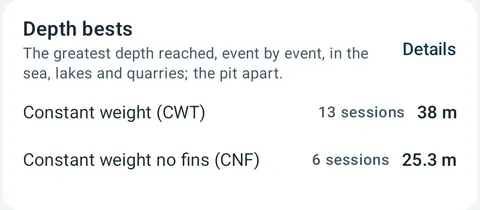
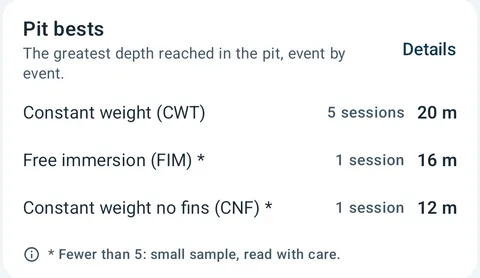
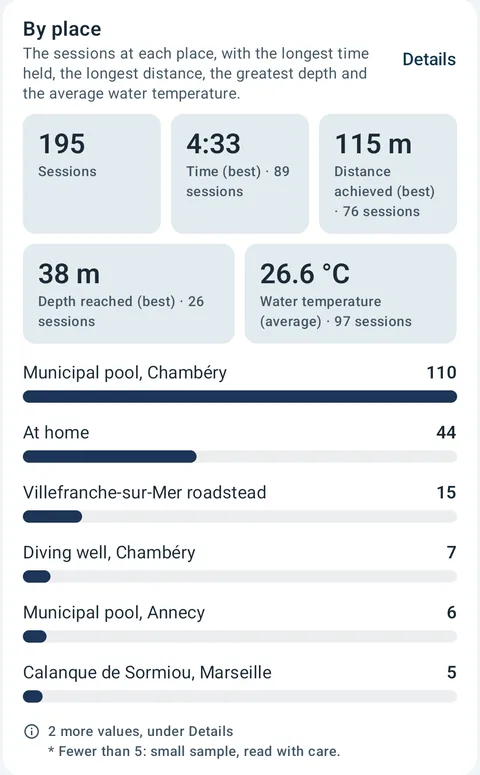
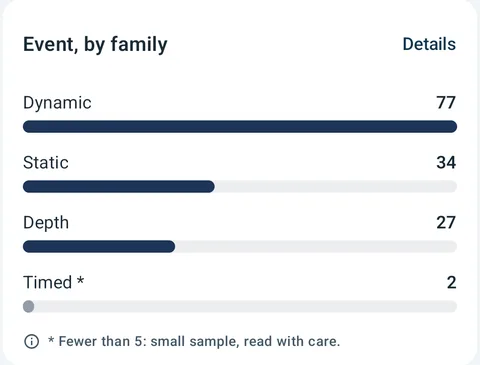
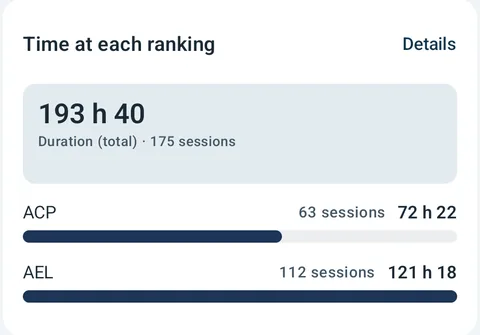
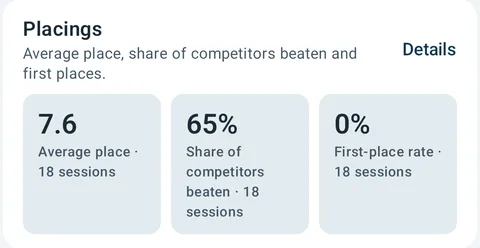
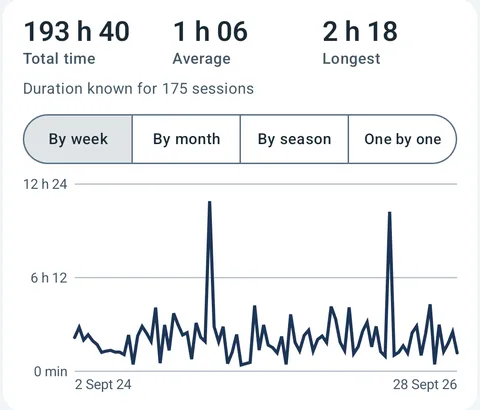
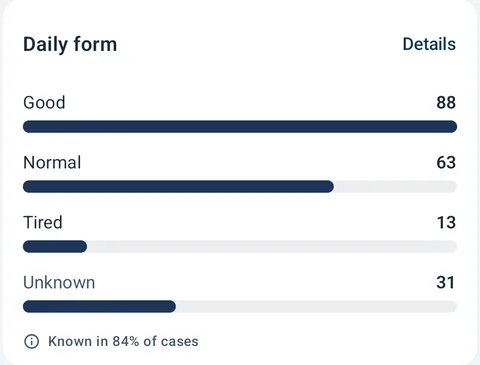
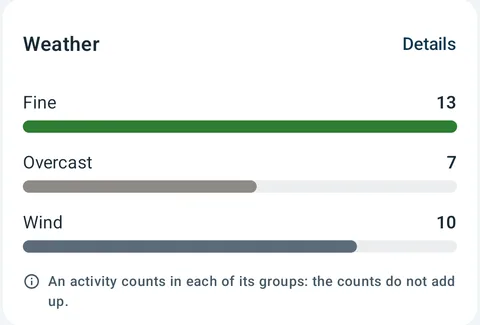
Tap a bar, a slice or a point: the sessions behind it open up. And every figure says how many sessions it is based on.
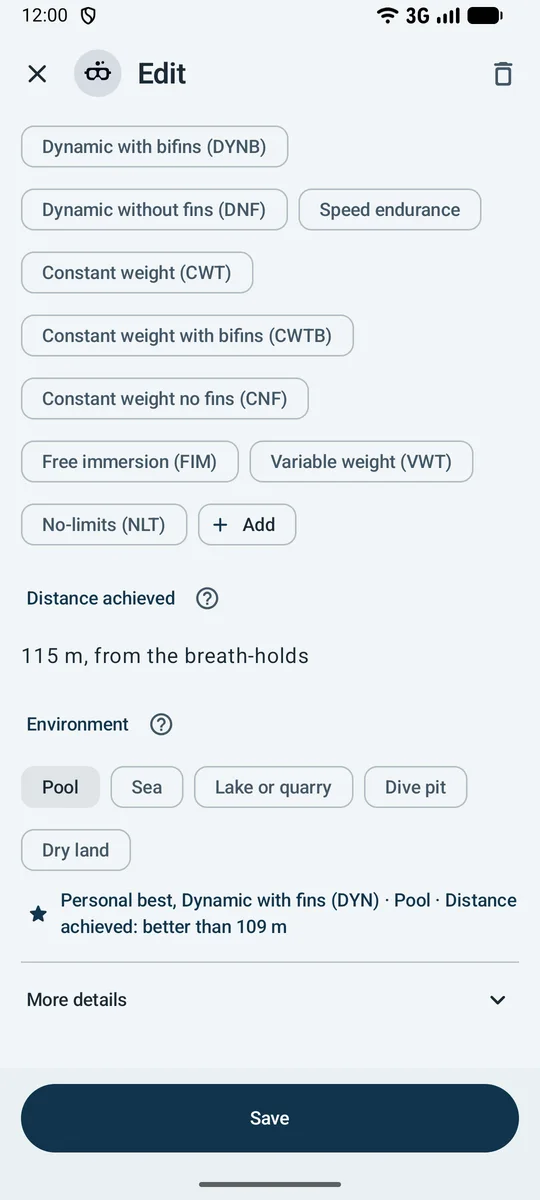
The session type, the event, the mark
The session type and the environment come first, then the event and the mark: a time, a distance or a depth, depending on the event. The breath-holds can be logged one by one for those who want the detail.
Pool · 115 m · Personal best- Each breath-hold: its distance, depth or breath-hold time, and the recovery that follows.
- The best breath-hold gives the session’s mark; the distance and the duration give the speed.
- A CO2 or O2 table can be done dry: that environment leaves out the water and the weather.
- In competition, the announcement, the bib, the ranked finishers and the age group.
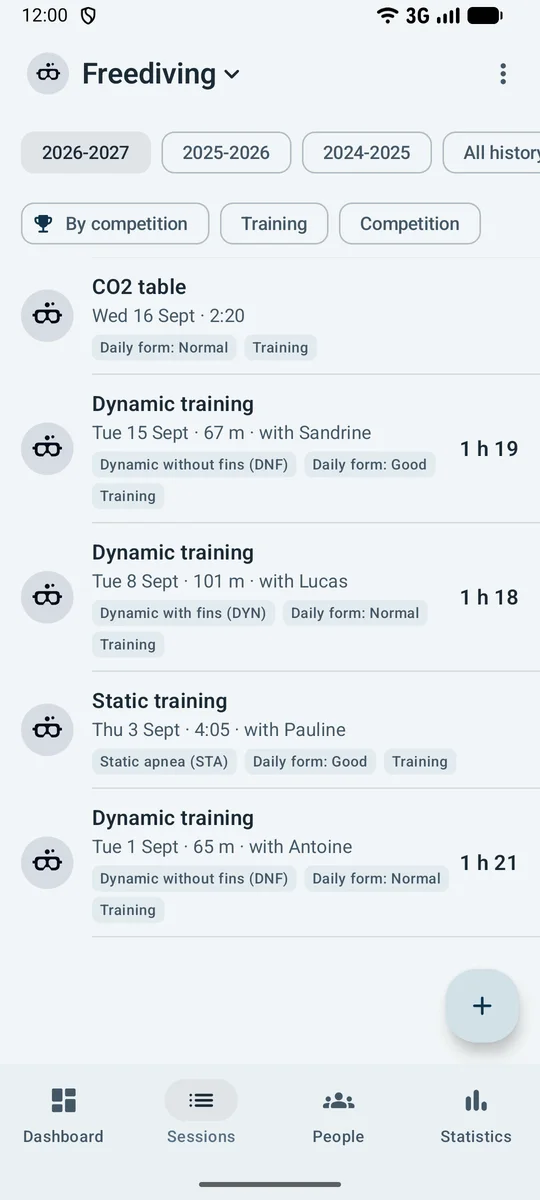
Your sessions, with their mark
Each session gives its type, its event and its mark in its own unit, from the most recent to the oldest. A competition adds its place among the ranked finishers.
- “Next session” carries on with the next one, with the same settings.
- A competition brings together its attempts, one per event; a training camp files its sessions at sea.
- A session cut short says “Cut short”, an attempt cancelled “Not attempted”.
- The buddy is noted with the session.
A type, a mark, and it is logged
A session counts with its date, its type and its mark. The event, the recovery, the water temperature and the daily form come when you feel like it.
Announced, achieved, place
Each attempt is logged with its announcement and its achieved result, its bib, its place among the ranked finishers and its age group. A training camp keeps its sessions under its name.
Everything freediving brings to the logbook
Logging
- A date is enough, and the result when there is one: no required field
- Outcomes: cut short, disqualified and not attempted
- Training and competition
- Session type (6), event (11), time, distance achieved, breath-hold time of the performance, speed, sprint time, depth reached, dive time, announced time, gap to the announced time, announced distance…
- “Next session” starts the next one with the same settings
Events
- Competition and training camp
Rankings
- 7 systems: FFESSM, AIDA, Molchanovs, PADI, SSI, PFI and FII
- FFESSM: AP to AEEL, 5 steps
- Dated rankings, best ranking and its date, a curve
Records and markers
- Records announced the moment they fall: time, distance achieved, sprint time and depth reached
Statistics
- Record, form, streaks, season-by-season trends; custom analysis on any field
- Static bests
- Static and tables, by environment
- Dynamic bests
- Sprint endurance bests
- Depth bests
- Pit bests
- Dynamic speed
- By session type
- Volume
- By place
- Training or competition
- Every figure says how many sessions it is based on
And across the whole logbook: goals and a companion, private groups of friends, body, finances, a one-file archive, CSV spreadsheet, a printed logbook as PDF. No account, no ads, no audience tracking.
Freediving, and everything else you do
Do you swim, dive with a tank, or go hiking? Each discipline has its own space in the same logbook, with its own words.
Free, with Premium
Logging and data are free, without limit. Free statistics cover your last 20 sessions; Premium opens your whole history.
Get it on Google Play Coming soon to the App Store