
 Mountaineering, by Orma Logbook
Your mountaineering.
Every climb with its summit, its alpine grade, its elevation gain and the altitude reached, your turn-backs with their reason, your different summits and the climbs you led, by terrain family. In a logbook that holds your other sports too.
Get it on Google Play Coming soon to the App Store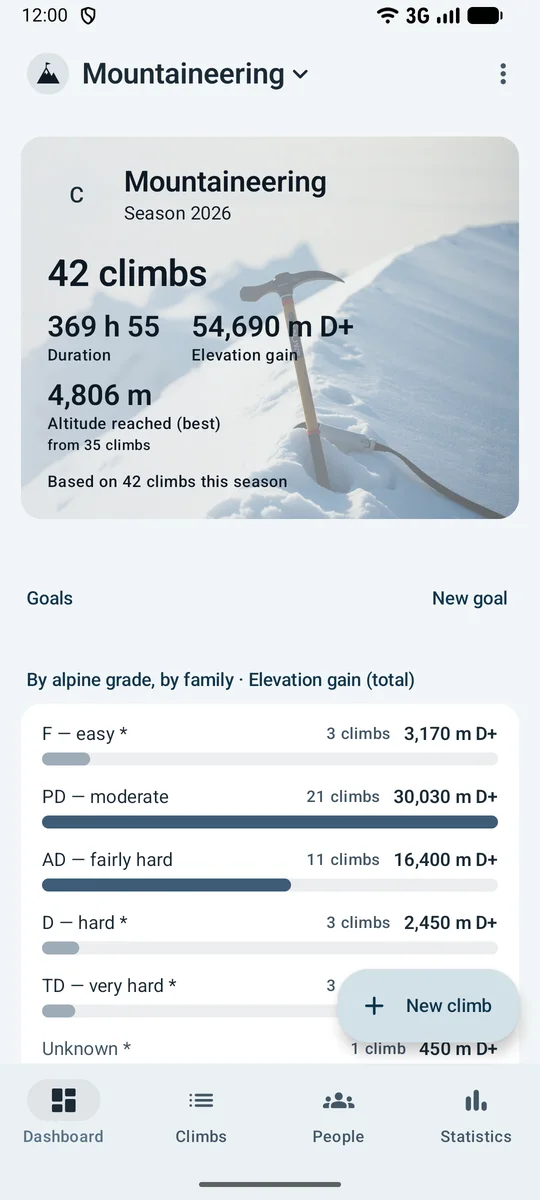
-
Turned back · ran out of time
A turn-back is not a failure
Reached or turned back: the goal of the climb is recorded as it happened, with its reason (bad weather, time, fatigue, terrain, an observed hazard, the group’s decision). The altitude reached before turning back still counts.
-
- F
- PD
- AD
- D
- TD
- ED
- ABO
From F to ABO, with + and −
The overall grade of the climb, each grade refined by + and −. The hardest one climbed through to the summit is kept as a record: a turn-back does not count.
-
- Snow
- Ice
- Mixed
- Rock
- Ridge
5 terrain types, by family
Snow, ice, mixed, rock or ridge, grouped as snow and ice, rock and mixed. Rock counts only when you reach it by a glacier: a pure rock route belongs to climbing.
-
A 4000er
Your first 4000er, announced
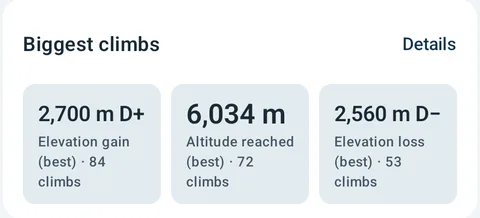
The logbook says so at the first climb you finish at a summit above 4,000 m. The highest altitude reached shows in “Biggest climbs”, with the biggest elevation gain.
-
Different summits
How many summits, year after year
The summit is entered as it is, and the logbook counts the distinct summits of each year, on the climbs done to their objective. “Barre des Écrins” and “Les Écrins” count as two: always write it the same way.
-
- Leading
- Second
- Alternating leads
Leading, second, alternating
Your place on the rope, climb after climb. “Climbs led, by category” counts those done to their objective, leading or alternating, by terrain family.
-
- WI1
- WI2
- WI3
- WI4
- WI5
- WI6
- WI7
Ice and mixed, each with its own pyramid
From WI1 to WI7 for ice and from M1 to M12 for mixed: these grades open with the terrain and stack your climbs in a pyramid.
-
- Back the same day
- Mountain hut
- Bivouac
- Base camp
From the hut to base camp
The nights on a climb are counted, with their lodging. An expedition is filed under its event, with its elevation gain, its hours and its nights.
More than 1,800 ways to read your mountaineering
17 ready-made analyses, and custom analysis: 65 indicators to cross with 28 criteria, as a breakdown or over time, with whatever filters you like.
- 17ready-made analyses
- 65indicators
- 28criteria
- 1,820possible combinations
- Your cumulative elevation gain, month by month
- The number of different summits noted, year after year
- The highest alpine grade noted each month
- The number of climbs done to their objective, and of turn-backs
- The number of turn-backs by reason
- Your highest altitude reached, year after year
- The number of snow and ice, rock and mixed climbs
- The biggest elevation gain of a climb in each massif
- The number of climbs led, second, and alternating
- The average duration of a climb by alpine grade
- Your average perceived effort by climb grade
- Your nights on climbs, season after season
- Your average time to the summit by terrain
- The number of climbs by avalanche bulletin level
- The number of climbs done in a day, in a mountain hut, in a bivouac and at base camp
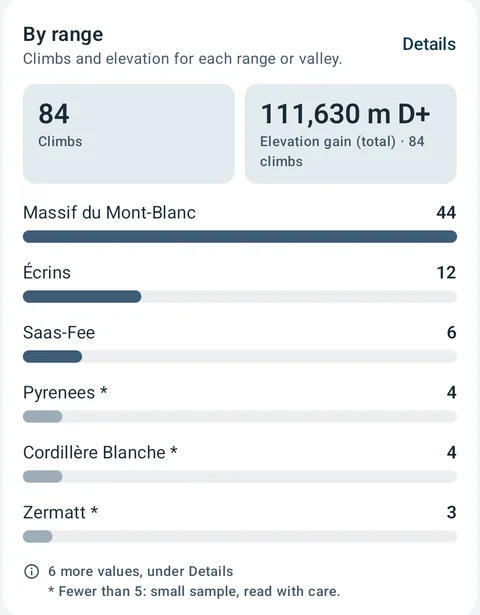
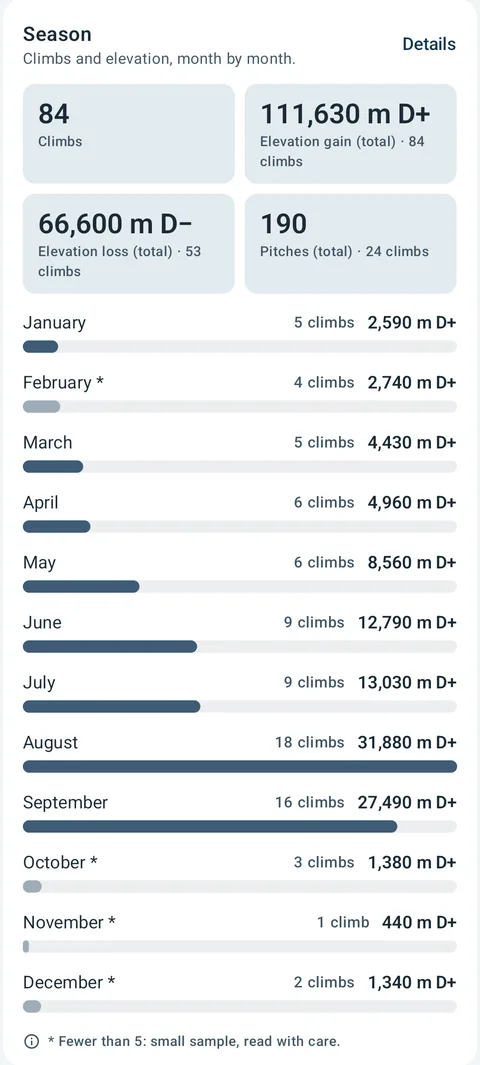
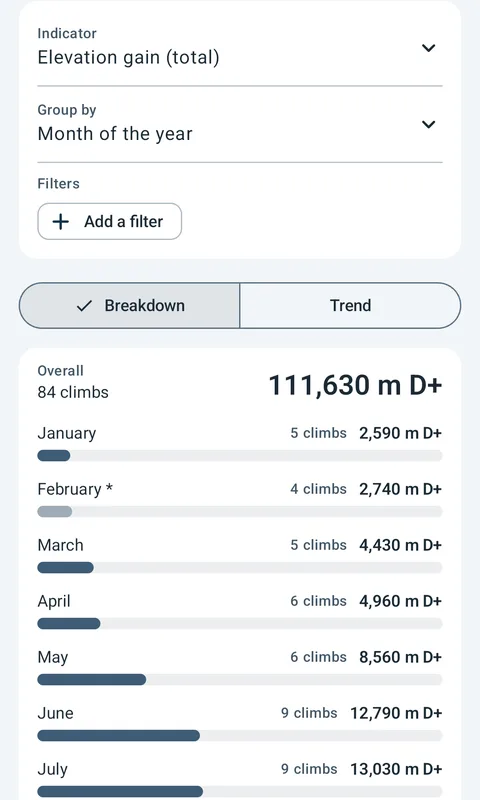
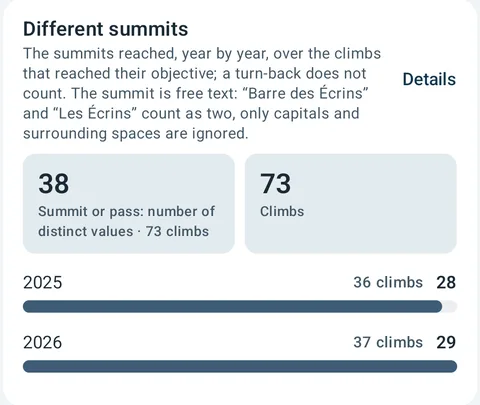
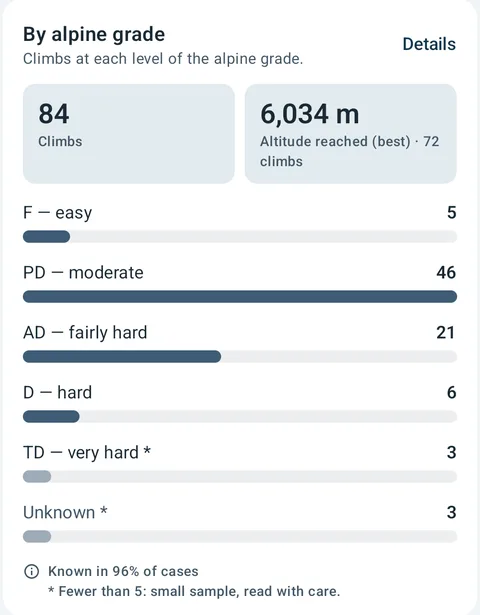
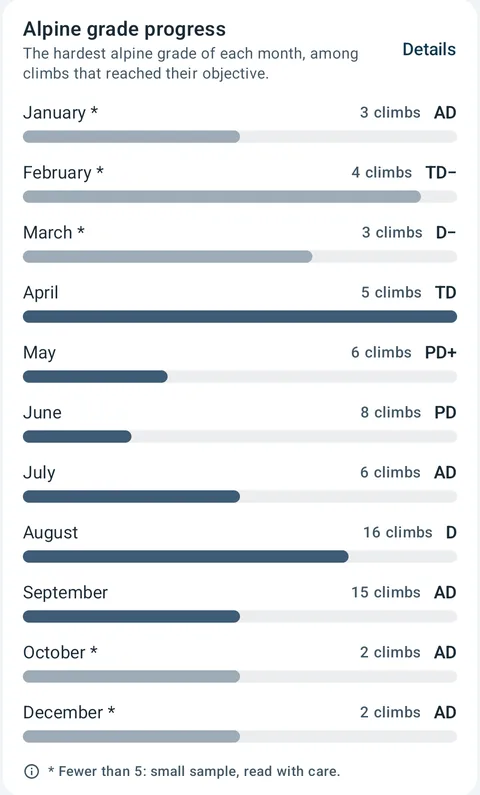
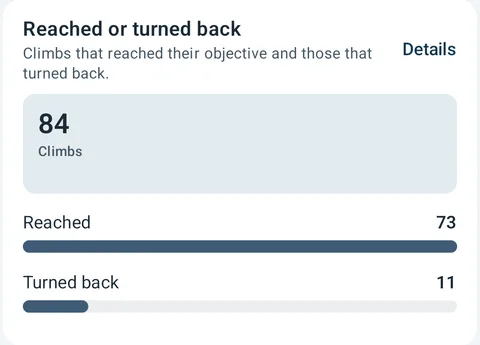
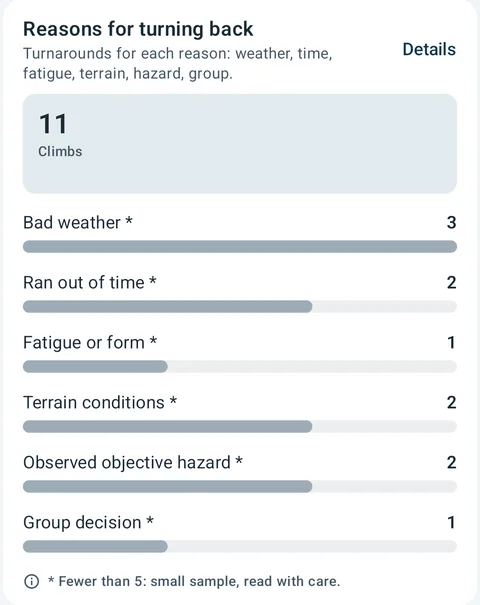
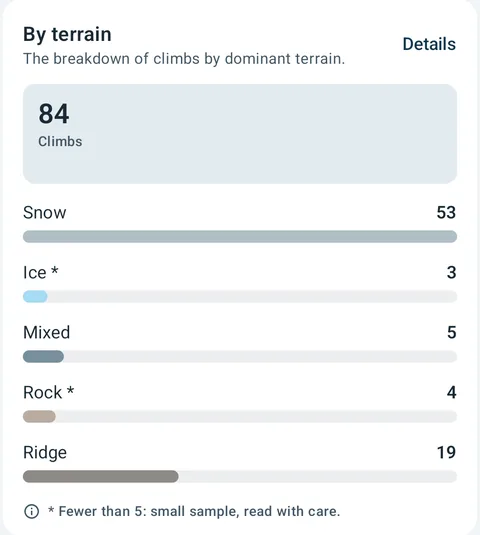
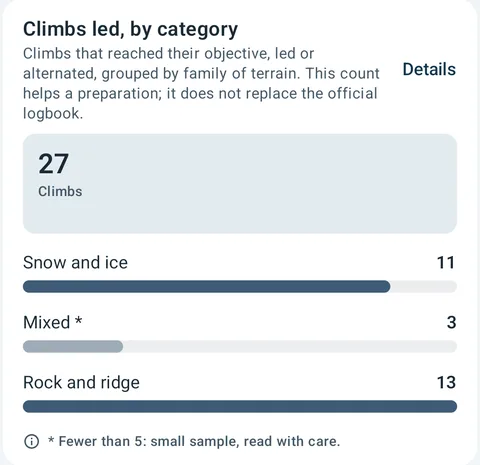
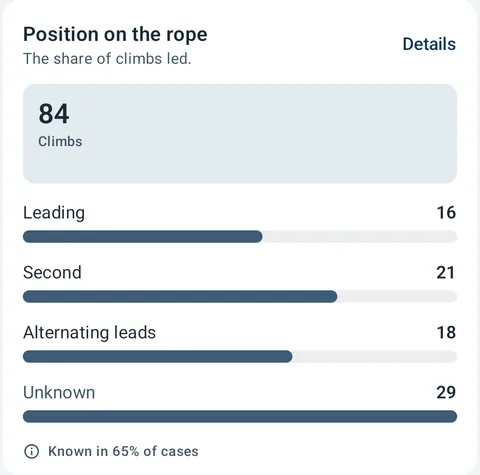
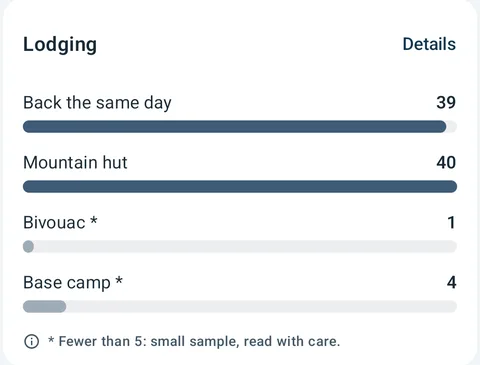
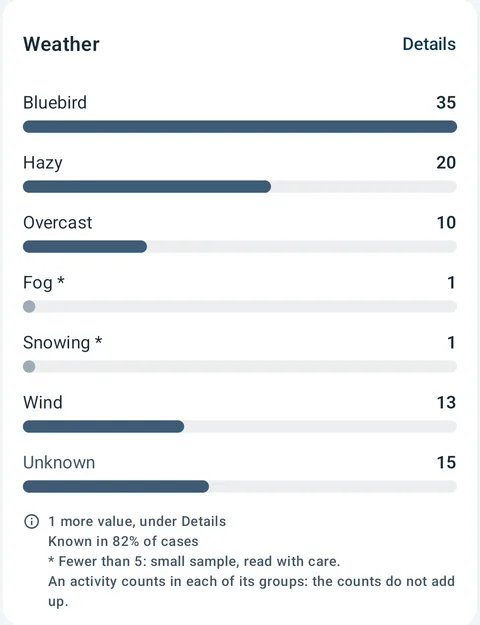
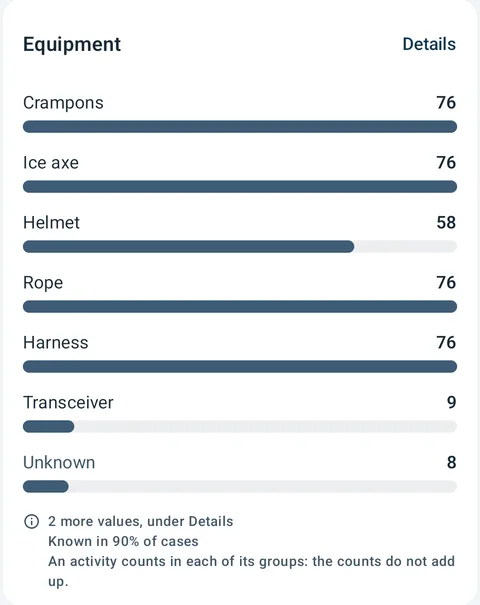
Tap a bar, a slice or a point: the climbs behind it open up. And every figure says how many climbs it is based on.
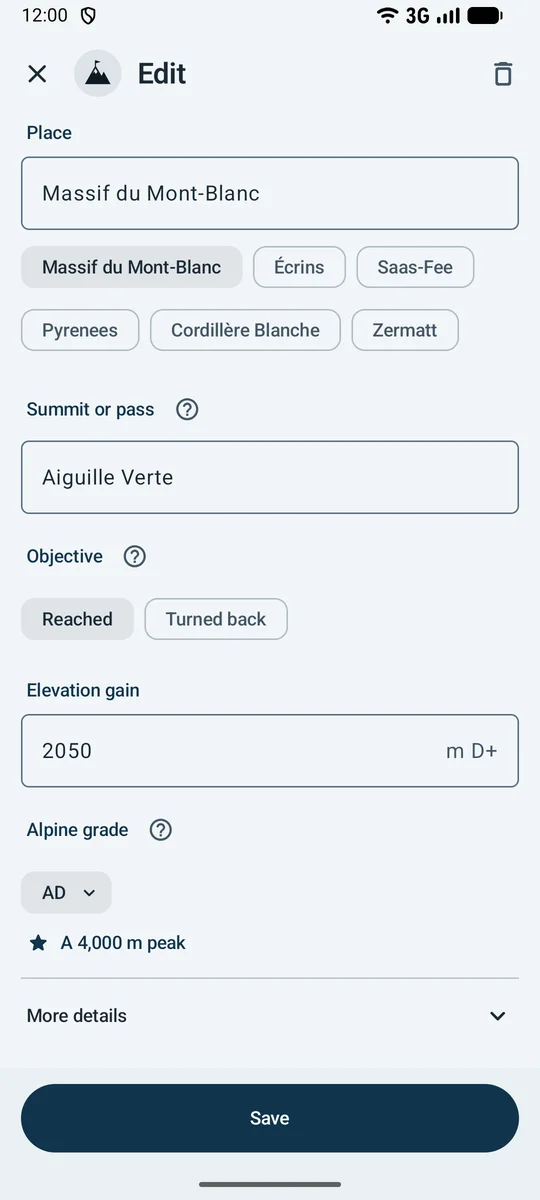
The summit, the objective, the elevation gain, the grade
The summit or the col, reached or not, the elevation gain and the alpine grade are in front of you; the rest unfolds when you want it.
Aiguille Verte · 2,050 m D+ · AD- “Reached” or “Turned back” with one tap, the reason for a turn-back coming next.
- The alpine grade from F to ABO, with the “A 4,000 m peak” mention when the summit earns it.
- Under “More details”: rock, ice and mixed grades and the commitment, depending on the terrain, the altitude reached, the time to the summit, the pitches and the roped glacier.
- Also under “More details”: your place on the rope, the gear, the guiding and the avalanche bulletin.
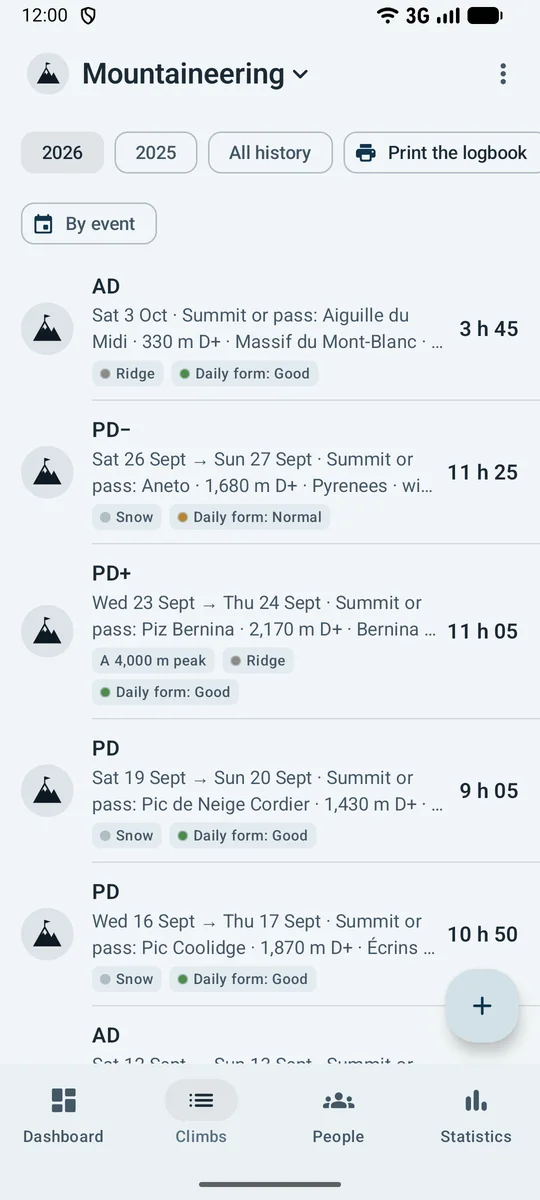
Your climbs, with their grade
Each climb gives its alpine grade, its summit, its elevation gain, its massif or valley, its duration, its terrain and the daily form, newest first.
- “A 4,000 m peak” marks a climb done to its summit above 4,000 m.
- The terrain and the daily form as tags, the massif or valley as the place.
- “By event” files an expedition under its event.
A summit, an objective, and it is noted
A climb is worth its date and its summit. The route, the grades, the nights, the weather and the perceived effort come when you feel like it, and the roped glacier is ticked with one tap.
From the hut to base camp
An expedition keeps its event: each summit keeps its altitude reached, its nights and its lodging, and the total reads in elevation gain, hours and nights.
Everything mountaineering brings to the logbook
Logging
- A date is enough, and the result when there is one: no required field
- Summit or pass, objective, elevation gain, elevation loss, terrain (5), route, alpine grade (21), rock grade (35), ice grade (7), mixed grade (12), protection (5), pitches…
- “Next day’s climb” starts the next one with the same settings
Events
- Expedition
Records and markers
- Records announced the moment they fall: elevation gain, alpine grade and altitude reached
- Milestones celebrated: a 4,000 m peak
Watch and files
- Sessions from your watch, filed from Health Connect
Statistics
- Record, form, streaks, season-by-season trends; custom analysis on any field
- Season
- By terrain
- Climbs led, by category
- By range
- Different summits
- Reached or turned back
- Reasons for turning back
- By alpine grade
- Alpine grade progress
- Ice grade pyramid
- Mixed grade pyramid
- Position on the rope
- By avalanche danger
- Biggest climbs
- Every figure says how many climbs it is based on
And across the whole logbook: goals and a companion, private groups of friends, body, finances, a one-file archive, CSV spreadsheet, a printed logbook as PDF. No account, no ads, no audience tracking.
Mountaineering, and everything you do alongside
Do you climb in the gym, hike, or go ski touring in winter? Each discipline has its own space in the same logbook, with its own words.
Free, with Premium
Logging and data are free, without limit. Free statistics cover your last 20 climbs; Premium opens your whole history.
Get it on Google Play Coming soon to the App Store