
 Scuba diving, by Orma Logbook
Your diving.
Every dive with its site, its maximum depth and its dive time, the gas you breathed with its percentage, the air used, your stops as the computer gave them, and your buddy team. In a logbook that holds your other sports too.
Get it on Google Play Coming soon to the App Store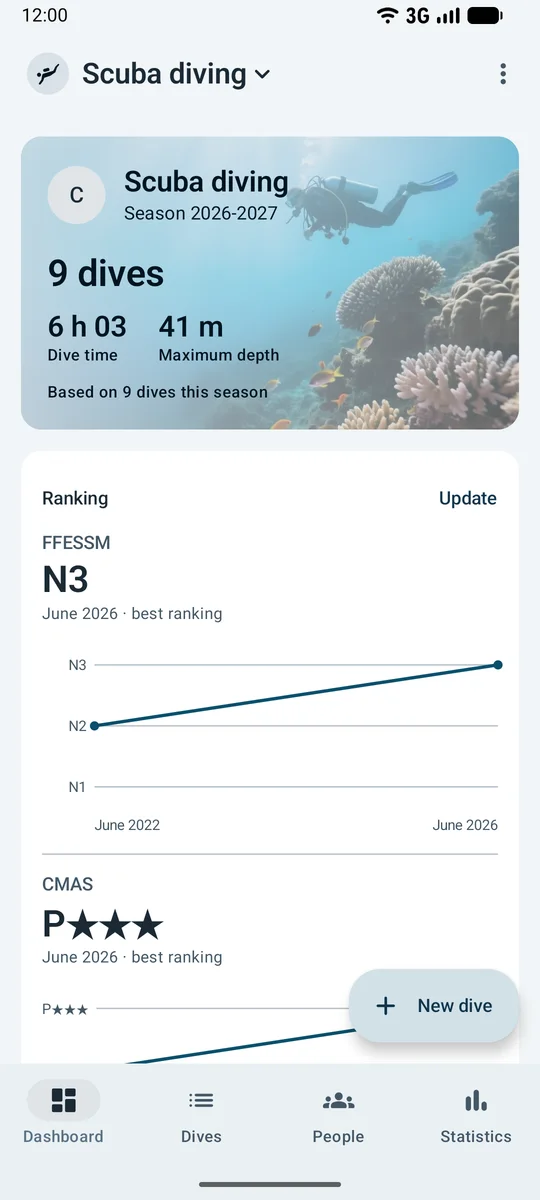
-
28 m · 42 min
The numbers you call out when you surface
The site, the maximum depth and the dive time are enough to log the dive, from the boat. The gas, the pressures, the water and the visibility come later, back on shore.
-
- Air
- Nitrox
- Trimix
- Oxygen (decompression)
4 gases, with their percentage
Nitrox is entered by its oxygen percentage, trimix by its oxygen then its helium. The average depth of each gas reads in the statistics.
-
138 bar
The air used works itself out
Note the pressure at the start and at the end: the air used follows, dive after dive. It then reads by environment, gas or site.
-
- Sea
- Lake
- Quarry
- River
- Cave
- Wreck
- Pool
7 environments, from the sea to the pool
The environment is taken from the site: dive at the same place again and it is already noted. The greatest depth, the longest dive and the best visibility read environment by environment.
-
- Exploration
- Training
- Night
- Drift
- Technical
5 types, which add up
A night drift dive ticks two boxes. Each type has its number of dives and its maximum depth.
-
- Student diver
- Supervised diver
- Autonomous diver
- Dive guide
- Instructor
5 roles, the one you had that day
It is not your level, it is the role you held that day. Dive guide or instructor, you also log how many divers you supervise.
-
3 min at 3 m
The stops, as the computer gave them
Depth and duration of each stop are logged one by one, when there are any. The logbook never calculates them, nor a residual nitrogen or a surface interval.
-
- N1
- N2
- N3
- N4
Your FFESSM level
Each certification is dated, and the time spent at each level reads in the statistics. Alongside it, 5 other systems: CMAS stars, PADI, SSI and BSAC grades, and the FFESSM teaching certificates.
More than 1,400 ways to read your dives
11 ready-made analyses, and custom analysis: 76 indicators to cross with 19 criteria, as a breakdown or over time, with whatever filters you like.
- 11ready-made analyses
- 76indicators
- 19criteria
- 1,444possible combinations
- Your maximum depth, month by month
- Your cumulative dive time, month by month
- The number of dives at sea, in lakes, in quarries, on wrecks and in pools
- Your deepest dive in each environment
- Your average maximum depth on air and on nitrox
- The average air used, by environment
- The average air used per dive, season after season
- The best visibility recorded at each site
- The average bottom water temperature, month by month
- Your average weight, month by month
- The number of exploration, training, night and drift dives
- The number of dives as a student, a supervised diver, an autonomous diver, or a guide or instructor
- The number of divers you have supervised, season after season
- The number of different sites dived, year after year
- The number of dives at each FFESSM level
- Your greatest depth on each trip
- Your longest dive in each environment
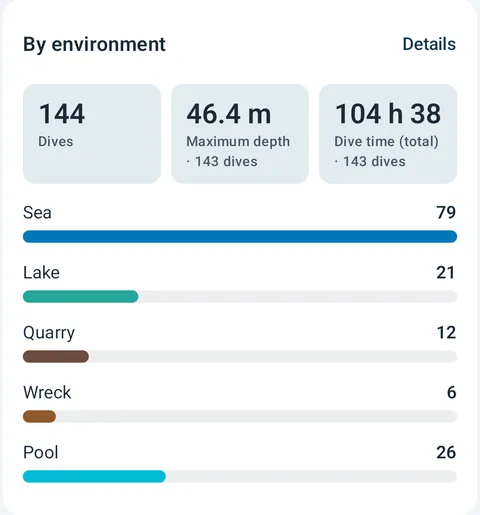
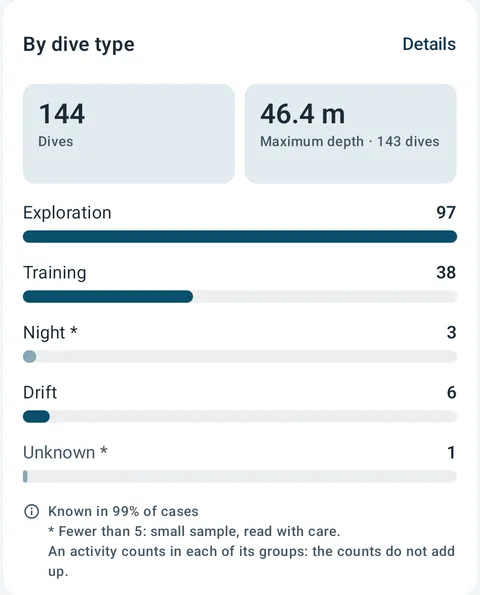
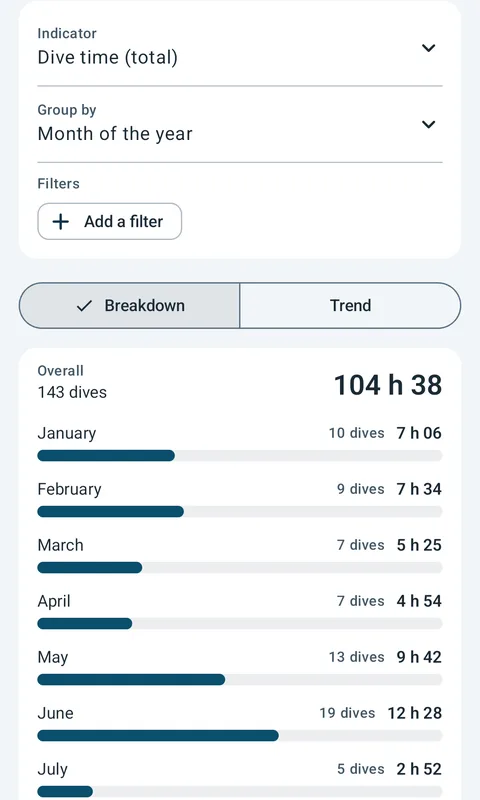
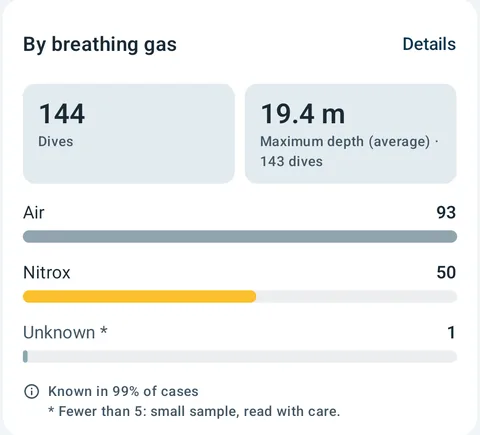
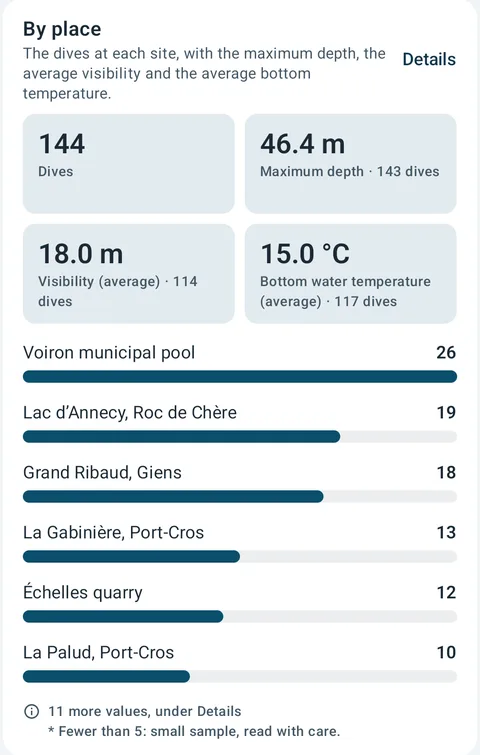
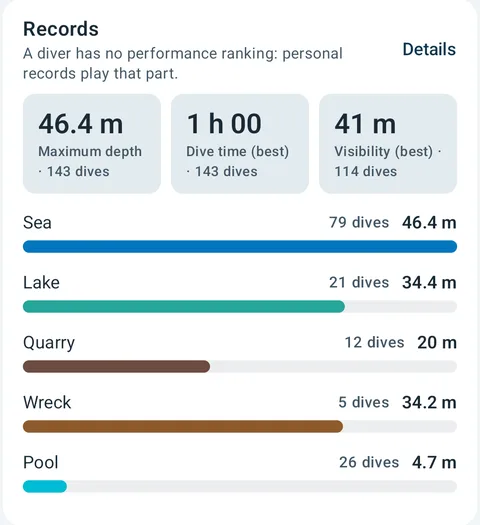
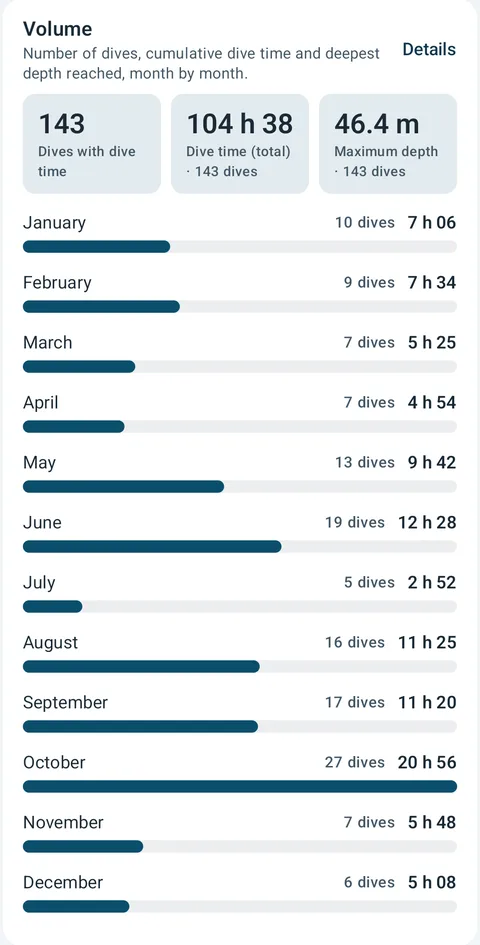
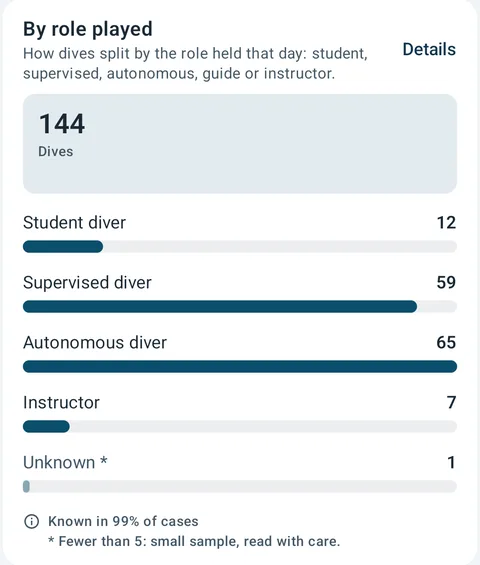
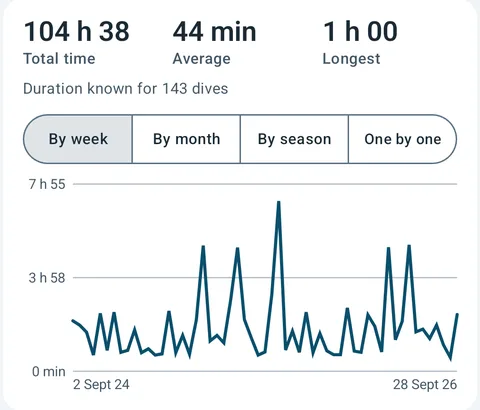
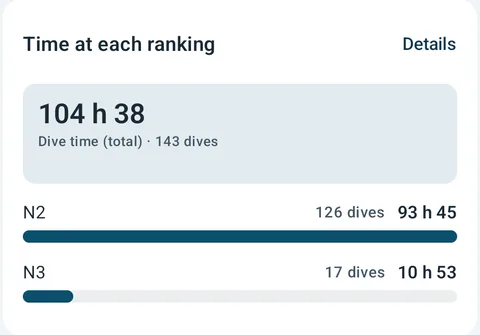
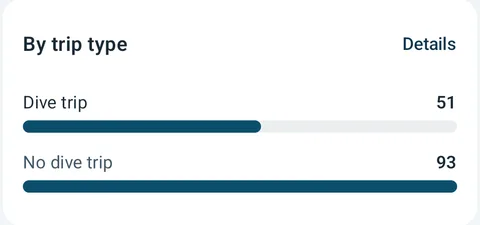
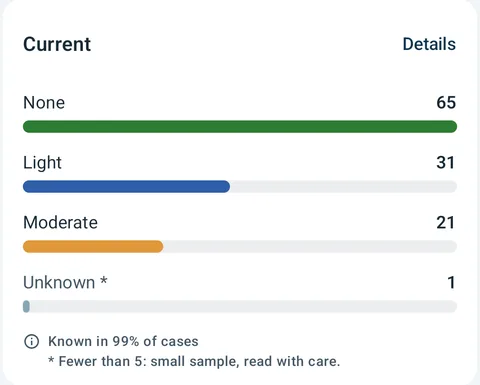
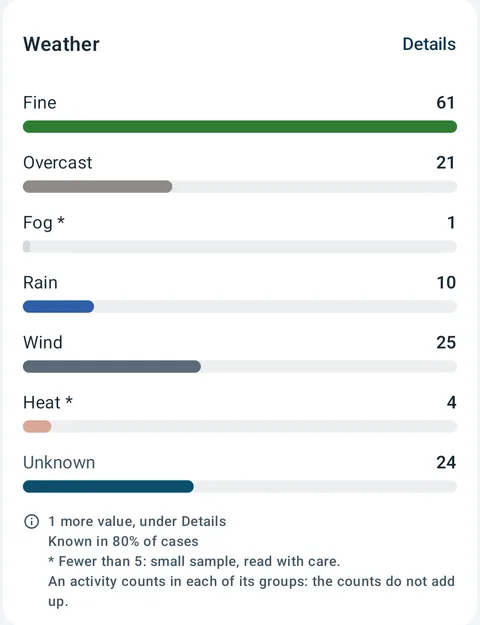
Tap a bar, a slice or a point: the dives behind it open up. And every figure says how many dives it is based on.
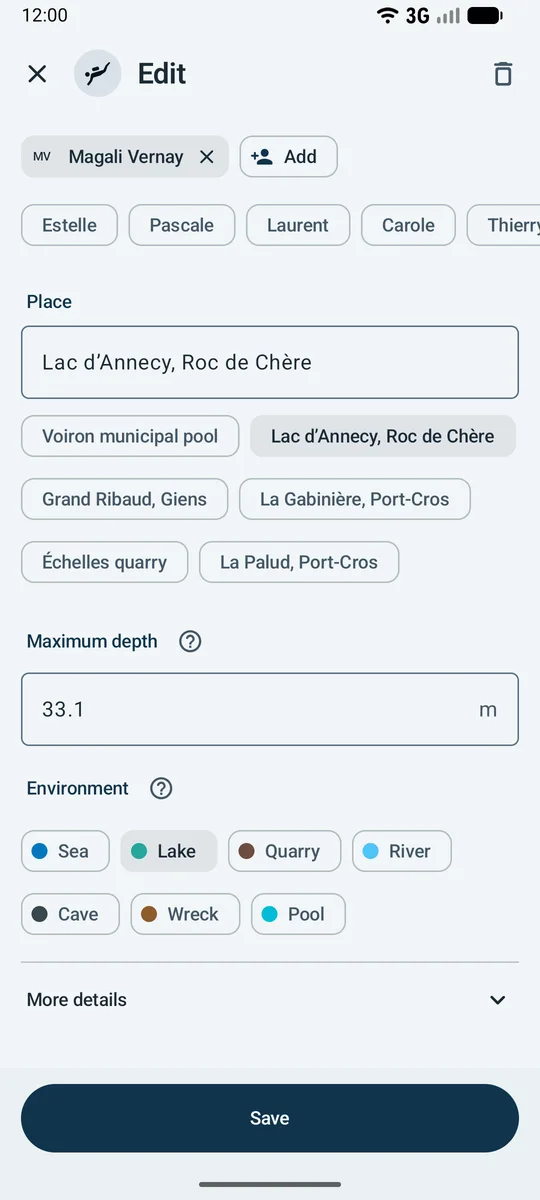
The site, the depth, the dive time
The site comes first, then the maximum depth, and the environment follows from it: the dive is logged. The duration is set at the top of the screen, and the rest unfolds when you want it.
Lac d’Annecy · 33.1 m · Lake- The environment is taken from the site; the gas is air by default, nitrox opens its percentage, trimix both of them.
- The cylinder, the wetsuit and the weight, then the pressure at the start and at the end: the air used is worked out.
- Water at the surface and at the bottom, visibility, current and weather; current and weather disappear in a pool.
- The role of the day, the stops one by one and the buddy team.
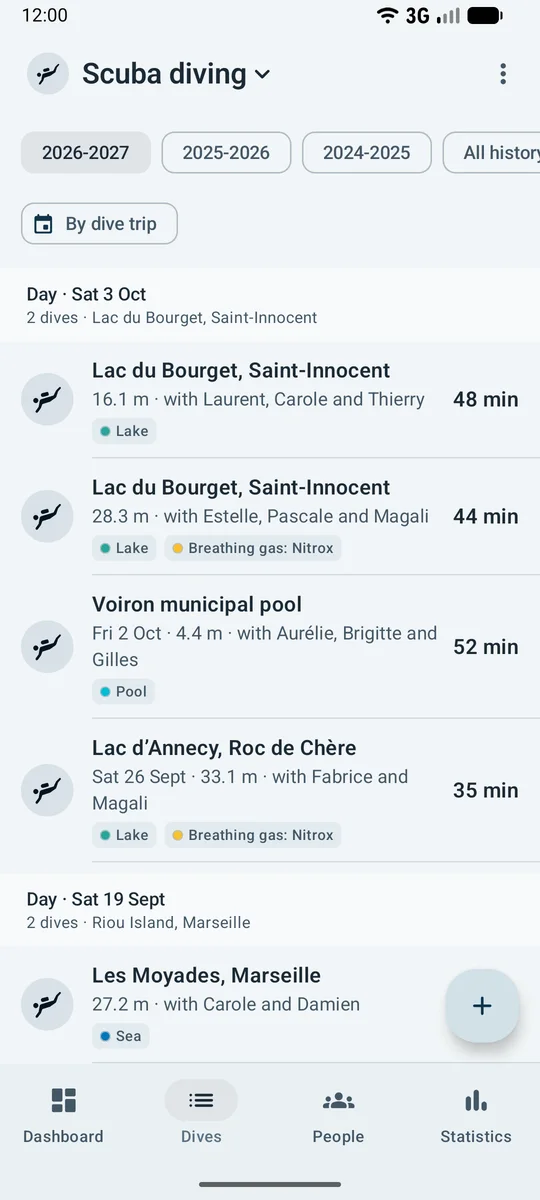
Your dives, day by day
Each dive gives its environment, maximum depth, site, buddy team and dive time, from the most recent to the oldest, grouped by day.
- “Next dive” carries on with the next one, with the same site and buddy team.
- “By dive trip” sorts the dives under the name of the trip, with its summary.
- A shortened dive is marked “Early ascent”, a cancelled outing “Cancelled before entry”.
- The number of each dive appears on its record; it also counts the dives logged before the logbook.
A site, a depth, and it is logged
A dive counts with its date, its site, its maximum depth and its dive time. The gas, the pressures, the temperatures, the role and the stops come when you feel like it.
From the weekend to the holiday week
A trip keeps its dives: their number, the maximum depth and the cumulative time read at a glance, under the name of the trip.
Everything scuba diving brings to the logbook
Logging
- A date is enough, and the result when there is one: no required field
- Outcomes: early ascent and cancelled before entry
- Maximum depth, environment (7), dive type (5), breathing gas (4), oxygen percentage, trimix — oxygen percentage, trimix — helium percentage, cylinder, wetsuit, weight, starting pressure, ending pressure…
- “Next dive” starts the next one with the same settings
Events
- Dive trip
Rankings
- 6 systems: FFESSM, CMAS, PADI, SSI and BSAC
- FFESSM: N1 to N4, 4 steps
- Dated rankings, best ranking and its date, a curve
Statistics
- Record, form, streaks, season-by-season trends; custom analysis on any field
- By environment
- By dive type
- Volume
- Records
- By breathing gas
- By role played
- By place
- Every figure says how many dives it is based on
Watch and files
- Sessions from your watch, filed from Health Connect
And across the whole logbook: goals and a companion, private groups of friends, body, finances, a one-file archive, CSV spreadsheet, a printed logbook as PDF. No account, no ads, no audience tracking.
Diving, and everything else you do
Do you swim in a pool, free dive, or hike along the coast? Each discipline has its own space in the same logbook, with its own words.
Free, with Premium
Logging and data are free, without limit. Free statistics cover your last 20 dives; Premium opens your whole history.
Get it on Google Play Coming soon to the App Store