
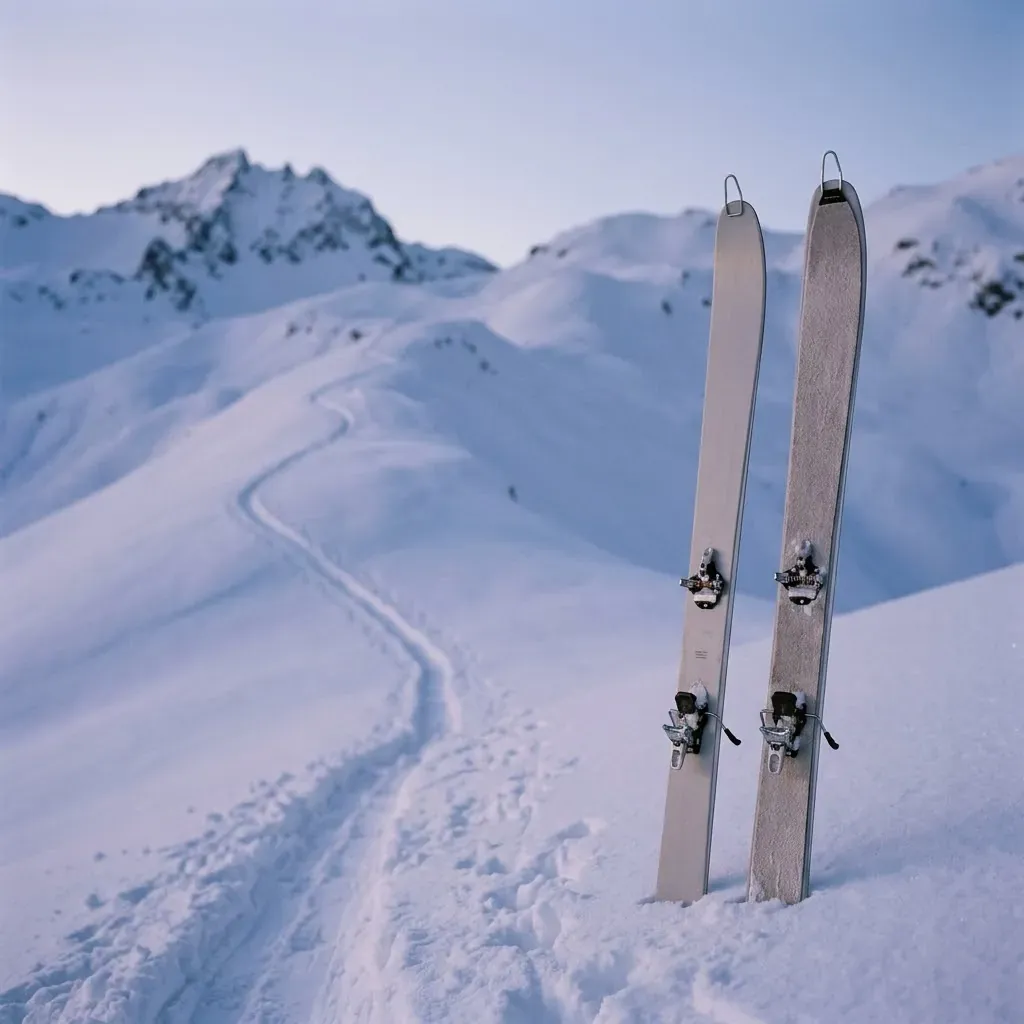
 Ski touring, by Orma Logbook
Your ski touring.
Every tour with its summit, its elevation gain up and down, its Toponeige grade and its exposure, the snow on the way up and on the way down, the avalanche bulletin, your turn-backs with their reason and your multi-day raids, stage by stage. In a logbook that holds your other sports too.
Get it on Google Play Coming soon to the App Store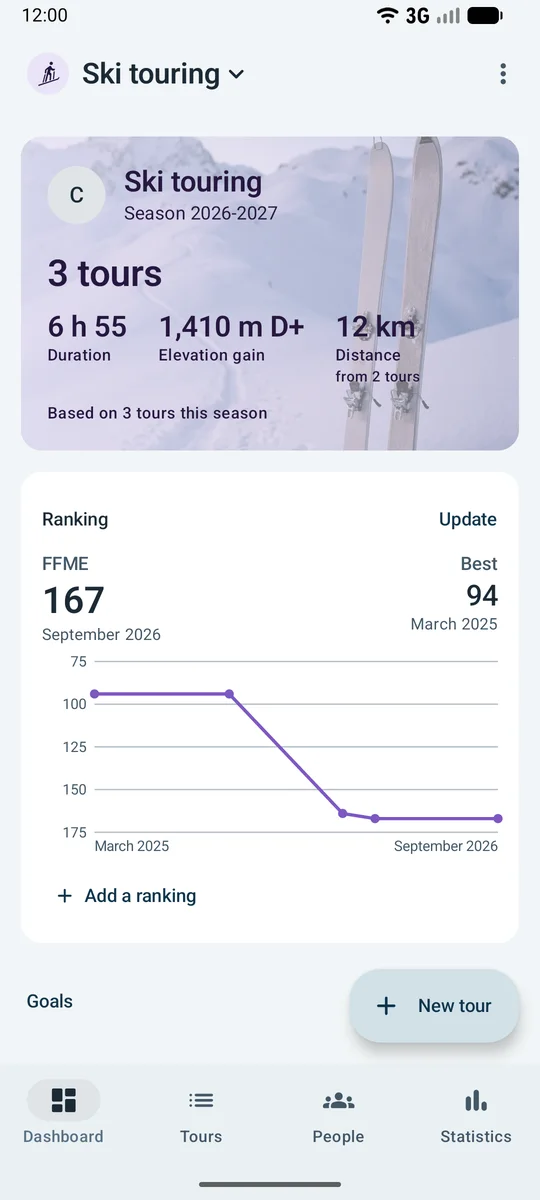
-
Pointe de Ronce · 1,830 m D+
The summit and the elevation gain, and it is noted
The summit, reached or turned back, the D+ and the D−, the transceiver, the shovel and the probe are in front of you; the rest folds away. The climbing speed works out on its own from the D+ and the climbing time.
-
- 1.1
- 1.2
- …
- 3.1
- 3.2
- 4.1
- 5.1
Toponeige, from 1.1 to 5.6
The difficulty of the descent, and the exposure from E1 to E4 apart: the severity of a fall, not its likelihood. The grade and the exposure are picked up in one tap when you choose a summit already noted.
-
- Powder
- Groomed
- Tracked out
- Spring snow
- Crust
- Hard or icy
- Slush
- Man-made snow
8 snows, on the way up and on the way down
The snow on the way up and the snow on the way down are recorded apart, several at once. “Snow on the way down” counts the tours by what you found.
-
- 1 — low
- 2 — moderate
- 3 — considerable
- 4 — high
- 5 — very high
The bulletin, tour by tour
The BERA level read before setting out is recorded and counted. It does not say whether the tour was safe: the logbook files it, and never advises.
-
- Bad weather
- Ran out of time
- Fatigue or form
- Terrain conditions
- Observed objective hazard
- Group decision
A turn-back, with its reason
The turn-back is recorded at the objective, straight away, with one of its 6 reasons. “Turn-back reasons” counts them; a timed race retirement keeps its own word.
-
- Tours
- Climbs
- Next day’s tour
Several ascents, a single D+
A tour with several ascents records them one by one: its D+ is their sum. “Next-day tour” chains the following day in one tap.
-
- Touring skis
- Race skis
- Splitboard
Your skis, your skins, pair by pair
Touring skis, race skis or splitboard, and your own pairs added as you go: “By skis” and “By skins” show what each pair has done.
-
- Individual
- Vertical
- Sprint
- Teams
- Mixed relay
5 race formats
Ski mountaineering races are events in the same logbook: the format, the time, the finishers, the category place and the bib. A Cup sits under its event, and so does a raid, stage by stage.
More than 2,800 ways to read your ski touring
19 ready-made analyses, and custom analysis: 71 indicators to cross with 40 criteria, as a breakdown or over time, with whatever filters you like.
- 19ready-made analyses
- 71indicators
- 40criteria
- 2,840possible combinations
- Your cumulative elevation gain, month by month
- Your average climbing speed, month by month
- The number of turn-backs by reason
- The number of tours done to their objective, and of turn-backs
- The highest high point of each month
- The biggest elevation gain of a tour at each summit
- The number of tours by snow found on the way down
- The number of tours by summit aspect
- The number of tours by avalanche bulletin level
- The number of tours by Toponeige grade, by family
- The number of tours by elevation gain band
- The average length of a tour by elevation gain band
- Your average climbing speed by snow on the way up
- The cumulative elevation gain of each pair of skis
- Your average heart rate by tour grade
- Your nights in huts and bivouacs, season after season
- The number of timed races by format
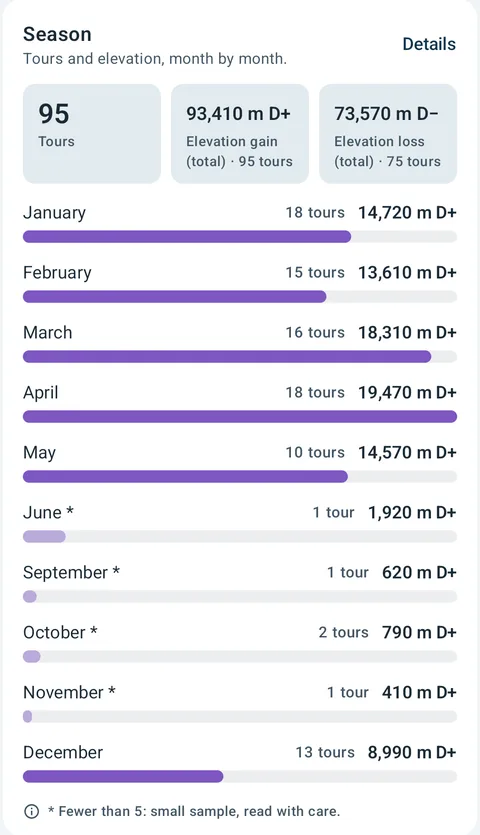
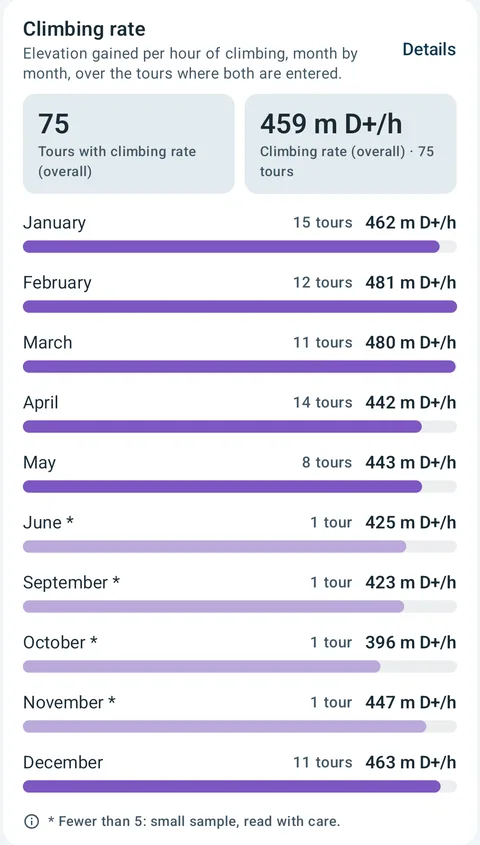
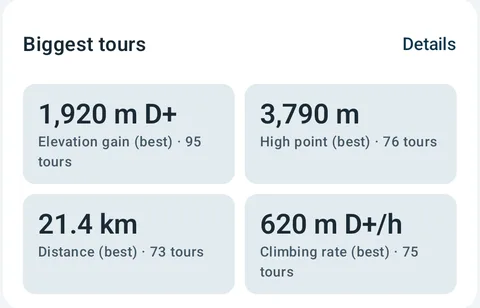
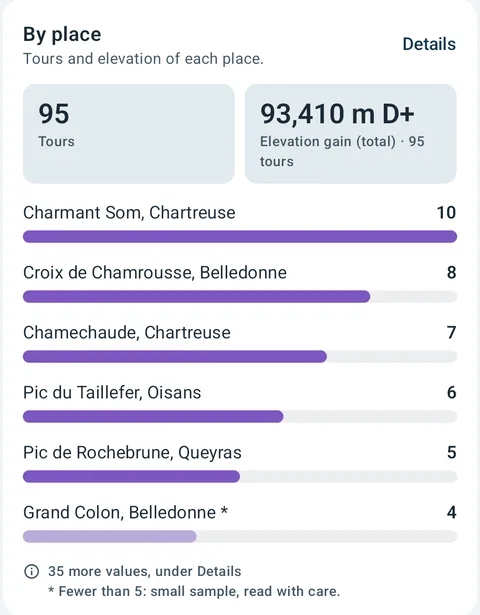
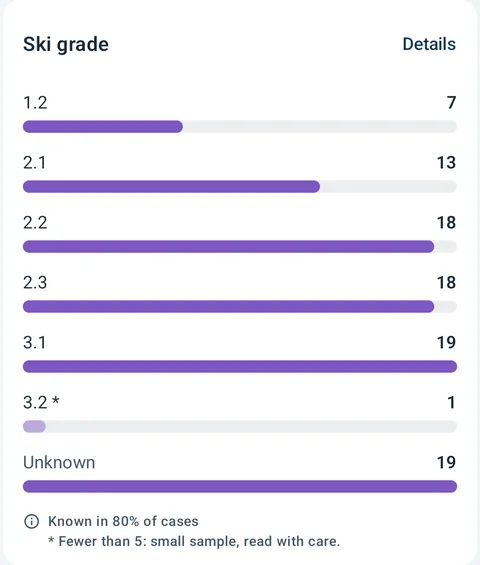
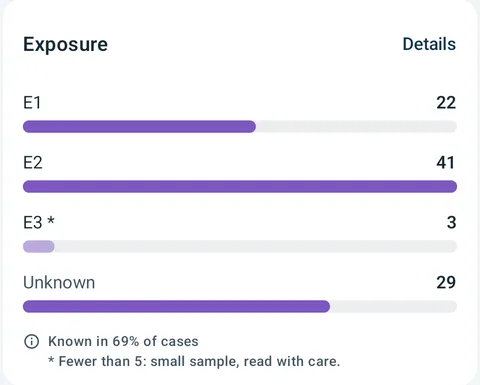
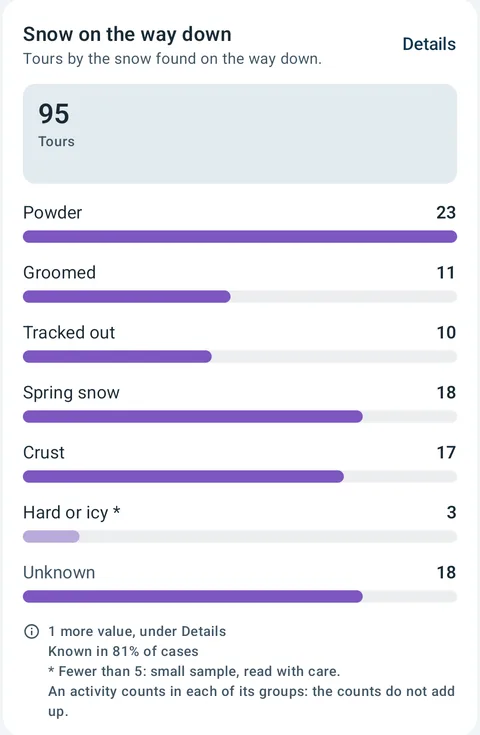
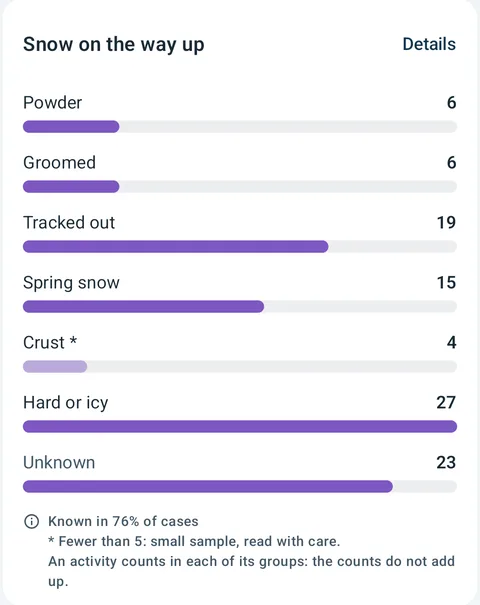
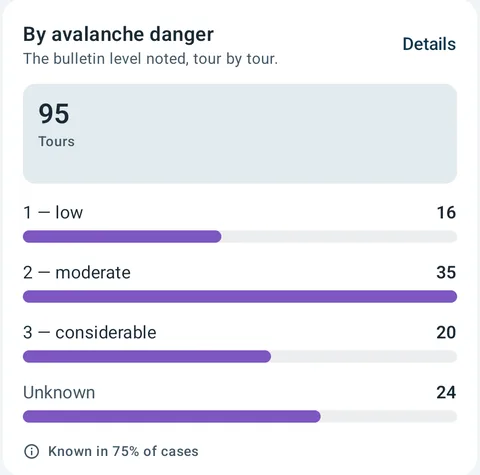
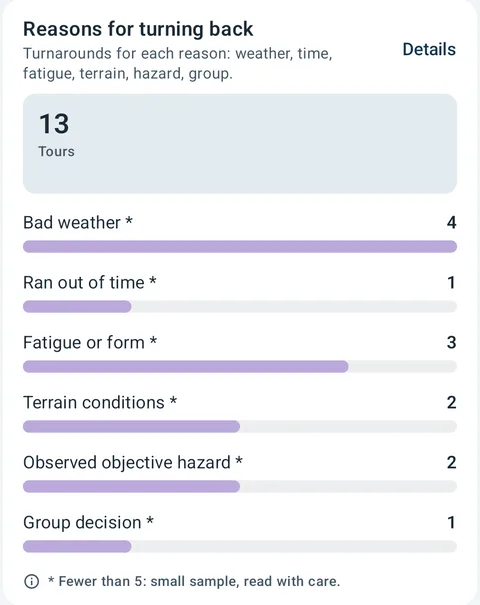
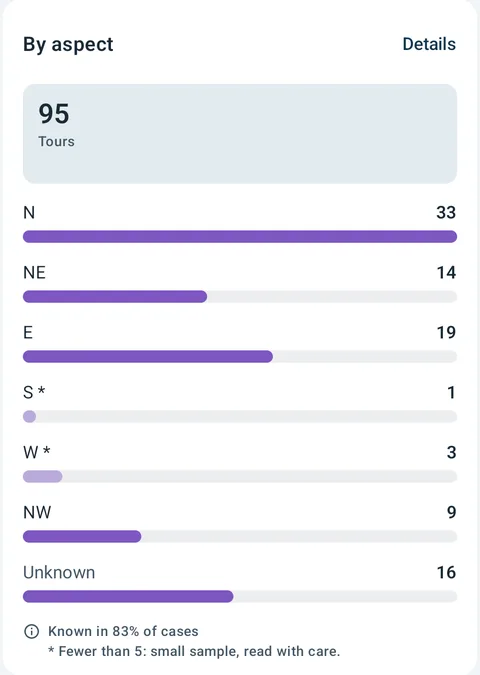
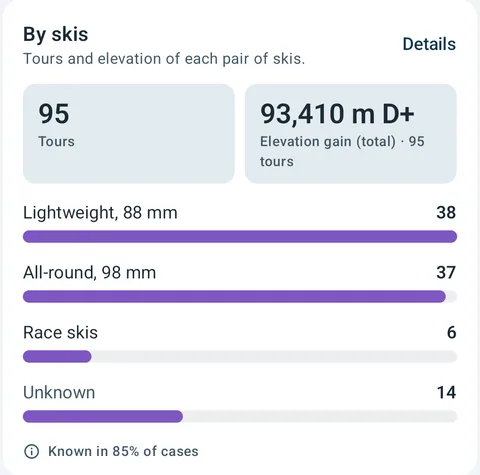
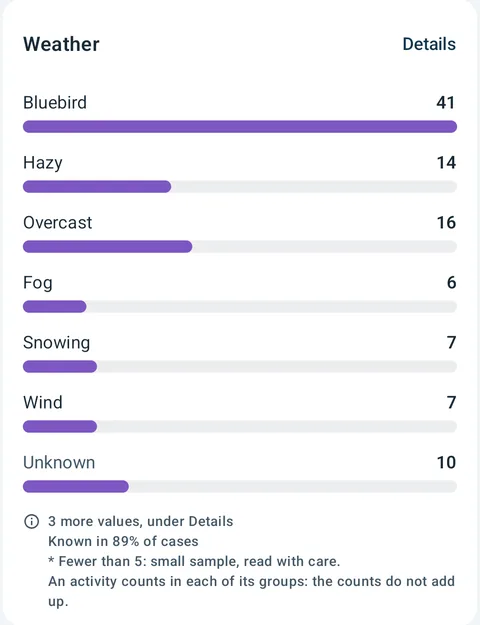
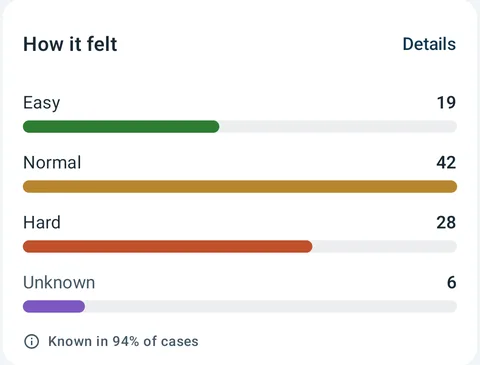
Tap a bar, a slice or a point: the tours behind it open up. And every figure says how many tours it is based on.
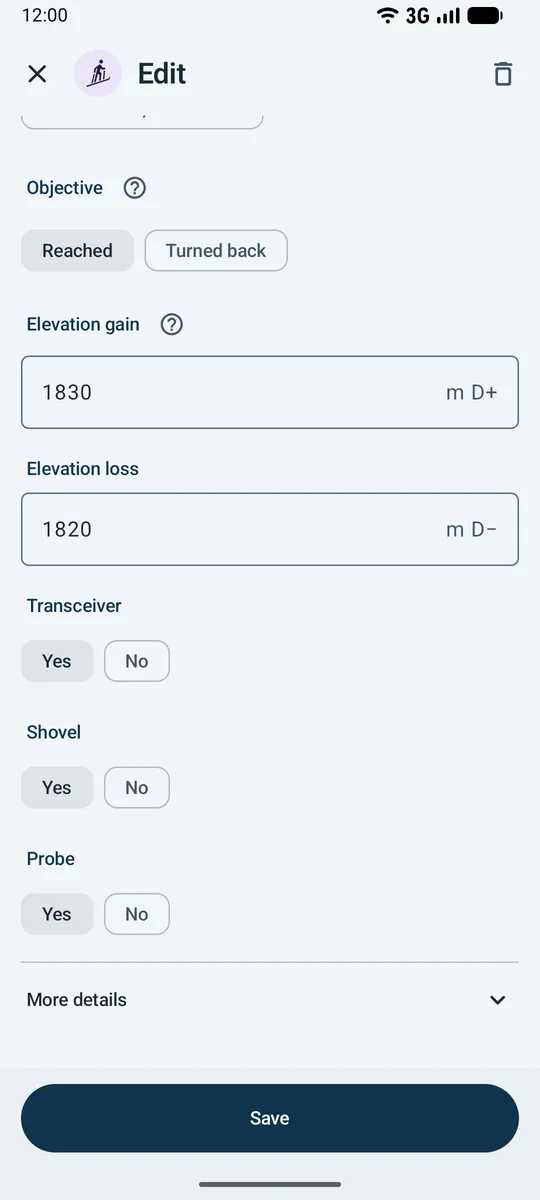
The summit, the objective, the elevation gain, the gear
The summit or the route, reached or not, the D+ and the D−, the transceiver, the shovel and the probe are in front of you; the rest unfolds when you want it.
Pointe de Ronce, Haute-Maurienne · 1,830 m D+- “Reached” by default; “Turned back” opens its reason.
- The ski grade, the exposure and the aspect, carried over from a summit already noted.
- The snow on the way up and on the way down, the avalanche bulletin, the weather and the temperature.
- The climbing time, which gives the speed, then the skis, the skins, the crampons and the ice axe.
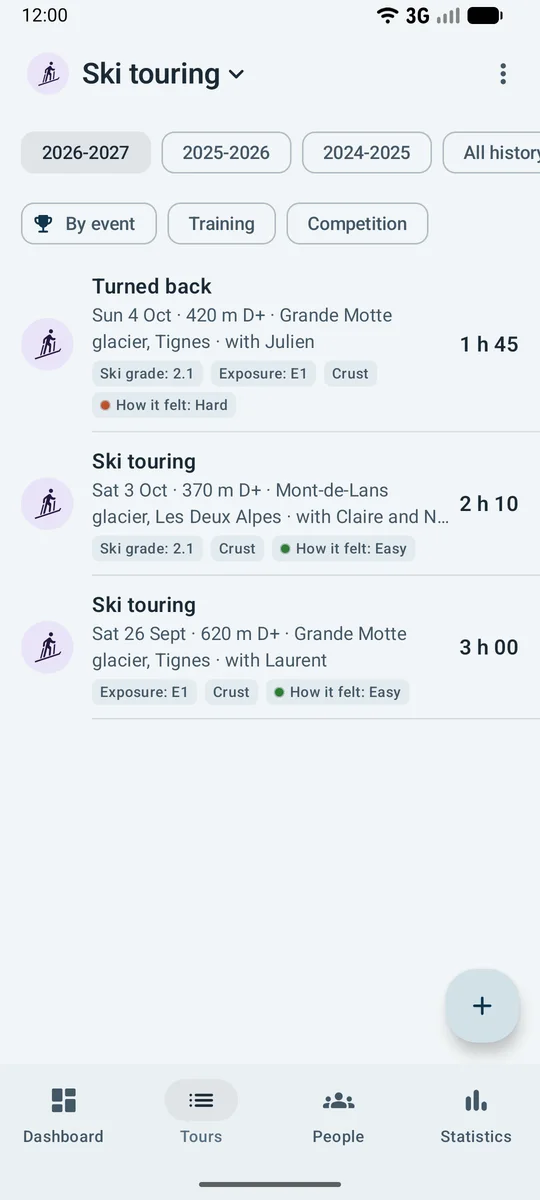
Your tours, with their D+ and snow
Each tour gives its summit, its objective reached or turned back, its elevation gain, its grade, its exposure, the snow on the way down and how it felt, newest first.
- A turn-back reads “Turned back”: a word of decision.
- A Cup or a raid sits under its event, one tour per stage.
- “Next-day tour” chains the following day.
- The climbing speed, calculated, reads on the tour’s page, not in the list.
A summit, a D+, and it is noted
A tour is worth its date and its summit. The grades, the snow, the avalanche bulletin, the gear and the feeling come when you feel like it, and a GPX or TCX file fills in the distance, the elevation gains, the high point and the heart rate.
From the traverse to the Cup
A raid keeps its event: each stage is a tour, with its hut or bivouac and its nights. A timed race is noted with its format, its time and its place; your ISMF ranking, your FFME ranking or another country’s, is recorded as history.
Everything ski touring brings to the logbook
Logging
- A date is enough, and the result when there is one: no required field
- Outcomes: retired, disqualified and did not start
- Training and competition
- Summit or route, objective, reason for turning back (6), elevation gain, elevation loss, high point, starting altitude, distance, climbing time, climbing rate, ski grade (18), exposure (4)…
- “Next day’s tour” starts the next one with the same settings
Events
- Cup, individual championship, classic race and ski traverse
- Rounds: qualifying, semi-final and final
Rankings
- 10 systems: FFME, Rangliste, FISI, PZA, USA Skimo, Skimo Canada, SAC, FEDME, SSA and ISMF
- Dated rankings, best ranking and its date, a curve
Records and markers
- Records announced the moment they fall: elevation gain and high point
Watch and files
- Sessions from your watch, filed from Health Connect
Statistics
- Record, form, streaks, season-by-season trends; custom analysis on any field
- Season
- Climbing rate
- By ski grade
- Snow on the way down
- By aspect
- By avalanche danger
- Reached or turned back
- Reasons for turning back
- Biggest tours
- By place
- By skis
- By skins
- Calculated: Average speed
- Every figure says how many tours it is based on
And across the whole logbook: goals and a companion, private groups of friends, body, finances, a one-file archive, CSV spreadsheet, a printed logbook as PDF. No account, no ads, no audience tracking.
Ski touring, and everything you do alongside
Do you hike in summer, climb mountains, or ski on the pistes or cross-country too? Each discipline has its own space in the same logbook, with its own words.
Free, with Premium
Logging and data are free, without limit. Free statistics cover your last 20 tours; Premium opens your whole history.
Get it on Google Play Coming soon to the App Store