
 Aikido, by Orma Logbook
Your aikido.
Your sessions empty-hand and with weapons, the technique and the attack worked on, your training camps with their instructor, your hours grade by grade and your gradings passed or not passed. In a logbook that holds your other sports too.
Get it on Google Play Coming soon to the App Store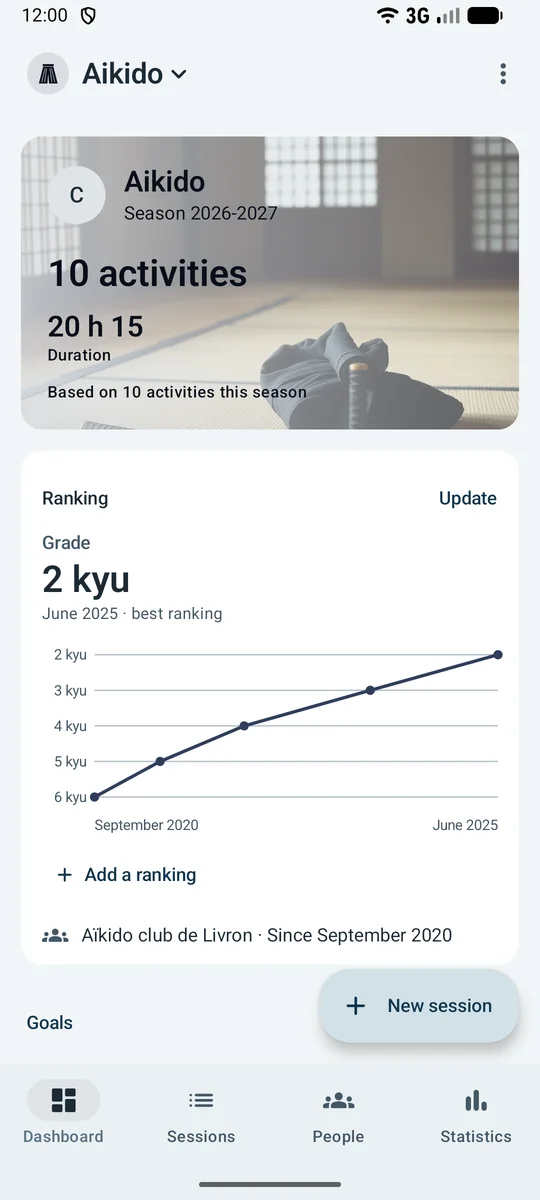
-
Empty-hand · Weapons
The class, empty-hand or with weapons
You first choose the form: taijutsu or buki-waza. With weapons, the bokken, the jo or the tanto are added, with the kind of work: suburi, awase, kumitachi, kumijō.
-
- Immobilizations (ikkyo to gokyo) · 5
- Throws · 8
13 techniques, by family
The pins from ikkyo to gokyo on one side, the throws on the other: irimi-nage, shiho-nage, kote-gaeshi, kaiten-nage… You tick several per session, and the list stays open for a syllabus your club names differently.
-
- Wrist grab (katate-dori)
- Same-side wrist grab (ai-hanmi katate-dori)
- Opposite-side wrist grab (gyaku-hanmi katate-dori)
- Both-wrists grab (ryote-dori)
- Both-shoulders grab (ryokata-dori)
- Both-wrists grab from behind (ushiro ryote-dori)
- Both-shoulders grab from behind (ushiro ryokata-dori)
- Overhead strike (shomen-uchi)
- Side-of-head strike (yokomen-uchi)
- Punch or knife thrust (tsuki)
10 attacks: grabs and strikes
Katate-dori, ryote-dori, shomen-uchi, yokomen-uchi, tsuki: the attack that sets off the technique is ticked with it. A grab on the same side and one on the opposite side are told apart.
-
- 6 kyu
- 5 kyu
- 4 kyu
- 3 kyu
- 2 kyu
- 1 kyu
- 1 dan
Your grade, from 6th kyu to 8th dan
14 steps, each with its date, from kyu to dan. Alongside, the Aikikai grade of the Hombu Dojo in Tokyo.
-
Passed · Not passed
The grading, and its result
The grade presented and the result are logged with the grading session; a passed grading offers to add the grade obtained to your history. A failed grading leaves its trace, with what the panel noted.
-
Hours by grade
Your hours, grade by grade
Each grade has its sessions and its hours: those of the current grade count from the day it was earned. Only sessions with a logged duration count toward the hours, and the logbook says so.
-
- Participant
- Assistant teaching
- Class instructor
- Exam uke
The role you played that day
Participant, assistant teaching, exam uke, or class instructor: the hours taught are read apart from the hours practised.
-
Training camp · Embukai
Training camps and their instructor
A training camp, an embukai or a grading is an event, with its sessions inside it. The instructor is chosen from your people: you find each instructor again, and the hours done with them.
More than 500 ways to read your aikido
12 ready-made analyses, and custom analysis: 23 indicators to cross with 26 criteria, as a breakdown or over time, with whatever filters you like.
- 12ready-made analyses
- 23indicators
- 26criteria
- 598possible combinations
- The number of sessions in which you worked on each technique
- The time spent on pinning techniques and on throws
- The number of sessions for each attack: shomen-uchi, katate-dori, tsuki…
- The number of sessions empty-hand and with weapons
- The number of sessions with weapons for each kind of work: suburi, awase, kumitachi, kumijō
- Your hours of practice, grade by grade
- The number of sessions at each grade
- Your hours of practice, month after month
- The number of sessions by day of the week
- The time spent with each instructor
- The number of sessions by role: participant, assistant, exam uke
- Your hours practised and your hours assisting, by role
- Your gradings, passed and not passed
- The number of sessions by event: training camp, grade exam, embukai
- The number of sessions by working position: standing, kneeling, seated
- The number of different techniques worked on, season after season
- The average length of a session, in a group class or in a private lesson
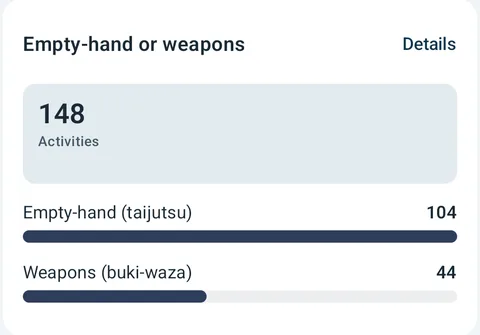
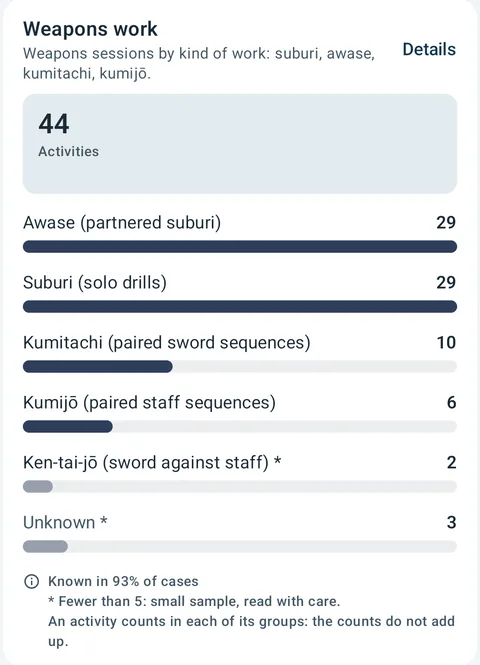
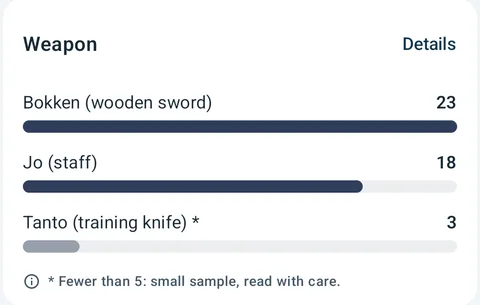
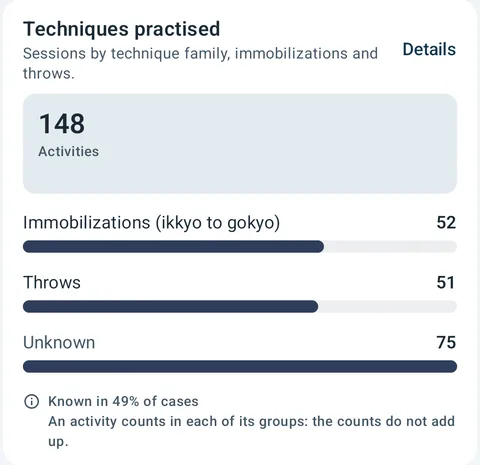
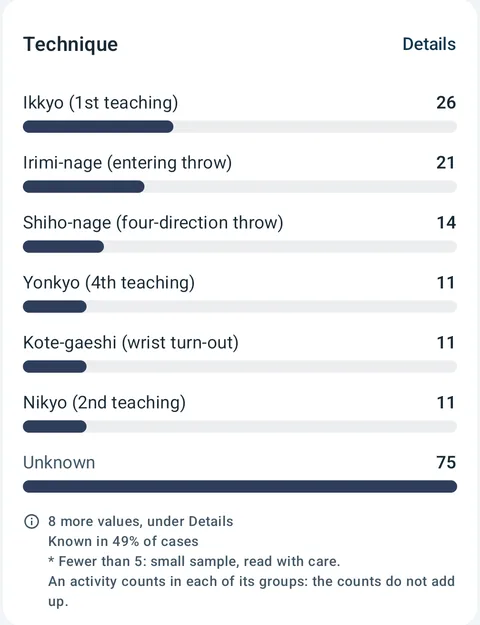
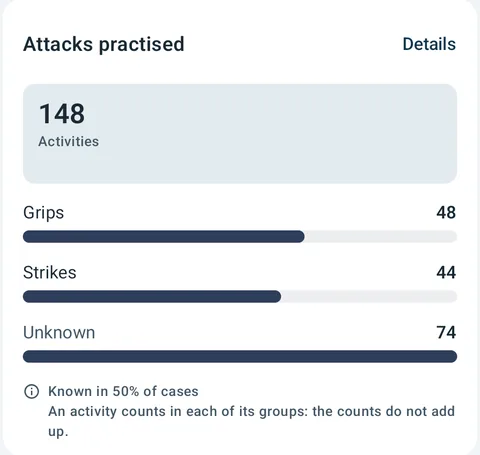
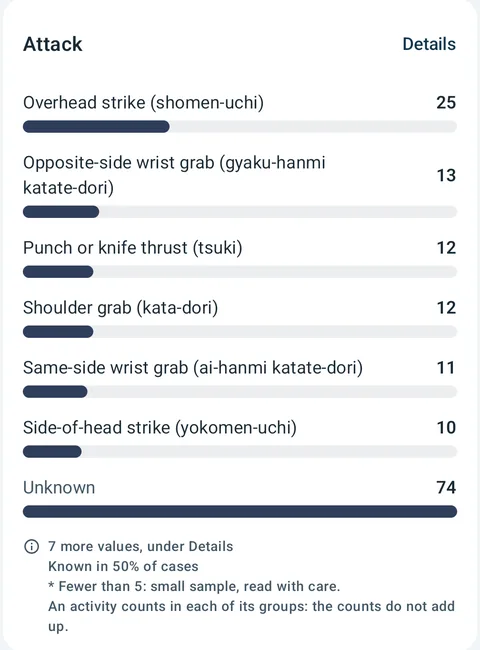
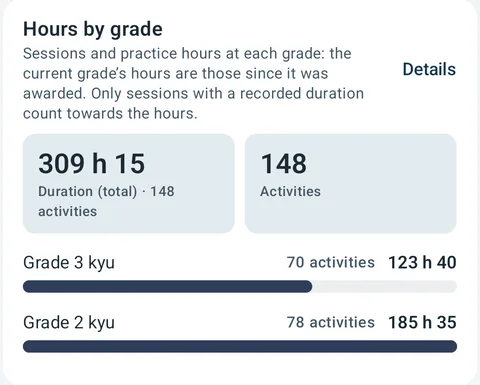
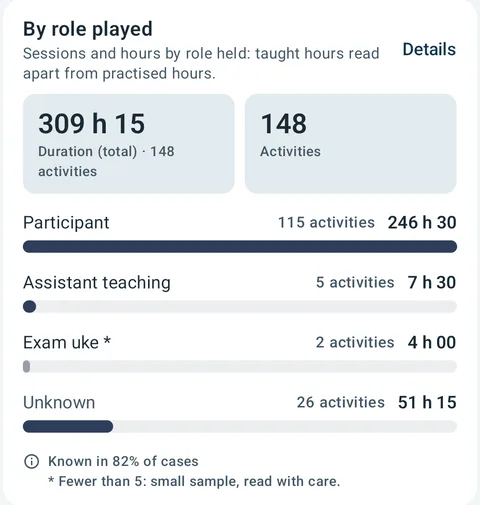
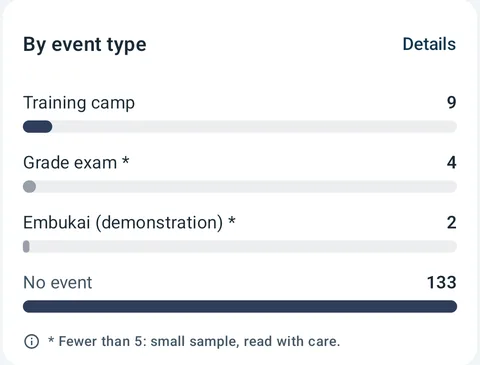
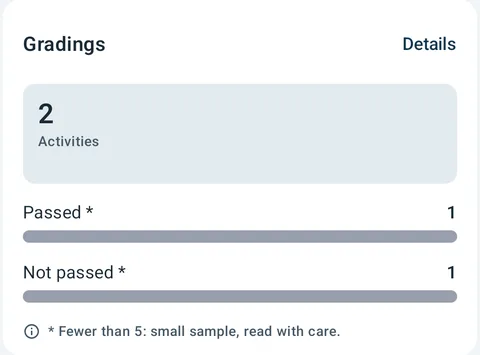
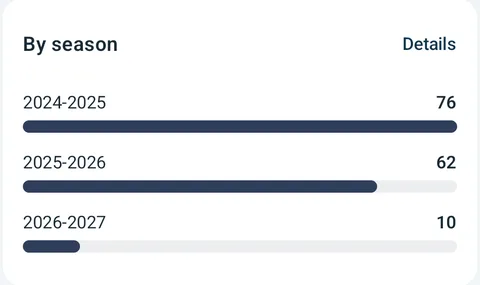
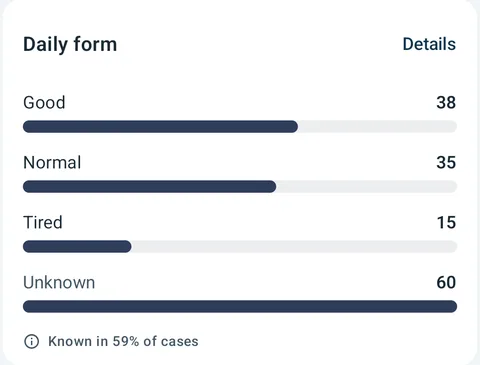
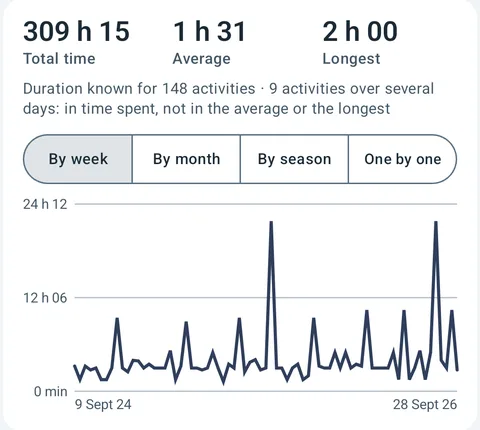
Tap a bar, a slice or a point: the sessions behind it open up. And every figure says how many sessions it is based on.
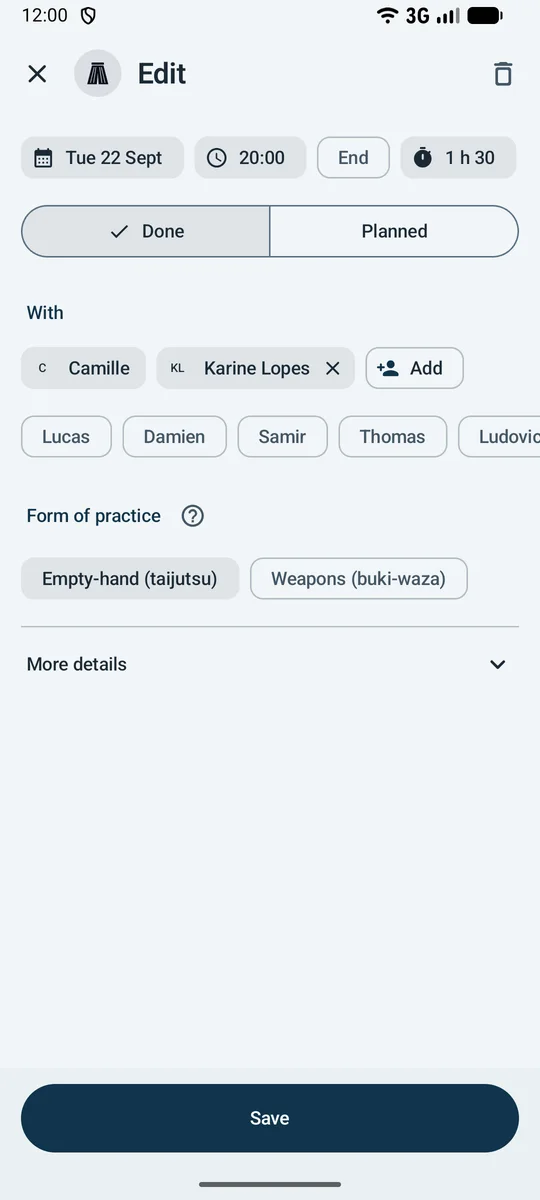
A class: the form first, the detail after
A date, the duration, the people you trained with, and the form of practice, empty-hand or weapons: that is all you need. The rest unfolds under “More details”.
Empty-hand (taijutsu), 1 h 30- The date, the time and the duration, and the people you trained with.
- The form of practice, empty-hand or weapons, with the weapon and the kind of weapons work.
- Under “More details”: the technique and the attack, one or several, the working position, group class or private lesson, the instructor.
- At a grading: the grade presented, passed or not passed.
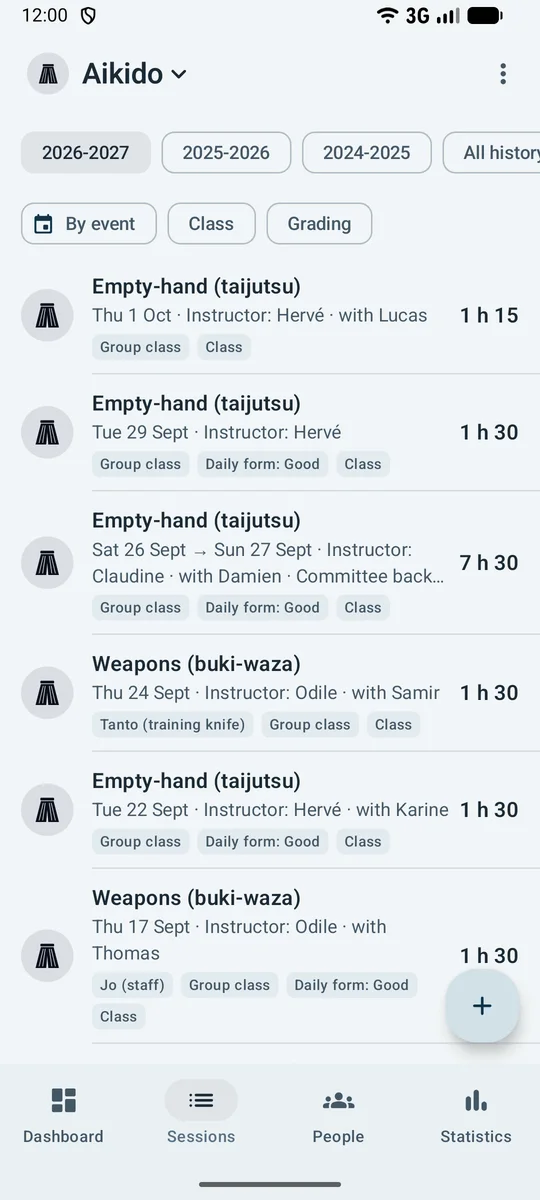
From the Tuesday class to the weekend session
Each line gives the form, the weapon or the grade presented, the type of class and the instructor. A class has no result to look for: what counts is what was worked on.
- The form, the weapon and the instructor at a glance, with the day’s form.
- The season filters at the top: 2026-2027, 2025-2026, 2024-2025 or the whole history.
- Training camps, embukai and gradings sit under their event, with “By event”.
- “Class” and “Grading” filter the list with one tap.
One date, and that is all
A session counts with its date: the form defaults to empty-hand, and the duration, the technique, the instructor or the role played come when you feel like it.
A white belt is not a beginner
Belt colours between the kyu are left to each club: a white belt worn for a long time does not signal a beginner. The grade is noted with its date, and it is added to your history in one tap when a grading is passed.
Everything aikido brings to the logbook
Logging
- A date is enough, and the result when there is one: no required field
- Outcomes: retired and did not start
- Class, training camp and grading
- Form of practice, weapon (3), weapons work (4), grade presented, grading result, working position (3), technique (13), attack (10), class type, instructor, daily form (3), average heart rate…
- “Next session” starts the next one with the same settings
Events
- Training camp, grade exam and embukai (demonstration)
Rankings
- 2 systems: Grade and Aikikai
- Grade: 6 kyu to 8 dan, 14 steps
- Dated rankings, best ranking and its date, a curve
Statistics
- Record, form, streaks, season-by-season trends; custom analysis on any field
- Regularity
- Hours by grade
- Empty-hand or weapons
- Weapons work
- Techniques practised
- Attacks practised
- By role played
- Gradings
- Every figure says how many sessions it is based on
Watch and files
- Sessions from your watch, filed from Health Connect
And across the whole logbook: goals and a companion, private groups of friends, body, finances, a one-file archive, CSV spreadsheet, a printed logbook as PDF. No account, no ads, no audience tracking.
Aikido, and everything else you do
Do you also practise judo, kendo or ju-jitsu, or do yoga or Pilates? Each discipline has its own space in the same logbook, with its own words.
Free, with Premium
Logging and data are free, without limit. Free statistics cover your last 20 sessions; Premium opens your whole history.
Get it on Google Play Coming soon to the App Store