
 Kendo, by Orma Logbook
Your kendo.
Your ippons scored and received, your strikes to men, kote, dō or tsuki, your keiko week after week, your gradings and your place at each championship. In a logbook that holds your other sports too.
Get it on Google Play Coming soon to the App Store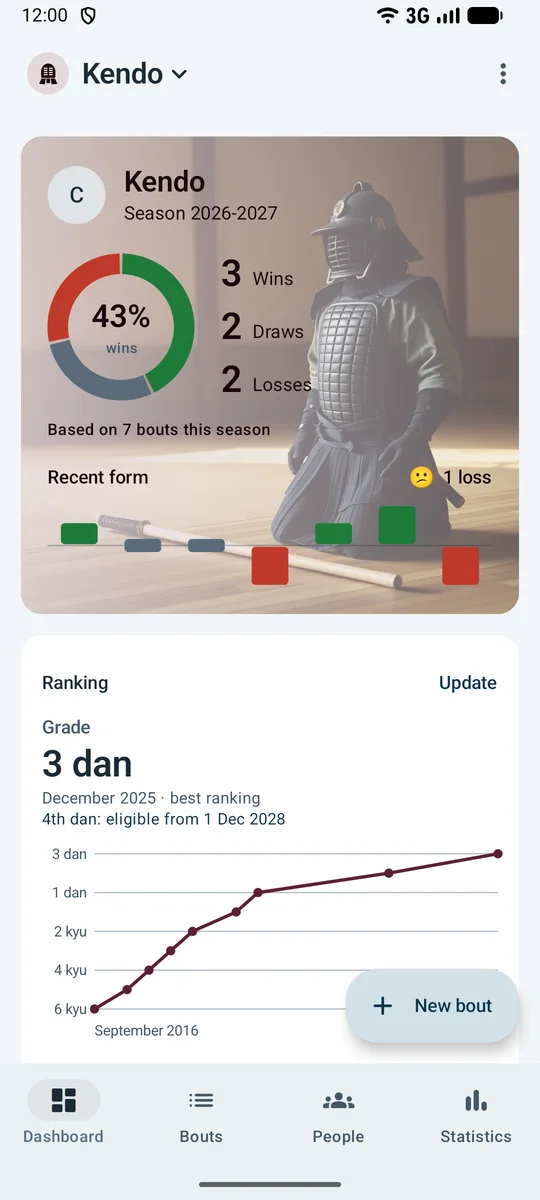
-
Men, kote, dō, tsuki
Every ippon, by its strike
You tick the strikes you scored and, apart, the strikes you received. The score counts in ippons, and a draw is possible.
-
- On time
- Encho
- Judges' decision (hantei)
- Hansoku (ejection)
4 ways to end a bout
On time, encho, hantei or hansoku: you tick how the bout ended, alongside the score. The logbook then counts your wins for each ending.
-
- Sanbon-shobu (2 ippons, 5 min)
- Ippon-shobu (1 ippon)
- Benjamins (2 ippons, 2 min 30)
- Minimes (2 ippons, 3 min)
- Cadets (2 ippons, 4 min)
- Kata (judged, no score)
- …
8 formats, from sanbon-shobu to judged kata
Two ippons in five minutes, or a single one in ippon-shobu; the youth categories have their own times, from 2 to 4 minutes. A judged kata is logged without a score, and jigeiko has its own format.
-
- Tachi no kata (seven forms) · 7
- Kodachi no kata (three forms) · 3
10 forms of kata, one by one
Tachi no kata and kodachi no kata are named form by form, at the grading, in a session or in competition. The list stays open.
-
- 3 kyu
- 2 kyu
- 1 kyu
- 1 dan
- 2 dan
- 3 dan
- 4 dan
Your grade, from 6th kyu to 8th dan
14 steps, each with its date: the grade sheet says when the next dan can be presented. And 13 other rankings, the Japanese federation’s, those of federations in other countries and the honorary titles (shōgō).
-
- Senpo (1st)
- Jiho (2nd)
- Chuken (3rd)
- Fukusho (4th)
- Taisho (5th)
- Daihyosha (deciding bout)
6 team positions, from senpo to daihyosha
In a club team championship, you record the position you hold in each bout, and the daihyosha for the deciding bout. Matchdays are logged one by one, at home or away.
-
Jitsugi · Kata · Written
The grading, test by test
The grade presented, the tests sat and the result, passed or not passed: each grading has its line. A passed grading offers to add the grade to your history.
-
- Kihon (basics)
- Suburi (solo cuts)
- Ashi-sabaki (footwork)
- Kirikaeshi
- Uchikomi-geiko
- Waza-geiko (technique drills)
- Kakari-geiko (continuous attack)
- Ji-geiko (free practice)
- Shiai-geiko (competition-style bouts)
- Kata (Nihon kendo kata)
10 keiko themes
Kihon, suburi, kirikaeshi, kakari-geiko, ji-geiko: tick the day’s work, and the number of jigeiko is added. The list stays open.
More than 1,600 ways to read your kendo
26 ready-made analyses, and custom analysis: 44 indicators to cross with 38 criteria, as a breakdown or over time, with whatever filters you like.
- 26ready-made analyses
- 44indicators
- 38criteria
- 1,672possible combinations
- The number of bouts where you scored with men, kote, dō or tsuki
- The number of bouts where you were struck on men, kote, dō or tsuki
- Your win rate by how the bout ended: on time, encho, hantei, hansoku
- The total of your ippons scored, season after season
- Your average ippon gap per bout, season after season
- Your win rate by your opponent’s grade
- Your wins against higher-graded opponents, season after season
- Your win rate in each category: seniors, honneurs, excellences
- Your win rate in each team position
- Your win rate against each of your opponents
- Your win rate in the pool, then at each round of the direct elimination
- Your best place in competition, season after season
- Your jigeiko, week after week
- The number of keiko for each theme: kihon, suburi, kirikaeshi, kakari-geiko…
- The time spent at each grade, from kyu to dan
- The number of gradings passed and not passed
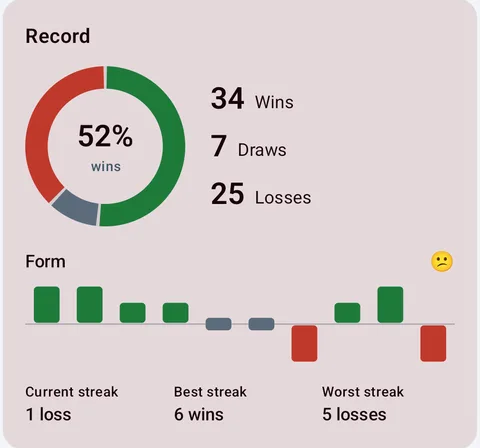
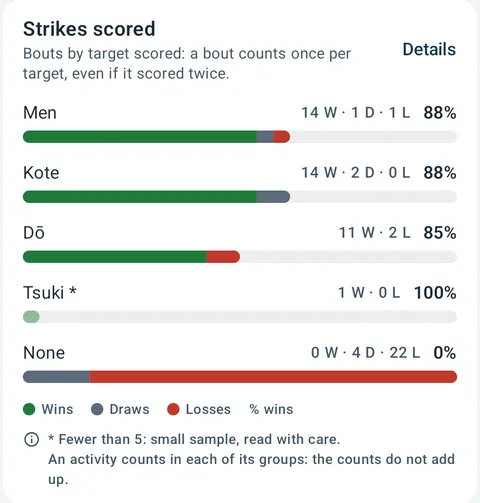
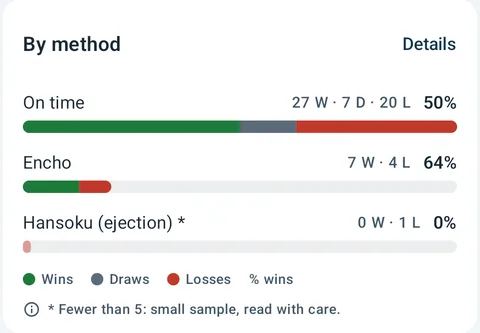
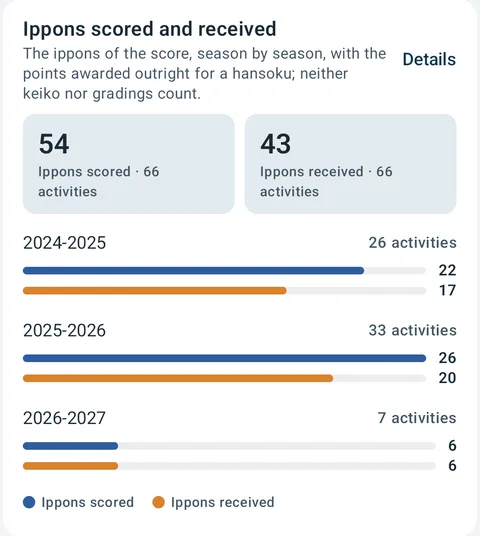
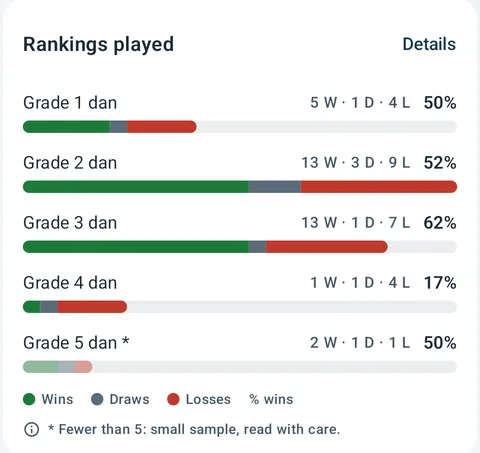
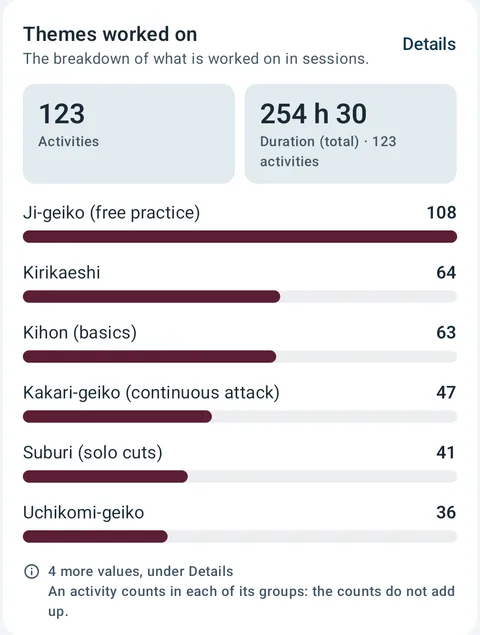
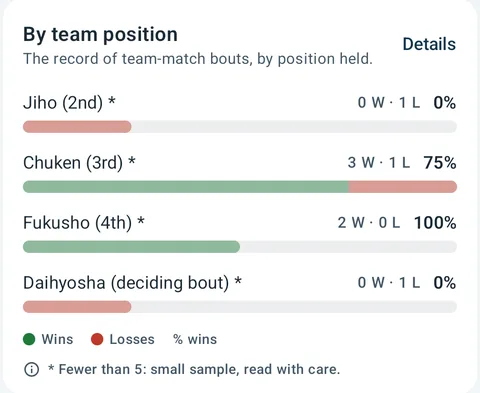
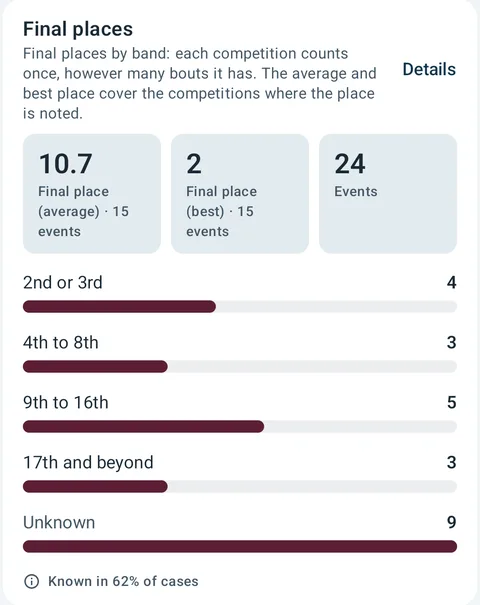
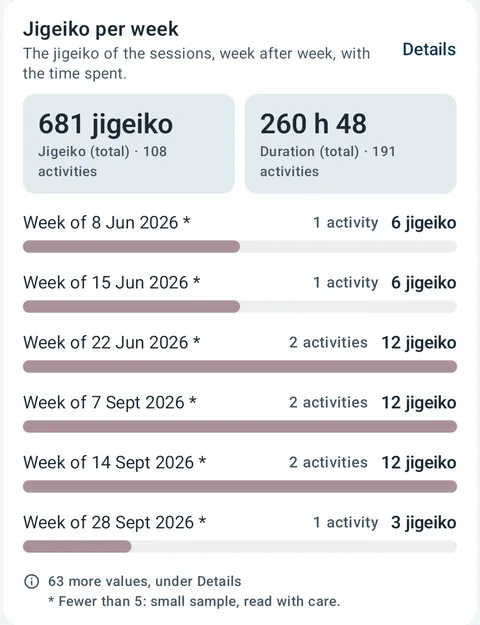
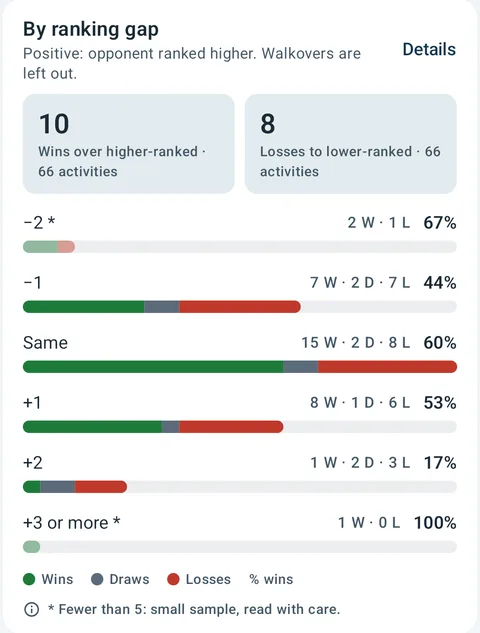
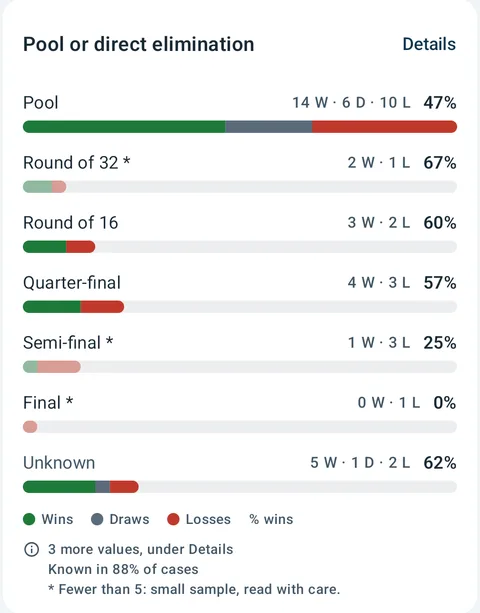
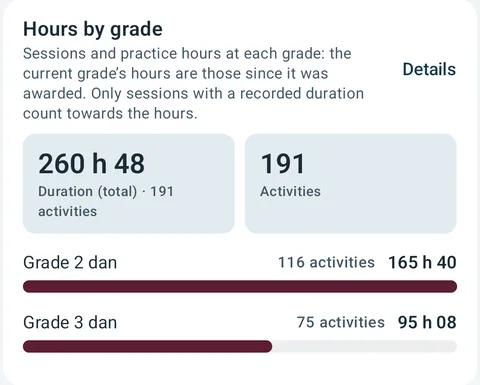
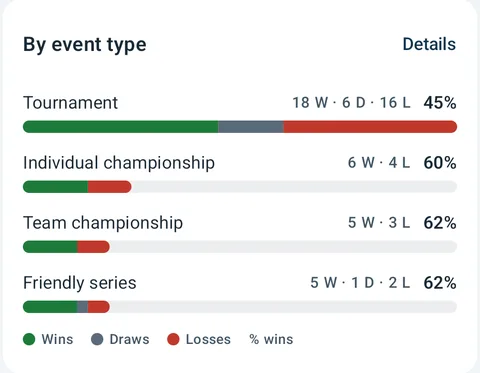
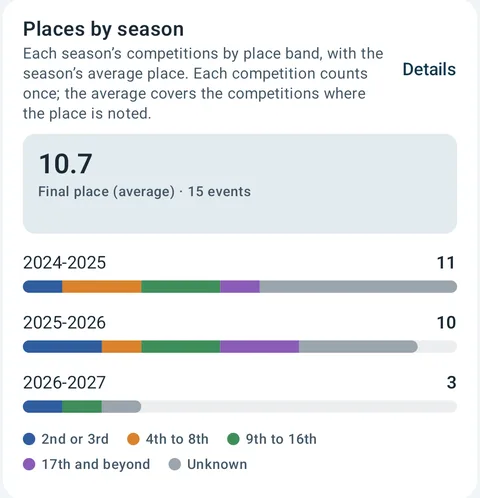
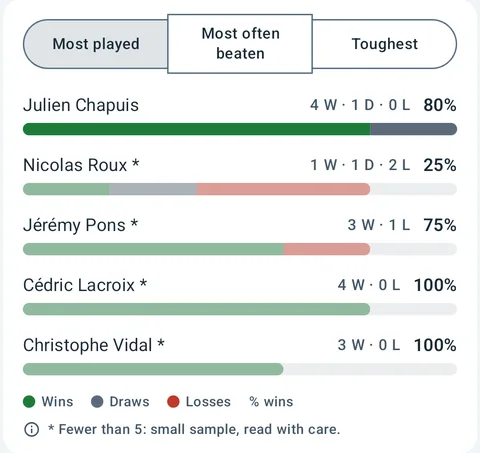
Tap a bar, a slice or a point: the bouts behind it open up. And every figure says how many bouts it is based on.
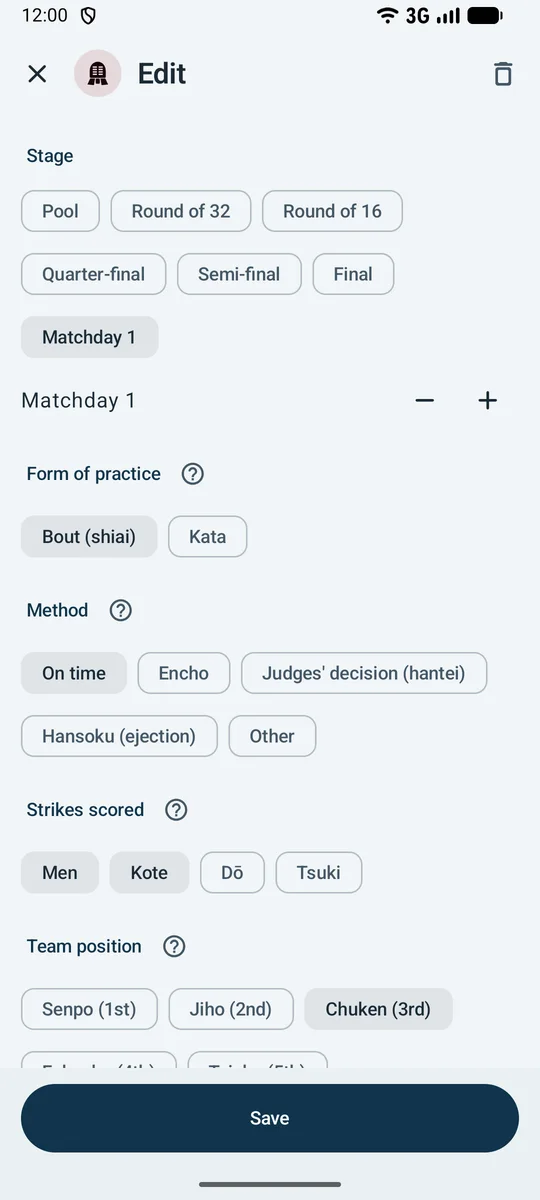
A team bout, from the matchday to the position held
Here a team bout, edited in a few taps under the kendo emblem: the stage, the form, how it ended, the strikes scored and the position held.
Chuken (3rd)- The phase: the pool, a round of the direct elimination, or the numbered matchday of the championship, with its counter.
- The form of practice, shiai or kata, and the end of the bout: on time, encho, hantei or hansoku.
- The strikes scored, one tap each: men, kote, dō or tsuki.
- The position held in the team, from senpo to taisho, and the daihyosha for the deciding bout.
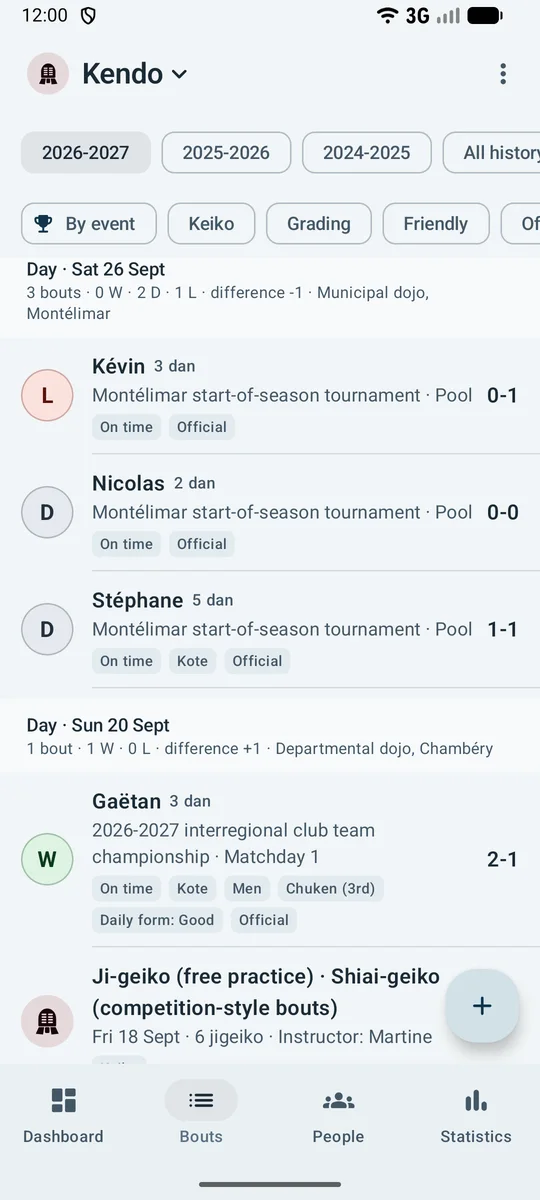
From keiko to the tournament, up to the team matchday
Each line gives the result and, in short, the form, the end of the bout and the strikes; for a keiko, the day’s work, the number of jigeiko and the instructor.
- Each bout carries its round: the pool of the tournament, the direct elimination, or the numbered matchday of a team championship.
- A draw counts apart in the record, like a win and a loss.
- Gradings, passed or not passed, with the grade presented.
- A keiko without a result stays out of the bout record, even with a named partner.
One date and one duration, that is all
A keiko counts with its date and its duration; the day’s work, the number of jigeiko and the instructor come when you feel like it.
Category and place, set once
The category, from Poussins to Excellences, women’s included, is taken from the event automatically and suggests the length of the bout. The competitors entered and your final place are noted once for the competition, whatever the number of bouts.
Everything kendo brings to the logbook
Logging
- A date is enough, and the result when there is one: no required field
- 8 formats: sanbon-shobu (2 ippons, 5 min); ippon-shobu (1 ippon); poussins, samurai (2 ippons, 2 min); benjamins (2 ippons, 2 min 30)…
- Outcomes: retired, walkover and disqualified
- Keiko, grading, friendly and official
- Form of practice, today’s work (10), jigeiko, kata (10), grade presented, grading result, tests sat (3), method (5), strikes scored (4), strikes received, category (11), competitors entered (noted on the bout)…
- “Next bout” starts the next one with the same settings
Events
- Tournament, individual championship, team championship, friendly series and training camp
- Rounds: pool, round of 32, round of 16, quarter-final, semi-final, final and matchday
- Competitors entered and final place
Rankings
- 14 systems: Grade, AJKF, BKA, DKenB, CKF, AUSKF, CBK, ABKF, SKI, NKR…
- Grade: 6 kyu to 8 dan, 14 steps
- Dated rankings, best ranking and its date, a curve
Opponents and partners
- A card for every opponent and partner: hand, club, rankings and notes
- Head-to-head, match preparation, record with each partner
- Several players followed; a match between two of them is logged once
Watch and files
- Sessions from your watch, filed from Health Connect
Statistics
- Record, form, streaks, season-by-season trends; custom analysis on any field
- Shiai or kata
- By method
- Strikes scored
- Strikes received
- Ippons scored and received
- Themes worked on
- Jigeiko per week
- Gradings
- Hours by grade
- By category
- By team position
- Pool or direct elimination
- Final places
- Places by season
- Training or competition
- Every figure says how many bouts it is based on
And across the whole logbook: goals and a companion, private groups of friends, body, finances, a one-file archive, CSV spreadsheet, a printed logbook as PDF. No account, no ads, no audience tracking.
Kendo, and everything else you do
Do you also practise fencing, aikido or judo, or run or lift weights during the week? Each discipline has its own space in the same logbook, with its own words.
Free, with Premium
Logging and data are free, without limit. Free statistics cover your last 20 bouts; Premium opens your whole history.
Get it on Google Play Coming soon to the App Store