
 Dance, by Orma Logbook
Your dance.
Each piece and figure, from learning to mastered, with what your teacher asked you to go back to; your place in the rankings, specialty by specialty, with each partner; your class and your Passeport Danse. In a logbook that holds your other sports too.
Get it on Google Play Coming soon to the App Store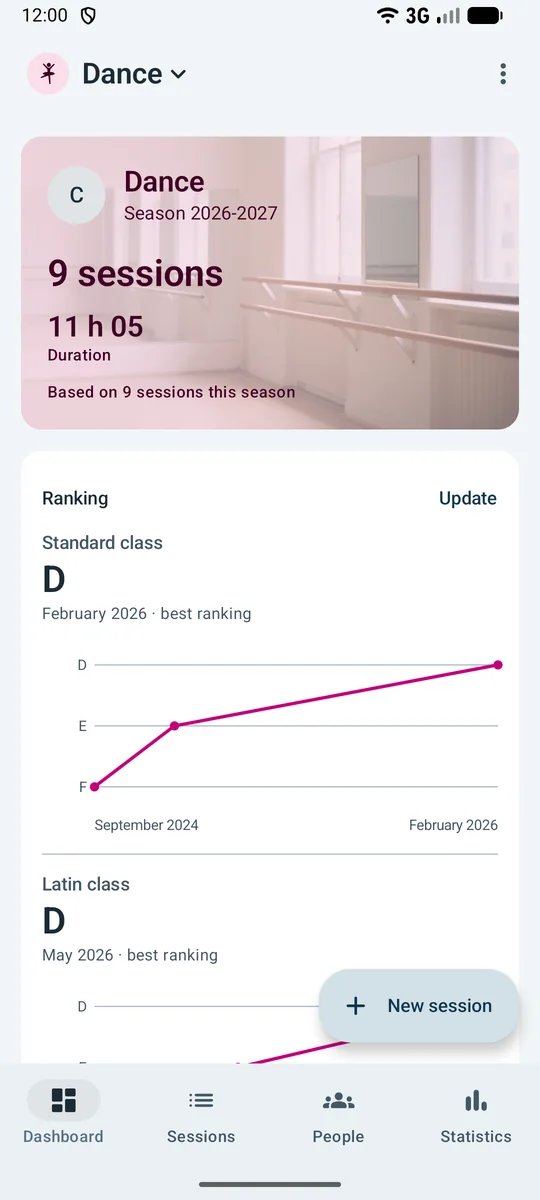
-
Learning · Polishing · Mastered
One piece, from the first time to mastered
A routine or a figure is named, then its stage is updated session after session. The logbook returns you the last time and what your teacher asked you to go back to.
-
- Slow waltz
- Tango
- Viennese waltz
- Slow foxtrot
- Quickstep
- Samba
- Cha-cha-cha
- Rumba
- Paso doble
- Jive
- Salsa
- Bachata
- Argentine tango
- Kizomba
- West Coast Swing
- Rock'n'roll
- Musette waltz
- Classical (ballet)
- Jazz
- Contemporary
- Modern
- Hip-hop
- Tap dance
- Flamenco
- African dance
- Bollywood
- Folk dances
27 styles, sorted by family
Competitive partner dance in standard and Latin, ballroom, stage and traditional dance: from slow waltz to flamenco. A missing style is added along the way.
-
- F
- E
- D
- C
- B
- A
Your FFDanse class, dated
From F to A, separately in standard and Latin, with the day you change class. And 14 other systems, from the Passeport Danse to the conservatoire cycles.
-
- Juniors
- Youths
- Adults
- Seniors I
- Seniors II
The couple’s age category
Chosen once for the competition, carried over to each run. It is set on both partners, not on you alone.
-
- Round of 16
- Quarter-final
- Semi-final
- Final
The round reached, up to the final
Each run keeps the round reached, the place, the number of ranked couples and the bib. A place, never a score that nobody gives.
-
Social, ball
The social has its word
Neither a class, nor a practice, nor a competition: a salsa social or a ball is logged for what it is. A training camp and a congress have their own type of competition.
-
- Standard
- Latin
- Ten dance
3 competition specialties
Standard, Latin or ten dance, set once for the competition. The place is then read specialty by specialty and with each partner.
-
Cycle 2 · Passed
The exam, with its mark
The cycle or the grade taken, then the result: passed or not passed for a conservatoire cycle, distinction, merit, pass or fail for a British grade.
More than 800 ways to read your dance
20 ready-made analyses, and custom analysis: 28 indicators to cross with 31 criteria, as a breakdown or over time, with whatever filters you like.
- 20ready-made analyses
- 28indicators
- 31criteria
- 868possible combinations
- The number of sessions of each dance
- Your dance time by family: standard, Latin, ballroom, stage, traditional
- The share of your sessions that are classes, socials, competitions or shows
- Your average place in competition, season after season
- The share of couples you finish ahead of, in standard and Latin
- Your average place with each partner
- Your best place in category, season after season
- The average number of ranked competitors, in a tournament or a championship
- The pieces and figures logged, by stage
- The pieces and figures you go back to most often
- The number of sessions with each teacher
- Your class time with each teacher
- Your dance time, month by month
- Your sessions by day of the week
- Your average heart rate in class, at a social and in competition
- The number of different dances you have danced, year after year
- Your private lessons, group classes and workshops
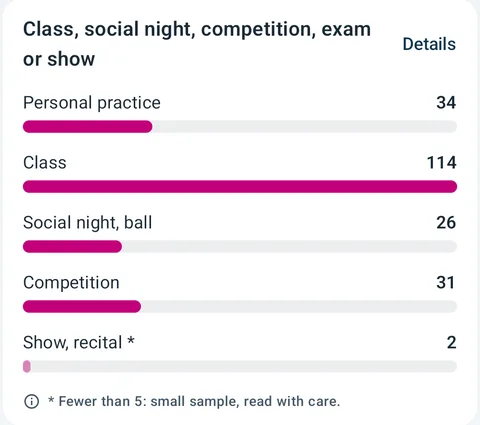
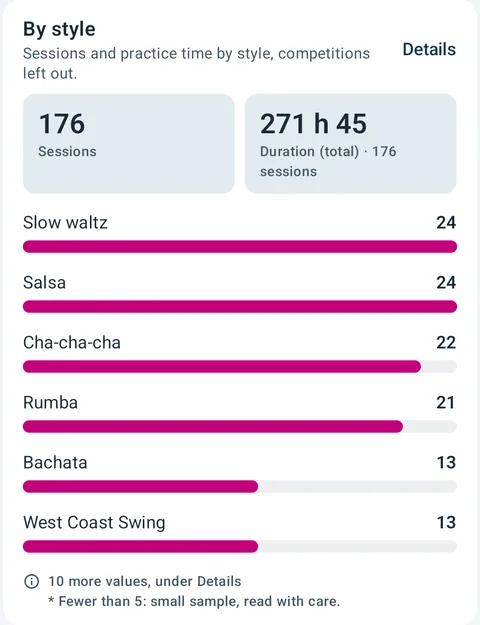
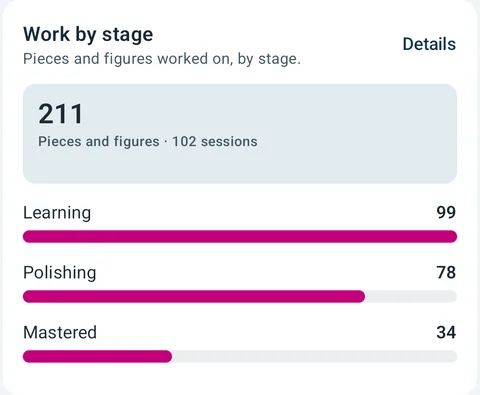
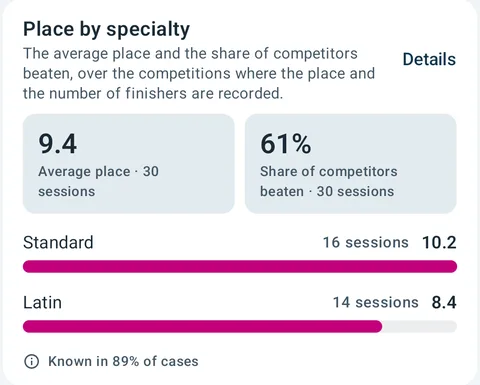
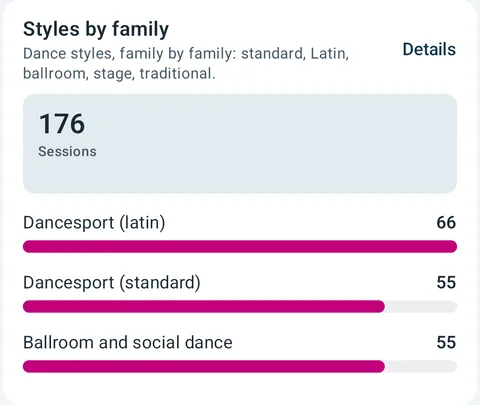
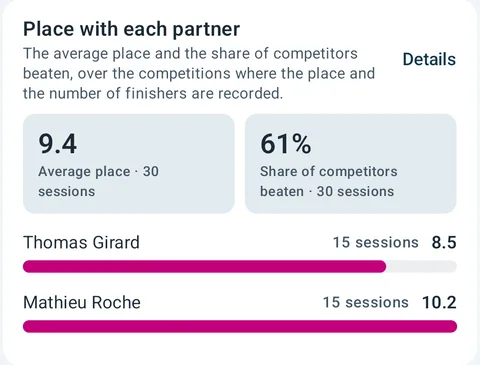
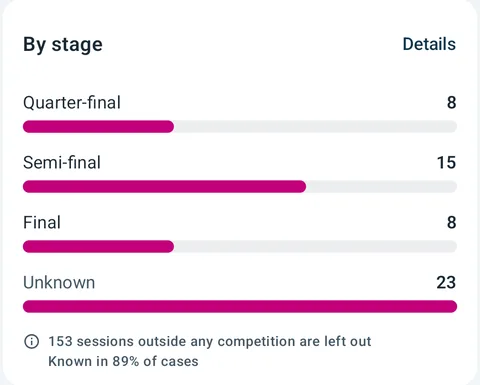
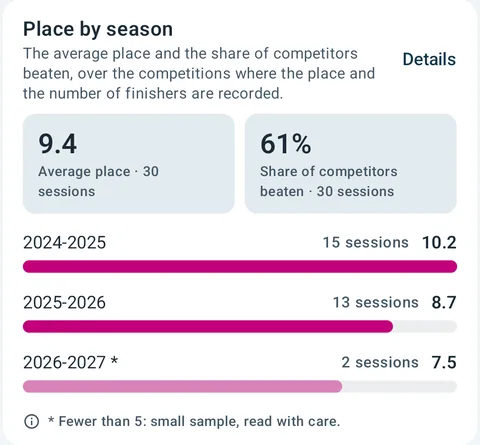
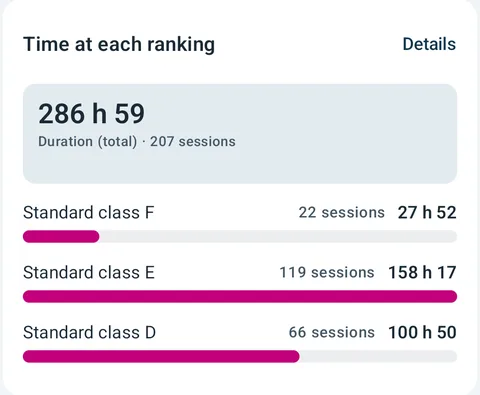
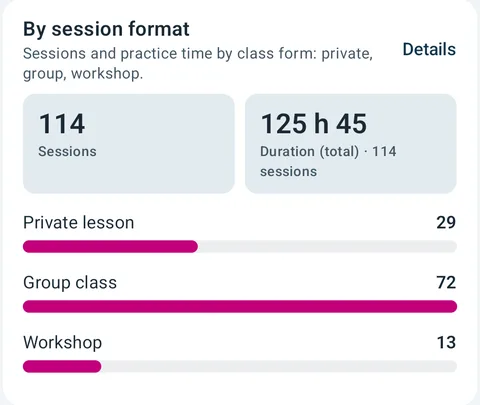
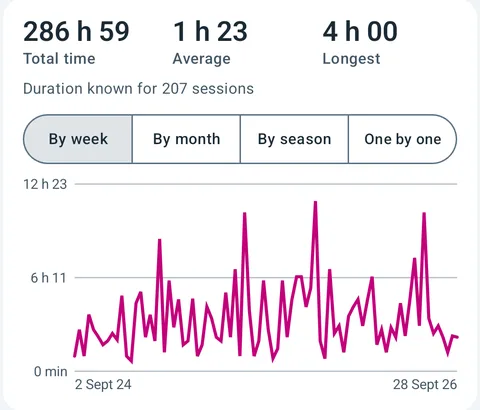
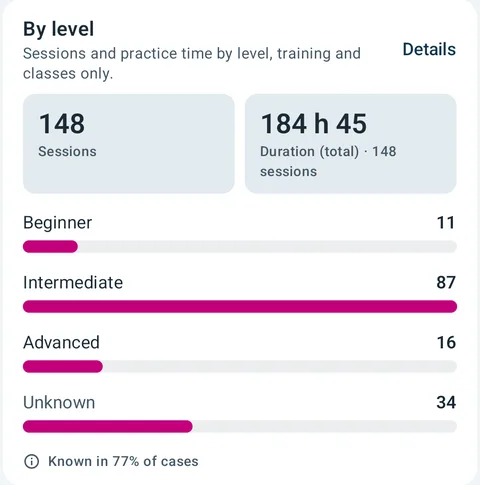
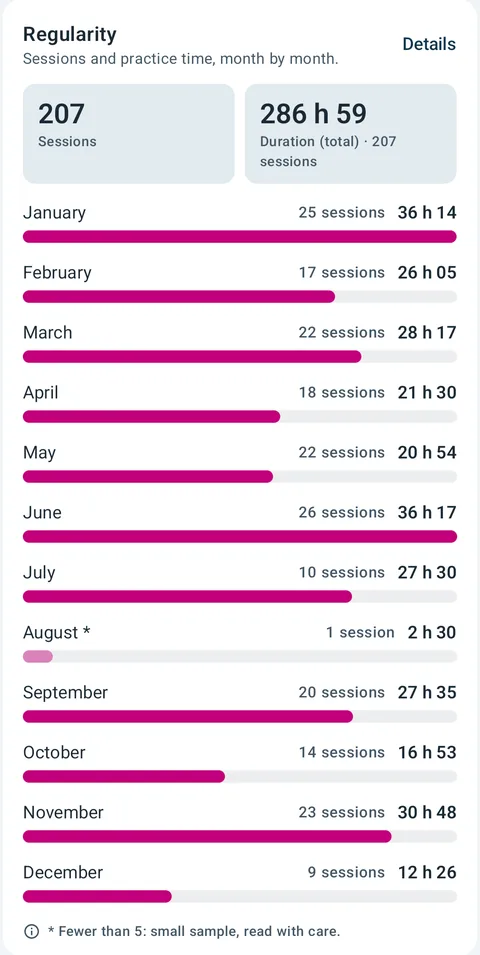
Tap a bar, a slice or a point: the sessions behind it open up. And every figure says how many sessions it is based on.
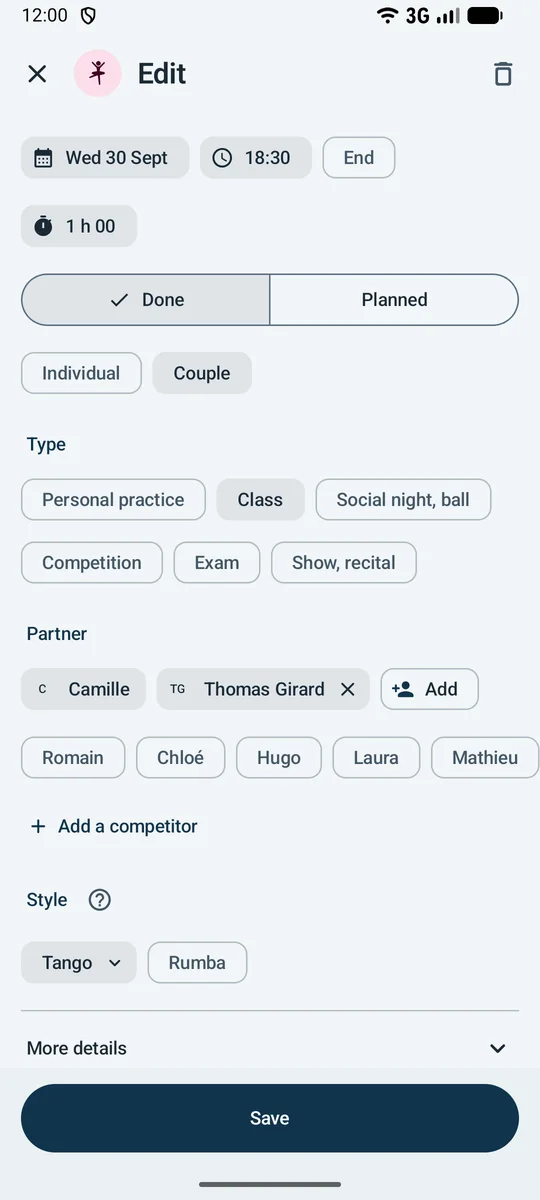
The duration, the type, the partner, then the style
You first say what it was: class, social, competition, exam or show, and who you danced with. The style follows; the teacher, the level, the format of the class and the pieces and figures worked on, each with its stage, fold under “More details”.
Tango · Class- The last time on a piece, as soon as you name it: its stage and what the teacher wanted to see again.
- Learning, polishing, mastered: a mastered piece closes its project.
- A competition adds the specialty, the age category, the bib, the place and the number of ranked competitors.
- The session from your watch arrives from Health Connect, with the heart rate.
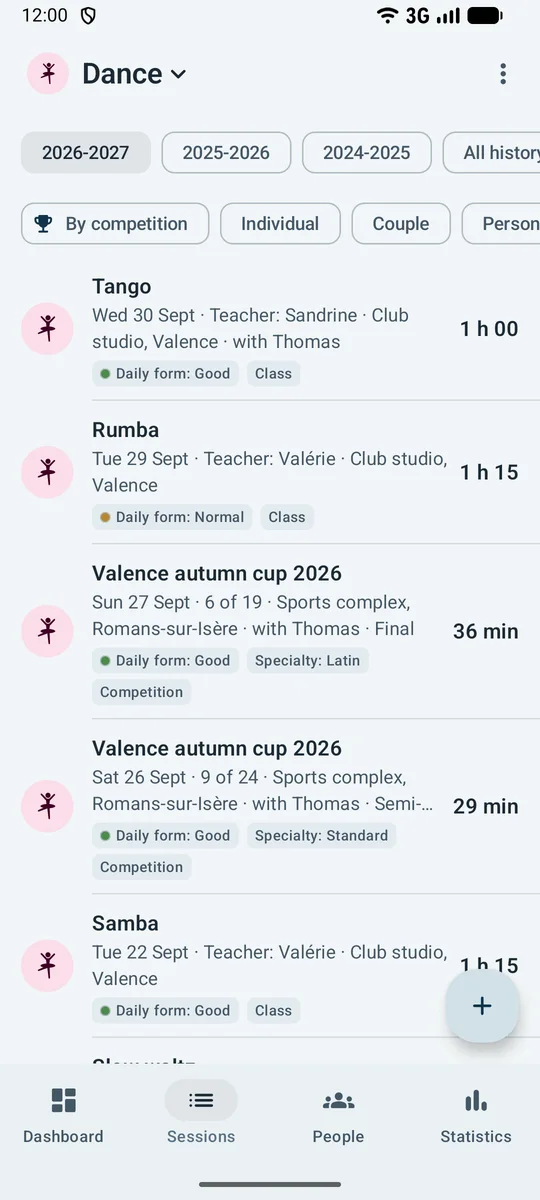
Classes, socials and competitions, each under its word
Each line gives the style, the place, the teacher and the duration, with the daily form and the type: class, social, competition. The “By competition” filter groups competitions by event, without inventing a score where there is none.
- Competitions are grouped by event, with their runs in standard, then in Latin.
- The teacher, the level and the format of the class show on the card.
- Socials, balls, training camps and galas have their character, with no ranking or place.
- A training camp or congress weekend is grouped under one event.
A choreography, from the first class to mastered
The logbook matches pieces of the same name from one session to the next: what is left to learn or to polish shows at a glance. Your teacher corrects a detail, and you find the remark again at the next session.
Place, partner, class
The average place and the share of couples finished ahead, by season, by specialty and with each partner. A changing partner erases nothing: each story stays readable, and the class and the Passeport Danse are each dated on their own scale.
Everything dance brings to the logbook
Logging
- A date is enough, and the result when there is one: no required field
- Individual and couple
- Outcomes: retired and disqualified
- Personal practice, class, social night, ball, competition, exam and show, recital
- Style (27), level (3), teacher, teacher, session format (3), daily form (3), average heart rate, bib number, place in category, finishers, specialty (3), age group (9)…
- “Next session” starts the next one with the same settings
Events
- Tournament, pairs championship, show, recital, exam session and workshop, congress
- Rounds: round of 16, quarter-final, semi-final and final
Rankings
- 15 systems: Standard class, Latin class, Passeport Danse, Conservatoire cycles, DTV classes (Germany), FIDS classes (Italy), Federal classes (Russia), NADB classes (Netherlands), DSA amateur grades (Australia), JDSF classes (Japan)…
- Standard class: F to A, 6 steps
- Dated rankings, best ranking and its date, a curve
Records and markers
- Projects: each “piece or figure” worked on, until you succeed
Watch and files
- Sessions from your watch, filed from Health Connect
Statistics
- Record, form, streaks, season-by-season trends; custom analysis on any field
- Regularity
- By style
- Styles by family
- By session format
- By teacher
- By level
- By specialty
- Class, social night, competition, exam or show
- Exam results
- Place by season
- Place by specialty
- Place with each partner
- Work by stage
- Every figure says how many sessions it is based on
And across the whole logbook: goals and a companion, private groups of friends, body, finances, a one-file archive, CSV spreadsheet, a printed logbook as PDF. No account, no ads, no audience tracking.
Dance, and everything you do outside it
Do you also do Pilates, yoga, gymnastics or strength training? Each discipline has its own space in the same logbook, with its own words.
Free, with Premium
Logging and data are free, without limit. Free statistics cover your last 20 sessions; Premium opens your whole history.
Get it on Google Play Coming soon to the App Store